


What to Consider Before Installing a Heat Pump at Home
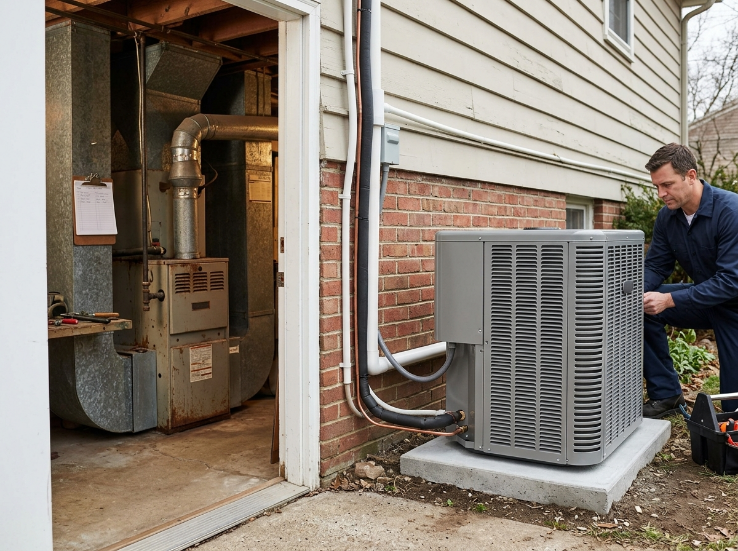
A heat pump can provide heating and cooling from the same basic system, making it an option worth considering for homeowners who want one system to handle different indoor comfort needs. However, choosing the right equipment involves more than selecting a model and finding a place to install it.
Home size, insulation, existing ductwork, electrical capacity, climate, equipment sizing, and installation design can all affect how well a heat pump performs. Taking time to review these factors before installation can help homeowners avoid comfort problems and equipment that does not match the property.
Understand How a Heat Pump Works
A heat pump transfers heat rather than generating it in the same way as a traditional combustion heating system. During cooling operation, it moves heat out of the home, while heating operation reverses the process and moves available heat indoors.
Because the same basic equipment can serve both functions, a heat pump can simplify the home's HVAC setup in certain applications. Performance still depends on correct sizing, proper installation, airflow, and the conditions in which the equipment operates. Understanding the basic process helps homeowners evaluate what the system is expected to do.
Check the Home’s Heating and Cooling Needs
The size of the home does not tell the entire story when selecting HVAC equipment. Insulation, windows, ceiling height, orientation, occupancy, air leakage, and existing ductwork can all affect how much heating and cooling capacity is needed.
Selecting equipment based only on square footage can lead to an incorrect system size. Oversized equipment may cycle differently than intended, while undersized equipment may struggle to maintain comfort during demanding periods. A proper assessment should consider the home's actual heating and cooling requirements before equipment is selected.
Review the Existing Ductwork
Homes with central HVAC systems often already have ductwork in place, but the condition of that duct system matters. Leaks, restrictions, poor insulation, or incorrect connections can reduce the amount of conditioned air reaching different rooms.
Installing new equipment without reviewing the existing ducts can limit the benefit of the upgrade. If the distribution system cannot deliver air effectively, the new heat pump may still leave certain rooms uncomfortable. The duct system should therefore be considered part of the installation rather than treated as an unrelated component.
Consider Electrical Requirements
Heat pump installations may involve electrical requirements that differ from existing heating equipment. Homeowners should determine whether the current electrical service and connections are suitable for the planned system.
Electrical work should be assessed by an appropriately qualified professional. The goal is to confirm that the installation can support the new equipment safely and according to applicable requirements. Trying to work around electrical limitations without proper planning can create unnecessary problems during installation.
Think About the Outdoor Unit Location
The outdoor section of a heat pump needs an appropriate location with enough space for airflow, service access, and proper operation. Placement close to walls, dense vegetation, or objects that restrict airflow can affect performance and make maintenance more difficult.
The location should also consider noise, water drainage, access for service, and exposure to the surrounding environment. A good installation balances practical service needs with the layout of the property so the equipment remains accessible without becoming an obstruction.
Choose Equipment That Fits the System
Not every heat pump is suitable for every house. Equipment capacity, efficiency, controls, indoor components, outdoor conditions, and compatibility with existing HVAC components should all be considered.
A system should be selected as a complete setup rather than buying individual components based on price alone. The indoor and outdoor equipment need to work together, and the installation should match the home's airflow and control requirements. Proper compatibility can have a direct effect on performance and long-term service needs.
Why Installation Quality Matters
Heat pump installation involves more than setting equipment in place. Refrigerant connections, electrical components, airflow, drainage, controls, and equipment placement all need to be handled correctly for the system to operate as intended.
Even good equipment can perform poorly when it is installed incorrectly or improperly sized. Installation quality therefore deserves as much attention as the equipment model itself. A carefully planned installation also makes future maintenance and service easier because components remain accessible and correctly configured.
Consider Your Home’s Insulation
A heating and cooling system can only compensate for heat gain and heat loss within its designed capacity. Poor insulation, major air leaks, and drafty windows can increase the amount of work required to keep indoor temperatures stable.
Before installing new HVAC equipment, homeowners may benefit from considering the condition of the home's envelope. Improving insulation and sealing obvious air leaks can support HVAC performance by reducing unnecessary heat transfer between indoor and outdoor spaces.
Think About Thermostat and Controls
Modern HVAC systems may rely on more advanced controls than older heating equipment. Thermostat compatibility, control wiring, scheduling features, and system communication should all be reviewed before installation.
Controls influence how the equipment responds to temperature changes and operating schedules. A properly configured thermostat can help the system operate according to the home's actual comfort needs instead of repeatedly starting and stopping without an appropriate strategy.
Plan for Future Maintenance
A heat pump is a long-term household system, so maintenance access should be considered during installation. Filters, outdoor coils, electrical components, drainage paths, and other service points should remain reasonably accessible.
An installation that is difficult to service can make routine maintenance harder later. Good planning considers not only how the system will work on the first day, but also how technicians will inspect, clean, troubleshoot, and maintain it in the future.
Consider Backup Heating Needs
Depending on the system design and local conditions, a heat pump may operate alongside another heat source or include supplemental heating. Homeowners should understand how the system handles colder periods and what happens if the outdoor unit cannot meet the home's heating demand alone.
The exact setup depends on climate, equipment type, home design, and homeowner preferences. Understanding the backup strategy before installation avoids confusion later and helps ensure the system is designed around the property's actual comfort requirements.
Final Thoughts
A successful heat pump project starts with planning. Homeowners should consider equipment sizing, ductwork, electrical requirements, insulation, outdoor placement, controls, installation quality, and future maintenance before the system is installed.
Heat pump operation is based on heat transfer, the movement of thermal energy from one place to another. Understanding this basic principle helps explain why system design, equipment sizing, and installation conditions all influence how effectively a heat pump can heat and cool a home.
 Dutch
Dutch
 English
 Arabic
 French
 Spanish
 Portuguese
 Deutsch
 Turkish
 Italiano
 Russian
 Romaian
 Portuguese (Brazil)
 Greek
Greek