


Best Virtual Personal Network in Pakistan for Online Security
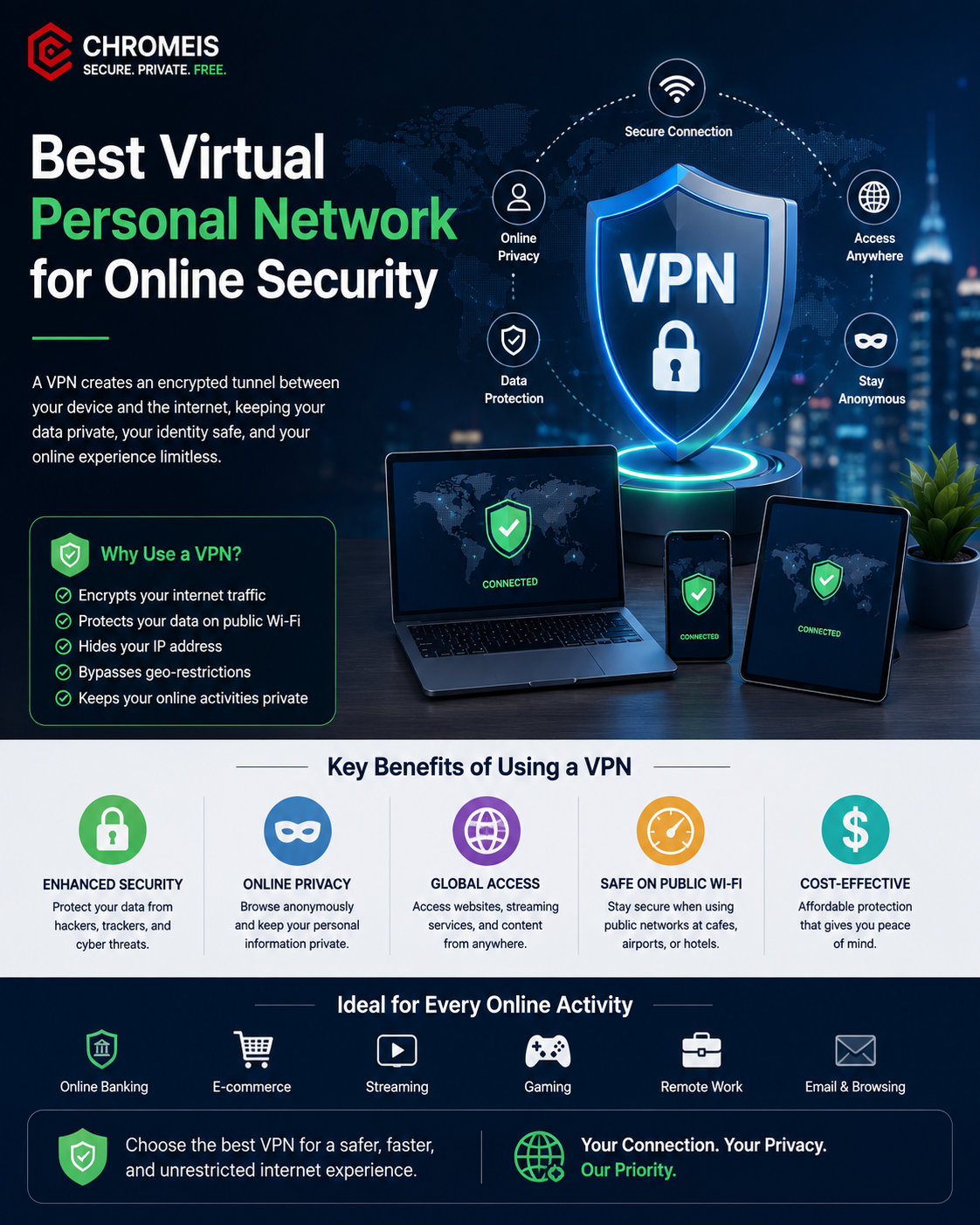
Online privacy is no longer only a concern for large companies or cybersecurity professionals. Everyday users in Pakistan connect to public Wi-Fi, access online banking, work remotely, use cloud platforms, and share sensitive information through websites and apps. This makes a secure internet connection more important than ever.
A virtual personal network in pakistan can add an extra layer of privacy by creating an encrypted connection between your device and the internet. It can help reduce the exposure of your online activity, especially when you are using unsecured networks.
But choosing a VPN is not simply about finding the cheapest option. Security features, server availability, connection speed, privacy policies, and reliability all matter.
What Is a Virtual Private Network?
A Virtual Private Network, commonly called a VPN, creates an encrypted tunnel for your internet traffic. Instead of sending data directly from your device to a website, the connection is routed through a VPN server.
This process can make it harder for unauthorized parties on the same network to observe your traffic. It can also hide your actual IP address from the websites you visit, replacing it with the IP address associated with the VPN server.
For Pakistani users, this can be useful when working from cafés, airports, hotels, universities, or other shared networks.
Why VPN Security Matters in Pakistan
Internet users frequently connect through different networks and devices. A business employee may work from home in the morning and a public Wi-Fi network in the afternoon. Each environment can create different security risks.
Reliable data services in pakistan can help businesses and individuals establish a more controlled connection when accessing online resources.
For example, imagine an employee checking company email from a coffee shop. The Wi-Fi may look harmless, but the user does not control how that network is configured. Using a reputable VPN can provide an encrypted connection between the employee's device and the VPN server.
It is not magic. A VPN cannot protect you from every online threat. Strong passwords, multi-factor authentication, updated software, antivirus protection, and safe browsing habits are still necessary.
Features to Look for in a VPN
The best VPN is not necessarily the one with the most advertisements. Look at the technology behind the service.
A strong VPN should use modern encryption and secure tunneling protocols. It should also have a clear privacy policy explaining what information it collects and why.
Connection speed is another major factor. A poorly optimized VPN can make websites load slowly and affect video calls, cloud applications, and remote work.
Server locations also matter. Users in Pakistan should consider services with nearby or well-connected international servers. A shorter network route can sometimes provide a better experience.
A kill switch is another useful security feature. If the VPN connection suddenly drops, it can prevent applications from continuing to send traffic through the normal internet connection.
Private Network Security in Pakistan for Businesses
Businesses have different requirements from individual users. Employees may access customer records, internal dashboards, cloud storage, development platforms, and business email from outside the office.
This is where private network security in pakistan becomes especially important.
A VPN can help create a safer connection for remote employees accessing company resources. However, organizations should not treat a VPN as their complete cybersecurity strategy.
Companies should combine VPN technology with access controls, endpoint security, identity management, firewalls, monitoring, and regular security testing.
For growing companies, secure infrastructure can also work alongside cloud hosting, managed IT environments, DevOps services in Lahore, and other digital solutions. The objective is simple: allow employees to work efficiently without unnecessarily exposing business systems.
VPNs for Remote Work and Online Privacy
Remote work has changed how people access business systems. Employees no longer need to sit inside an office to complete important tasks.
A VPN can make remote connections more secure, particularly when employees are using networks they do not fully trust.
For individuals, privacy is another reason to consider a VPN. Internet activity can reveal information about browsing habits, IP addresses, and approximate location. A VPN can reduce some of this exposure, although it does not make a person completely anonymous online.
That distinction is important. A VPN is a privacy and security tool, not an invisibility cloak.
Free or Paid VPN: Which Is Better?
Free VPN services may appear attractive, especially for students and casual users. But users should carefully check how the service earns money.
Some free services may have limitations on speed, data, server locations, or features. Others may collect more information than privacy-conscious users expect.
Paid VPN providers generally offer more resources for maintaining servers, security features, customer support, and network performance. Still, paying for a VPN does not automatically make it trustworthy.
Before choosing a provider, read its privacy policy, understand its logging practices, and check whether its security claims are supported by independent audits or credible technical information.
How to Choose the Right VPN in Pakistan
Start by identifying your actual need. If you mainly want protection while using public Wi-Fi, your requirements may be different from those of a company managing remote employees.
Check the provider's encryption standards, supported protocols, server network, privacy policy, connection stability, and device compatibility.
Also consider whether the service works reliably with your internet connection. A VPN can be technically excellent but still frustrating if it frequently disconnects or creates significant latency.
Avoid selecting a service purely because it promises complete anonymity or extremely high speeds. Security marketing can sound impressive. The technical details matter more.
VPNs Are Part of a Bigger Security Strategy
Using a VPN is one step toward better online security. It should work alongside other basic practices.
Keep operating systems and applications updated. Use unique passwords and enable multi-factor authentication wherever possible. Avoid opening suspicious links or downloading unknown files.
Businesses should go further by implementing security policies, employee awareness training, access management, encrypted storage, regular backups, and vulnerability assessments.
The strongest security approach is layered. One tool cannot solve every problem.
Conclusion
Choosing the right enterprise hosting Pakistan depends on what you need from the service. Privacy, encryption, speed, server availability, reliability, and transparent policies should all be considered before making a decision.
For businesses, VPN technology can support remote access while forming part of a broader cybersecurity strategy. For individuals, it can provide useful protection when connecting through public or unfamiliar networks.
A VPN is not a replacement for complete cybersecurity, but it is a practical layer of protection when selected and configured properly. If you are building a secure digital environment, Chromeis can also help businesses explore broader solutions around cloud infrastructure, hosting, cybersecurity, and digital transformation.
Frequently Asked Questions
1. What is a virtual personal network in Pakistan?
It is a VPN service that creates an encrypted connection between a user's device and a VPN server. It can improve privacy and help protect internet traffic when using networks that may not be fully trusted.
2. Is a VPN completely secure?
No. A VPN improves privacy and protects traffic between your device and the VPN server, but it cannot prevent phishing, malware, weak passwords, or unsafe websites. Additional security measures are still important.
3. Are free VPN services safe?
Not necessarily. Some free VPNs have restrictions or privacy practices that may not suit security-conscious users. Always review the provider's privacy policy and reputation before using one.
4. Can businesses use VPN services for remote employees?
Yes. Businesses can use VPNs to provide employees with more secure access to certain company resources. For stronger protection, VPNs should be combined with identity management, access controls, endpoint security, and monitoring.
5. How should I choose VPN services in Pakistan?
Compare encryption, privacy policies, server locations, connection speed, reliability, supported devices, security features, and the provider's reputation. Choose based on your actual security and connectivity requirements rather than price alone.
 Deutsch
 English
 Arabic
 French
 Spanish
 Portuguese
 Turkish
 Dutch
Dutch
 Italiano
 Russian
 Romaian
 Portuguese (Brazil)
 Greek
Greek