

How to Proofread Homework Before Submission
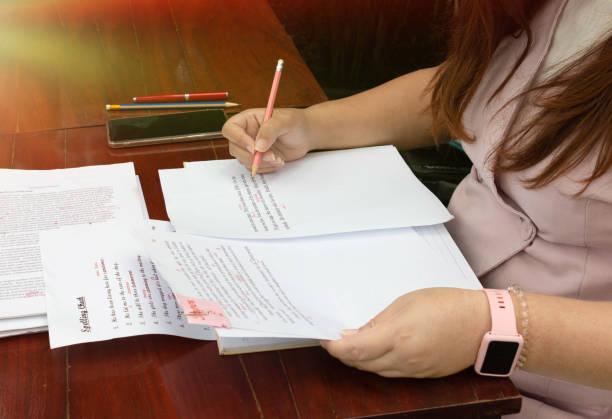
Finishing your homework is a great feeling, but pressing “submit” too quickly can cost you marks. Small mistakes in spelling, grammar, calculations, formatting, or citations can make otherwise strong work look careless. That’s why taking a few minutes to proofread your homework before submission is worth the effort. A careful final review can also help you notice missing answers, unclear explanations, and instructions you may have overlooked while writing.
The good news is that proofreading does not have to take hours. With a simple step-by-step approach, you can check the important parts of your assignment without starting from scratch. In this guide, I’ll show you practical ways to proofread homework, catch common errors, and submit your work with greater confidence.
Start by Reading the Assignment Again
Before I start looking for commas or spelling mistakes, I go back to the assignment instructions.
This sounds obvious, but it is easy to forget what the teacher actually asked for after you've spent a long time writing. You may have produced a good answer while accidentally missing one part of the question.
Read the prompt alongside your finished homework.
Ask yourself:
-
Did I answer every part of the question?
-
Did I follow the required format?
-
Did I stay within the word limit?
-
Did I include the required examples or evidence?
-
Did I use the requested number of sources?
-
Did I follow the required citation style?
-
Did I include everything the teacher specifically asked for?
George Mason University's Writing Center recommends returning to the assignment prompt before submitting and checking that the finished work meets its requirements. (The Writing Center)
This should be your first check because there is little point in polishing an answer that does not fully answer the assignment.
Check the Content Before Fixing Grammar
Once you know the assignment is complete, look at the actual information in your answers.
This is where you ask a simple question: Does this make sense, and is it correct?
For a math assignment, redo important calculations. For science homework, check terminology, units, labels, and conclusions. For history, look again at names, dates, quotations, and important facts.
I would pay particular attention to details that are easy to type incorrectly.
For example, a technical assignment may contain terms that differ by only a few letters but have completely different meanings. If you're working on biology or genetics, verify unfamiliar terminology against a reliable academic or professional source instead of trusting memory alone.
If you need additional support with the structure or wording of a genetics assignment, you can also review this genetics homework writing resource before completing your own final review.
The point is not to make your homework sound complicated. It is to make sure the information you are submitting is accurate.
Read Your Homework Out Loud
One of the simplest proofreading methods is also one of the most useful: read the assignment aloud.
When you read silently, your brain can fill in missing words because it already knows what you intended to say. Reading aloud slows you down. Awkward sentences, repeated words, missing words, and punctuation problems become easier to notice.
George Mason University's Writing Center recommends reading slowly and aloud, paying attention to individual words and punctuation. (The Writing Center)
For example, look at this sentence:
The results of the experiment shows that the treatment was effective.
It is easy to skim past the problem.
Read it aloud, though, and “results...shows” may sound wrong. The corrected version is:
The results of the experiment show that the treatment was effective.
You don't have to read loudly if you're in a library. You can quietly move your lips, whisper, or use text-to-speech.
The important thing is to hear the words rather than relying entirely on your eyes.
Proofread One Type of Error at a Time
Trying to find every mistake during one reading can become exhausting. Instead, give yourself a different job during each pass.
This is particularly helpful if you already know which mistakes you tend to make.
Look for sentence problems
Check whether every sentence expresses a complete thought.
Watch for fragments such as:
Because the temperature increased.
That isn't a complete sentence on its own.
Also look for run-on sentences. If one sentence contains several separate ideas joined together with weak punctuation, consider splitting it.
Check subject-verb agreement
Look for sentences where the subject and verb don't match.
For example:
The results shows a significant difference.
should become:
The results show a significant difference.
Check verb tense
Make sure you haven't moved randomly between past and present tense.
This can happen easily in reports and essays, especially when you are describing something that happened in the past and then discussing its significance.
Check pronouns
Words such as it, they, this, and which should have clear references.
If your reader has to stop and wonder what “this” means, rewrite the sentence.
George Mason's editing guidance recommends checking sentence completeness, pronoun references, verb tense, punctuation, and sentence variety as separate proofreading concerns. (The Writing Center)
Don't Forget Punctuation
After checking your sentences, do another pass specifically for punctuation.
Look for:
-
Missing full stops
-
Extra commas
-
Comma splices
-
Missing apostrophes
-
Incorrect quotation marks
-
Unclosed parentheses
-
Incorrect capitalization
-
Inconsistent hyphenation
You don't need to make every sentence complicated. In fact, if punctuation becomes difficult to manage, simplifying the sentence may be the better solution.
For example, instead of forcing three ideas into one long sentence, divide them:
The experiment produced unexpected results. The control group behaved differently. We therefore repeated the test.
Three straightforward sentences can be much easier to understand than one overloaded sentence.
Search for the Mistakes You Make Most Often
Here's a trick that can save time: create your own personal proofreading list.
Everyone has different habits. Maybe you regularly confuse your and you're. Perhaps you leave out commas, use overly long sentences, repeat the same word, or forget to capitalize proper nouns.
Whatever your pattern is, look specifically for it.
For example, your personal list might include:
-
its / it's
-
affect / effect
-
your / you're
-
missing commas
-
repeated words
-
inconsistent verb tense
-
overly long sentences
-
incomplete citations
George Mason's guidance on self-editing recommends focusing on a small number of sentence-level problems at a time rather than trying to correct everything simultaneously. (The Writing Center)
That approach makes proofreading less frustrating. Instead of asking yourself, “How am I supposed to find every mistake?” you're asking, “Have I checked the three mistakes I usually make?”
Use Spellcheck, but Don't Depend on It
Spellcheck is useful. It is also limited.
It will probably notice:
recieve
when you meant:
receive
But it may not notice:
I went their yesterday.
Both their and there are correctly spelled words, so a basic spelling check may not solve the problem.
The same issue occurs with words such as:
-
then / than
-
your / you're
-
its / it's
-
affect / effect
-
accept / except
Technical homework creates another problem. Specialized vocabulary may be unfamiliar to a general spelling tool, so don't automatically replace a scientific term just because software flags it.
If you're writing about genetics, for example, check technical terminology against an authoritative scientific resource when you're uncertain.
In other words, use software as an extra pair of eyes—not as the person responsible for your final submission.
Check Your Citations
If you've used outside sources, give your citations their own proofreading pass.
This is easy to overlook because citations often sit at the bottom of the page or in a separate reference section.
Check that:
-
Sources are cited where required.
-
Quotations are clearly identified.
-
Paraphrased information is properly attributed.
-
In-text citations match the reference list.
-
References follow the required style.
-
You haven't accidentally left out a source.
Your teacher may require APA, MLA, Chicago, or another system, so follow the style specified for the assignment.
George Mason University's editing checklist specifically includes checking the documentation of quotations and paraphrases against an approved citation guide. (The Writing Center)
This is also one area where accuracy matters more than cosmetic perfection. A beautifully written assignment with incomplete source documentation can still create a serious academic problem.
Change the Way You Look at the Page
Sometimes the problem isn't your writing. It's familiarity.
You've looked at the same paragraph so many times that your brain knows what it expects to see. That makes small errors harder to notice.
Try changing the conditions of your final review.
You could:
-
Print the assignment instead of reading it on screen.
-
Increase the text size.
-
Read from the last paragraph toward the first.
-
Read one sentence at a time.
-
Use text-to-speech.
-
Change the font temporarily.
-
Ask someone you trust to read it.
Reading sentences separately can be particularly helpful when you're looking for grammar mistakes because you are less focused on the overall story and more focused on the individual sentence.
University writing guidance also recommends strategies such as reading aloud, working through one concern at a time, and giving writing a break before looking at it again. (The Writing Center)
Take a Break If You Have Time
If the deadline isn't immediately approaching, stop working for a while.
You don't need to disappear for three days. Even a short break can help you return to the assignment with a slightly different perspective.
When I read something immediately after writing it, I tend to see what I meant rather than what is actually on the screen. Coming back later makes it easier to notice awkward wording and missing details.
George Mason's proofreading advice likewise recommends letting a paper rest before another reading when time permits. (The Writing Center)
So, if possible, don't make your final proofreading pass the exact moment you finish writing.
A better sequence is:
Write → revise → take a break → proofread → submit
That small gap can make the final review much more effective.
A Quick Homework Proofreading Checklist
If you're about to submit and only have a few minutes, use this shorter review.
Content
-
I answered every part of the question.
-
My facts and calculations are correct.
-
My examples actually support my answer.
-
I followed the teacher's instructions.
-
I stayed within the required word count.
Writing
-
My sentences are complete.
-
Subjects and verbs agree.
-
My verb tense is consistent.
-
Pronouns are clear.
-
I removed unnecessary repetition.
-
The paragraphs follow a sensible order.
Spelling and punctuation
-
I checked spelling manually.
-
I checked commonly confused words.
-
Punctuation is correct.
-
Names and technical terms are accurate.
-
Capitalization is consistent.
Sources
-
Required citations are included.
-
Quotations and paraphrases are attributed.
-
My reference list matches my citations.
-
I followed the required citation style.
Final submission
-
I have the correct file.
-
The file opens properly.
-
My name and other required details are included.
-
I am submitting the final version.
The Best Proofreading Habit Is Simple
You don't need an elaborate system to proofread homework well.
What matters most is slowing down and giving the finished assignment a deliberate final check. Start with the assignment requirements, verify the content, then work through sentences, grammar, spelling, punctuation, and citations.
And don't assume that proofreading means making every sentence sound more sophisticated. Clear writing is usually more useful than complicated writing.
 English
 Arabic
 French
 Spanish
 Portuguese
 Deutsch
 Turkish
 Dutch
Dutch
 Italiano
 Russian
 Romaian
 Portuguese (Brazil)
 Greek
Greek