


How On-Demand Entertainment Is Changing Traditional TV Habits
The way people watch television has changed dramatically over the last decade. Traditional television once revolved around fixed schedules, channel surfing, and waiting for a favorite program to broadcast. Today, viewers increasingly expect entertainment to be available when they want it, on the device they prefer, and in a format that fits their daily routine.
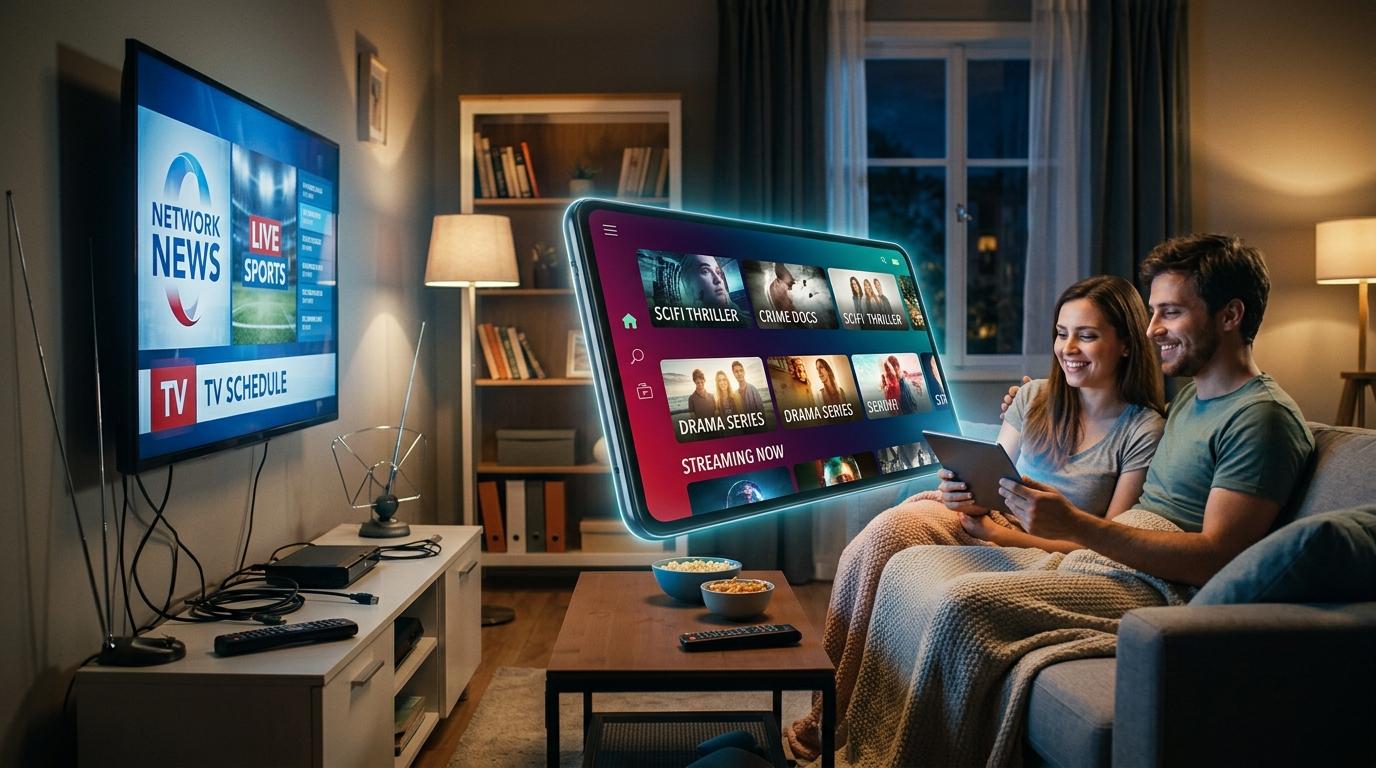
On-demand entertainment is one of the biggest forces behind this change. Instead of waiting for a scheduled broadcast, viewers can select available movies, television programs, documentaries, and other content whenever they are ready to watch. IPTV has also contributed to this shift by combining internet-based live television with features such as video-on-demand, electronic program guides, and multi-device access.
For households exploring Parivar IPTV, understanding how on-demand entertainment is changing television habits can help explain why internet-based viewing has become increasingly attractive. An Indian IPTV Set Top Box can also provide a dedicated way to enjoy compatible IPTV content on a television while retaining the familiar large-screen experience.
What Is On-Demand Entertainment?
On-demand entertainment refers to content that viewers can select and watch according to their own schedule rather than following a fixed broadcast timetable.
Traditional television follows a programmed schedule. If a show starts at 8:00 PM, viewers generally need to be available at that time unless the service provides a recording or replay option.
On-demand viewing changes that model.
Depending on the platform, viewers can browse available content and choose what they want to watch. This can include:
- Movies
- Television shows
- Documentaries
- Children's programs
- Sports-related content
- News programs
- Regional entertainment
- Special programming
Availability varies between services and depends on content rights.
The Shift From Scheduled Television to Flexible Viewing
For decades, television schedules influenced people's daily routines.
Families would organize evenings around popular programs. Viewers might rush home to watch a particular show or discuss the previous night's episode the following day.
On-demand entertainment has reduced the importance of these fixed schedules.
Today, someone can watch a program during lunch, late at night, on a weekend, or whenever they have free time.
This flexibility is especially valuable for people with busy or unpredictable schedules.
1. Viewers Have More Control Over Their Time
One of the biggest changes is the amount of control viewers have over when they watch entertainment.
A traditional schedule tells viewers when content is available.
On-demand entertainment allows viewers to choose when to watch available content.
This can be helpful for:
- Working professionals
- Students
- Parents
- Shift workers
- Travelers
- People with irregular schedules
Instead of changing their schedule around television, viewers can fit entertainment into their existing routine.
2. The Rise of Binge-Watching
On-demand entertainment has also changed how people consume television series.
Traditional television usually releases episodes according to a weekly schedule.
On-demand platforms may make multiple episodes available at once or provide extensive libraries of previously released content.
This encourages binge-watching, where viewers watch several episodes during one session.
Binge-watching has changed expectations around television storytelling. Viewers may become accustomed to watching an entire season over a weekend rather than waiting several months or weeks for individual episodes.
Not every IPTV service provides full-season libraries, but the broader on-demand trend has influenced how audiences expect to consume television.
3. Less Channel Surfing
Traditional television often involves scrolling through channels to find something interesting.
With hundreds of available channels, viewers may spend significant time searching without finding content they want.
On-demand platforms use menus, categories, search tools, and recommendations to make content discovery more organized.
Instead of asking, "What's on right now?" viewers can ask, "What do I want to watch?"
This represents a major shift in television habits.
4. Search Has Become More Important
Search functionality has become an important part of modern entertainment.
Viewers can search for:
- Movie titles
- Program names
- Actors
- Genres
- Channels
- Languages
- Categories
This can make large entertainment libraries easier to navigate.
IPTV platforms that provide search functionality can make it simpler to locate available content without manually browsing every channel.
5. Regional Content Is Easier to Discover
On-demand entertainment can also benefit viewers interested in regional programming.
Modern audiences may want movies and television shows in different languages depending on their preferences.
For Indian viewers, this can include Hindi, Tamil, Telugu, Malayalam, Kannada, Bengali, Marathi, Punjabi, Gujarati, and other regional content.
When researching Parivar IPTV, viewers can check what Indian and regional programming is currently available.
A well-organized content library can make it easier for families to discover entertainment that matches their language and cultural preferences.
6. Family Viewing Has Become More Flexible
Traditional television often required the entire family to agree on what to watch.
With on-demand entertainment, different members of a household may have more flexibility.
For example, parents may choose a movie after the children go to bed, while children can watch age-appropriate content at another time.
If a service supports multiple compatible devices and simultaneous streams according to its subscription terms, household members may also be able to watch different programming.
This makes the television experience more adaptable to modern family schedules.
7. Television Is No Longer Limited to One Screen
On-demand entertainment has expanded beyond the traditional television.
Depending on the service, viewers may be able to access compatible content through:
- Smart TVs
- Set-top boxes
- Smartphones
- Tablets
- Computers
- Streaming devices
This creates a multi-device entertainment environment.
A viewer can watch a movie on a large television at home and use a compatible mobile device for personal viewing at another time.
The exact device support depends on the service.
The Role of IPTV in On-Demand Entertainment
IPTV can combine traditional live television with modern internet-based features.
Instead of completely replacing live television, IPTV can bring different forms of entertainment together.
A service may provide:
Live TV + On-Demand Content + EPG + Multi-Device Access
This combination gives viewers both scheduled programming and flexible entertainment.
Someone can watch a live sports event while it is happening and later choose an available on-demand movie.
This balance can make IPTV attractive to households that still enjoy live television but want greater control over other entertainment.
8. Live TV Still Has an Important Role
The growth of on-demand entertainment does not mean that live television has disappeared.
Live programming remains important for:
- Sports
- Breaking news
- Special events
- Live entertainment
- Cultural programs
- Major broadcasts
The excitement of watching something as it happens is difficult to reproduce through on-demand viewing.
This is why modern entertainment increasingly combines both approaches rather than forcing viewers to choose one.
9. Time Zones Matter Less
International viewers can benefit significantly from on-demand entertainment.
Someone living outside their home country may face a time difference that makes live television difficult to follow.
For example, a program broadcast in the evening in one country could air during working hours somewhere else.
If the content is available on demand or through a catch-up feature, viewers may be able to watch it later.
This flexibility can be particularly valuable for international families and people living abroad.
10. The Indian IPTV Set Top Box and Modern Viewing
Although on-demand entertainment is strongly associated with apps and mobile devices, many viewers still prefer watching content on a traditional large television.
An Indian IPTV Set Top Box can provide a dedicated television-focused setup for compatible IPTV services.
Instead of relying exclusively on a phone, tablet, or computer, viewers can connect the set-top box to their television and use a remote control to navigate supported IPTV content.
This can create a bridge between traditional television habits and modern internet-based entertainment.
The device should be compatible with the chosen IPTV service and television.
How On-Demand Entertainment Changes Daily Routines
One of the most noticeable changes is that television is becoming less tied to a particular time of day.
A traditional schedule might look like:
8:00 PM → Favorite program → 9:00 PM → Another scheduled show
An on-demand routine can look more like:
Free time → Choose content → Watch
This may seem like a small change, but it represents a significant shift in how entertainment fits into everyday life.
11. Viewers Spend Less Time Waiting
Waiting for a favorite program to start is becoming less common.
When suitable on-demand content is available, viewers can often begin watching immediately.
This can reduce the amount of time spent searching through channels or waiting for something interesting to appear.
However, the available content still depends on the provider and licensing arrangements.
12. Personal Preferences Influence What People Watch
Traditional television schedules are designed for a broad audience.
On-demand libraries can provide a more personalized experience because viewers actively select content based on their interests.
Someone interested in documentaries can focus on documentaries. A movie enthusiast can browse movies. A family can look for children's programming.
This gives viewers greater control over their entertainment choices.
13. Advertising Habits Are Changing
Traditional television has historically relied heavily on scheduled advertising breaks.
Digital and on-demand entertainment has introduced different approaches to advertising and subscription models.
Depending on the platform, viewers may encounter advertisements, subscription-based access, or a combination of both.
The specific experience varies significantly between services.
14. The Importance of Internet Connectivity
On-demand entertainment depends heavily on internet connectivity.
If the internet connection is unstable, viewers may experience:
- Buffering
- Reduced video quality
- Playback interruptions
- Delayed loading
A reliable broadband connection is therefore important for IPTV and other internet-based entertainment services.
Households with multiple simultaneous streams should also consider total bandwidth requirements.
What Should You Look for in an IPTV Service?
If you are considering Parivar IPTV or another IPTV service, compare the features that actually matter to your household.
Content Selection
Check whether the service provides the channels, movies, shows, and regional programming you want.
On-Demand Library
Find out what type of on-demand content is available and whether it is included in your subscription.
Device Support
Confirm compatibility with your Smart TV, Indian IPTV Set Top Box, smartphone, tablet, or other preferred device.
EPG
An Electronic Program Guide can make live television easier to navigate.
Simultaneous Streams
Check how many devices can legally stream at the same time under the subscription.
Streaming Quality
Look at supported resolutions and make sure your internet connection is appropriate.
Customer Support
Reliable support can make setup and troubleshooting easier.
Content Authorization
Choose legitimate providers that have the appropriate rights to distribute their content.
How Parivar IPTV Fits Into Changing TV Habits
As viewers move toward flexible entertainment, Parivar IPTV can be researched as an internet-based television option for audiences interested in Indian and regional programming.
The important consideration is not simply the number of channels advertised. Viewers should examine available content, on-demand options, supported devices, streaming quality, subscription rules, and other features.
For households that prefer a dedicated television setup, an Indian IPTV Set Top Box can complement this type of entertainment environment when compatible.
The Future of Television Viewing
The future of television is likely to combine multiple viewing models.
Live television will continue to be important for real-time events, while on-demand entertainment will provide flexibility for movies, shows, and other content.
Smart TVs, IPTV services, streaming devices, and connected home networks are bringing these experiences together.
Rather than replacing traditional television completely, on-demand technology is changing what viewers expect from television.
People increasingly want:
Choice + Convenience + Flexibility + Accessibility
Final Thoughts
On-demand entertainment is changing traditional TV habits by giving viewers more control over when, where, and how they watch available content. Instead of planning daily schedules around television broadcasts, people can increasingly fit entertainment around their own routines.
IPTV contributes to this change by combining internet-based live television with features such as on-demand content, electronic program guides, regional programming, and multi-device access.
For viewers researching Parivar IPTV, it is worth examining the available live channels, on-demand content, supported devices, streaming quality, and subscription conditions. An Indian IPTV Set Top Box can also provide a familiar large-screen viewing experience while connecting to compatible internet-based television services.
The biggest change is simple: television is becoming less about "What's on now?" and more about "What do I want to watch?" As internet connectivity and connected devices continue to develop, this shift toward flexible, viewer-controlled entertainment is likely to remain an important part of the future of home television.
 Deutsch
 English
 Arabic
 French
 Spanish
 Portuguese
 Turkish
 Dutch
Dutch
 Italiano
 Russian
 Romaian
 Portuguese (Brazil)
 Greek
Greek