


Why Malaysian Manufacturers Are Rethinking How They Build Cleanrooms
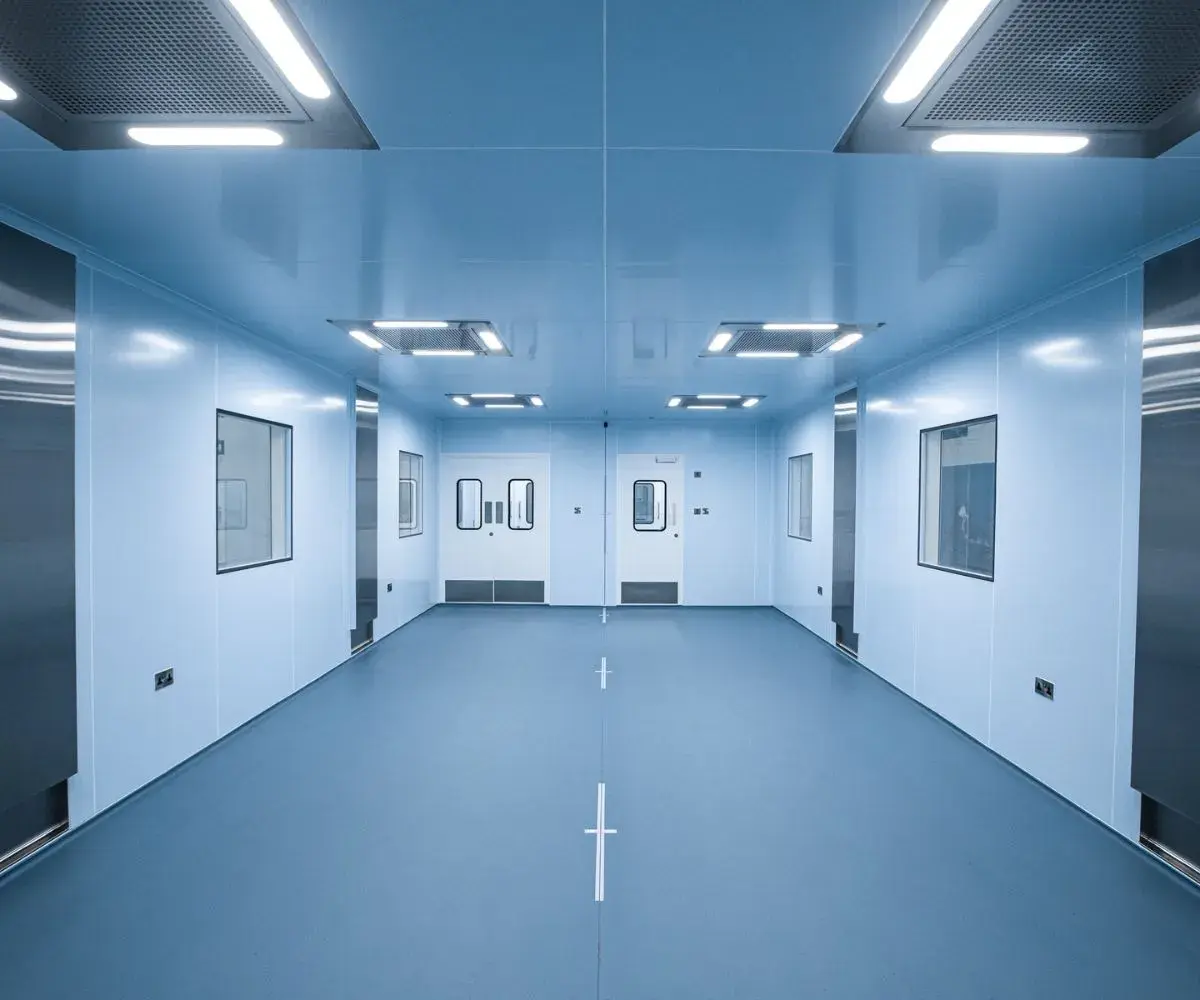
A few years ago, if you asked a plant manager in Penang how long a new cleanroom would take, the honest answer was usually “longer than you’d like.” The process meant block walls, on-site fabrication, ductwork routed around whatever the architect hadn’t planned for, and a commissioning phase that dragged on. Often that was because nobody had quite worked out how the space would behave during the wettest weeks of the monsoon.
That answer is starting to change. More manufacturers across Malaysia are now bringing in a specialist prefabricated cleanroom company instead of a general building contractor, and not just to save time. The way these facilities are designed, built and expanded is shifting, and it’s worth understanding why before you commit to either route.
The pressure behind the shift
Malaysia has spent decades building a reputation as a serious manufacturing base. Semiconductor assembly and testing in Penang and Kedah, medical device production in the northern corridor, and a growing pharmaceutical and nutraceutical sector in the Klang Valley all depend on controlled environments.
What has changed is the pace. A customer wins a contract, a new product line gets approved, or an audit flags a gap, and suddenly the facility needs a compliant cleanroom in months rather than years. Traditional construction struggles with that timeline. Every week spent waiting on wet trades is a week of revenue the business isn’t earning.
Regulation adds to the pressure. Pharmaceutical manufacturers answer to the NPRA and to GMP standards aligned with PIC/S. Medical device makers face their own audit trail. Electronics firms are held to ISO 14644 classifications by demanding global customers. None of these bodies care how the room was built, but all of them care whether it performs consistently and whether you can prove it.
What “prefabricated” really means
There’s still some confusion about the term. A prefabricated cleanroom isn’t a tent or a temporary enclosure, although those exist for other purposes. It’s a permanent, engineered facility whose main components are manufactured off-site to precise specifications and assembled inside an existing building.
Typically, that includes insulated wall and ceiling panels with flush, cleanable surfaces. It also covers integrated door and window systems, pre-designed ceiling grids for fan filter units or HEPA terminals, and service routes planned before anything arrives on site. Because so much is built in a controlled factory setting, tolerances are tighter, and there’s far less dust, debris and guesswork during installation.
The practical result is that assembly can take weeks rather than months, and disruption to the rest of the facility stays manageable.
The climate problem nobody should ignore
Here’s something that tends to get overlooked in sales conversations. In Malaysia, the panels are rarely the hard part. The air is.
High ambient humidity year-round puts serious demands on HVAC and dehumidification. A cleanroom that looks immaculate on handover day can drift out of specification once the rainy season arrives, if the air handling wasn’t sized with local conditions in mind. Static electricity, condensation on cold surfaces and microbial risk all follow humidity closely.
So when you’re comparing options, spend at least as much time on the mechanical design as on the walls. A good supplier will ask about your process heat loads, gowning traffic, pressure cascades and peak humidity before quoting anything. If they don’t ask, that tells you something.
Where prefab makes sense, and where it doesn’t
It would be dishonest to claim prefabricated systems suit every project. They work particularly well when:
- You’re fitting a cleanroom into an existing warehouse or factory shell
- Speed to production matters commercially
- You expect to expand, reconfigure or relocate in future
- You need a consistent, repeatable finish across several sites
They’re less suited to enormous, highly bespoke facilities where the building itself is being designed around the process from the ground up. In those cases, a hybrid approach often makes more sense, with conventional structure and prefabricated internal systems.
The flexibility point deserves more attention than it usually gets. Product lines change. A modular room can often be extended or reconfigured without demolishing what’s already there. For a growing business, that adaptability can be worth more than the time saved on the first build.
Choosing the right partner
Most problems with cleanroom projects don’t come from the concept. They come from the choice of supplier. Before you sign, it’s worth asking a few direct questions:
What validation support do you provide? Look for help with design, installation and operational qualification documents, not just a test certificate at the end.
Who handles certification testing? Particle counts, airflow velocity, filter integrity and pressure differentials should be tested against the ISO class you actually need.
Is there local support after handover? Filters need replacing and equipment needs servicing. A supplier who disappears after commissioning leaves you exposed at your next audit.
What are the panels made of, and why? Pharmaceutical, electronics and food applications each have different priorities for cleanability, fire performance and chemical resistance.
How easily can the room grow? Ask to see how a future expansion would actually work.
Working with an experienced prefabricated cleanroom company in Malaysia that understands both international standards and local operating conditions removes a lot of the risk from these decisions. You want people who have already dealt with the humidity, the regulators and the logistics, not people learning on your project.
The bigger picture
The move towards prefabricated cleanrooms isn’t really about construction methods. It reflects how Malaysian manufacturing itself has changed. Facilities need to respond quickly, prove compliance consistently and adapt as products and customers evolve.
A cleanroom used to be treated as a fixed piece of infrastructure, built once and left alone. Increasingly, it’s treated as a working asset that should keep up with the business around it. If you’re planning one now, that’s the mindset to start with.
 Dutch
 English
 Arabic
 French
 Spanish
 Portuguese
 Deutsch
 Turkish
 Italiano
 Russian
 Romaian
 Portuguese (Brazil)
 Greek