


Identity Verification Service: KYC and NFC Identity Verification
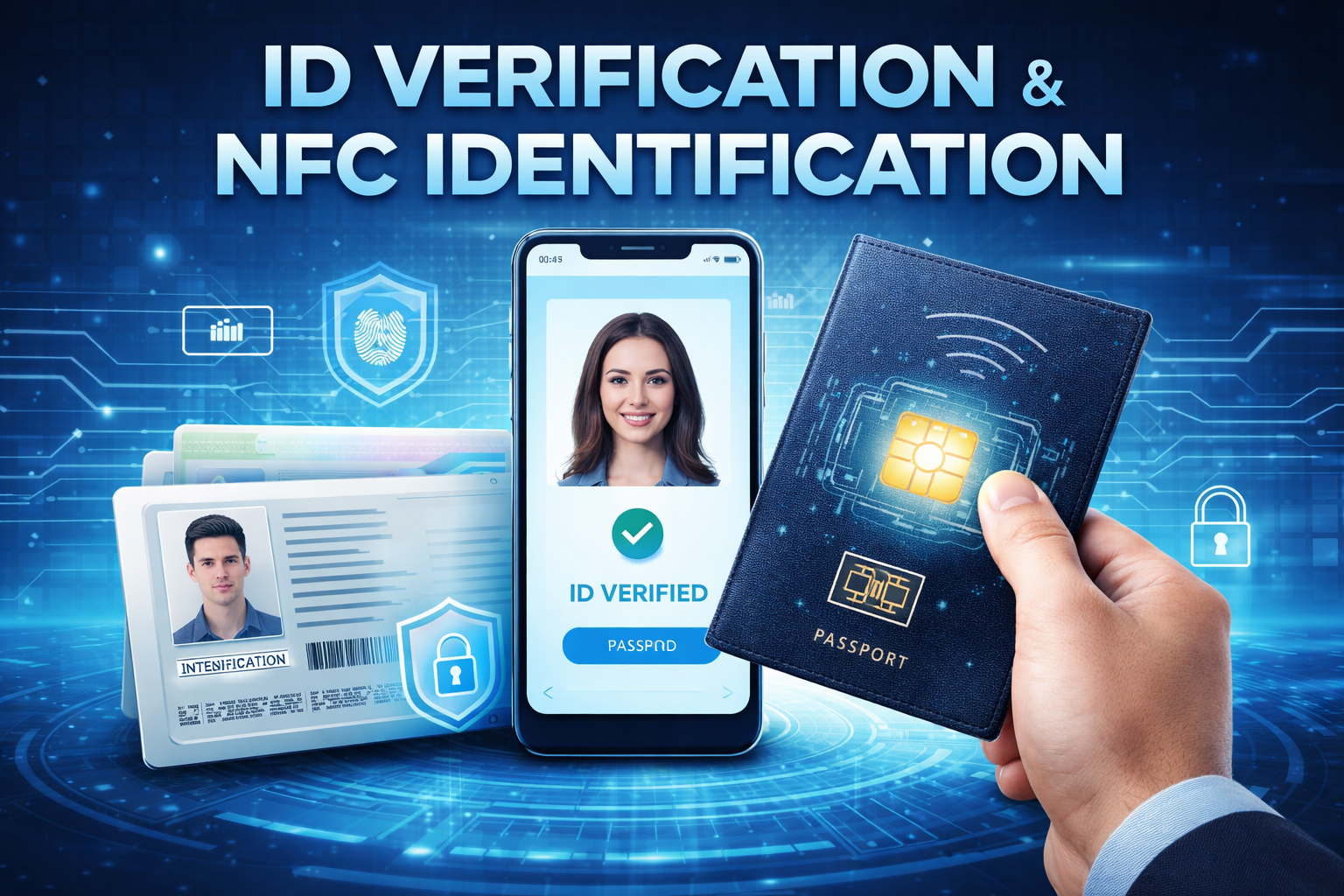
As businesses move more services online, verifying a customer’s identity has become an essential part of secure digital onboarding. An identity verification service kyc helps organizations confirm that a person is genuine before providing access to financial, healthcare, telecom, e-commerce, and other digital services. Modern KYC solutions combine document verification, biometric checks, liveness detection, and technologies such as NFC to create a faster and more secure verification process.
What Is an Identity Verification Service?
An identity verification service verifies customer information using trusted identity documents and biometric data. During digital onboarding, users can submit a government-issued ID, capture a selfie, and complete additional security checks. The system can compare information from the document with the user’s face while checking whether the document appears authentic.
The FIDO Alliance recognizes document authentication and face verification as important components of remote identity verification, particularly for secure account creation and recovery.
How KYC Verification Works
KYC, or Know Your Customer, is the process businesses use to establish and verify customer identity. A digital KYC workflow can include document capture, OCR data extraction, document authenticity checks, selfie verification, and liveness detection.
A typical KYC process follows these steps:
- The customer uploads or captures an identity document.
- The system extracts important information from the document.
- Security features and document data are analyzed.
- The customer completes a selfie or biometric verification.
- The system compares the biometric information with the document.
- The verification result is provided to the business.
This automated approach can reduce manual verification work while creating a smoother onboarding experience.
What Is NFC Identity Verification?
NFC identity verification uses Near Field Communication to read information stored inside compatible identity documents. Instead of relying only on a photograph of a document, an NFC-enabled smartphone can communicate with an embedded chip when supported by the document.
Modern identity documents may contain embedded chip technology such as NFC or RFID. FIDO’s document authenticity requirements include chip-based documents among higher-security document categories.
NFC verification can provide additional data for identity checks, helping businesses compare information from the document chip with information captured during the verification process.
Benefits of KYC and NFC Verification
Combining digital KYC with NFC identity verification can provide several benefits:
- Faster customer onboarding
- Reduced manual verification
- Stronger document authentication
- Better fraud detection capabilities
- Improved customer experience
- Support for remote identity verification
- Additional verification data from compatible NFC documents
NFC can be particularly useful when businesses need stronger assurance than image-based document verification alone.
Choosing the Right Identity Verification Solution
Businesses should evaluate an identity verification service based on security, accuracy, integration options, user experience, document coverage, and scalability. A strong solution should support multiple verification methods and provide reliable results without creating unnecessary friction for legitimate customers.
As digital fraud continues to evolve, combining KYC, biometric verification, document authentication, and NFC identity verification can help businesses build a more secure digital onboarding process while maintaining a convenient experience for customers.
 Turkish
 English
 Arabic
 French
 Spanish
 Portuguese
 Deutsch
 Dutch
Dutch
 Italiano
 Russian
 Romaian
 Portuguese (Brazil)
 Greek
Greek