


The Workout Wardrobe Audit: When to Replace Training Gear and What to Check
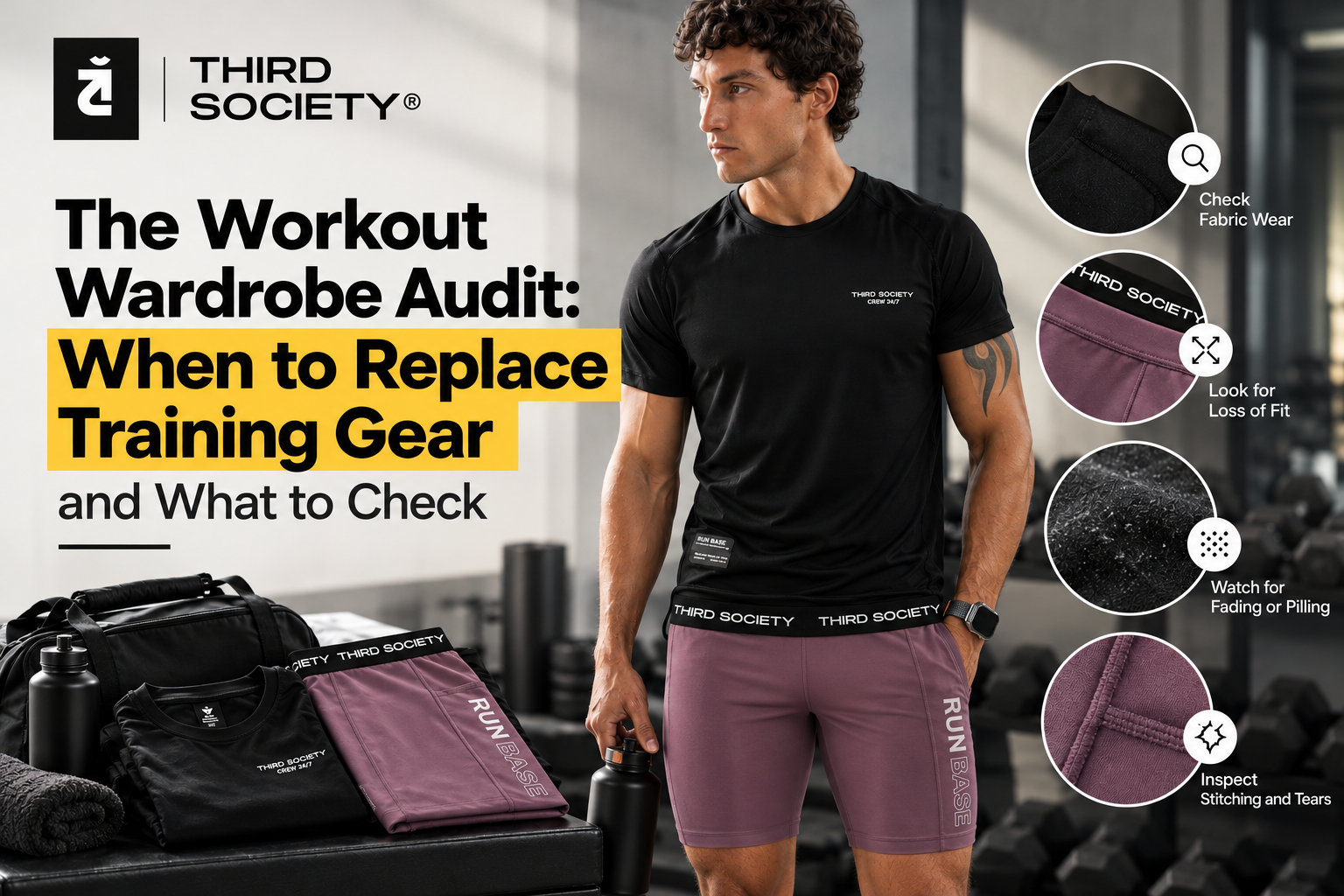
A workout wardrobe usually grows one item at a time: a top bought before joining the gym, shorts added for summer running, a favourite tank worn for years and a few pieces that seemed useful but rarely leave the drawer. Periodically reviewing the collection can make training simpler. It helps identify what still works, what needs different care and what no longer feels suitable for the activities you do.
Replacing clothing is not a matter of following a strict timeline. Wear depends on fabric, frequency of use, how garments are washed and the demands of each session. A practical audit focuses on condition and performance rather than age alone.
Start With Comfort During Movement
The most important question is whether the garment still feels right when you train. Put it on and move through a few actions that resemble your usual workout: reach overhead, bend, squat, rotate your shoulders or jog in place. Look for repeated tugging, twisting, slipping or pulling that distracts you from the session.
Fit changes can come from wear, washing, body changes or the fact that the garment was never suitable for that activity. If an item consistently restricts movement or requires adjustment, it may be better reserved for low-demand use or replaced with something better suited to the session.
Inspect Seams, Waistbands and Stress Points
Check the areas that experience repeated tension. On tops, look at shoulder seams, armholes, side seams and the neckline. On shorts or tights, inspect the waistband, inner-thigh seams and areas that stretch during squats or running. Loose stitching, holes, a waistband that no longer stays in place or fabric that has become noticeably thin are useful signals to review the garment.
A small loose thread does not always mean an item must be discarded, and some damage may be repairable. The decision depends on whether a repair restores comfortable use and whether the garment remains suitable for the workout.
Check Stretch and Shape Recovery
Stretch fabrics should move with the body, then return reasonably close to their intended shape. If knees or elbows remain baggy, a waistband has lost its hold or a top hangs differently after every wash, performance may have changed. Compare the item with a newer garment of a similar design if you are unsure, but remember that different fabric blends behave differently.
Do not judge quality on thickness alone. A heavier fabric may provide more structure, but the right choice depends on the design and activity. Look at fit, construction, comfort and care requirements together.
Notice Persistent Odour and Fabric Build-Up
Sometimes a garment looks fine but develops an odour soon after a workout. Review the washing process first: follow the care label, avoid leaving sweaty clothing bundled in a bag, allow garments to dry properly and use a suitable wash routine. Fabric type, detergent build-up and delayed washing can all influence how a garment smells.
If the problem continues after the care routine is corrected, consider whether the item is still comfortable and hygienic for its intended use. Avoid assuming a single washing trick works for every fabric. Care instructions are more reliable than applying high heat or strong chemicals that could damage stretch, prints or fibres.
Match Each Item to a Real Job
A useful wardrobe has garments that match actual routines. A relaxed top may be ideal for strength training, while a different fit may feel better during a run. If a piece is uncomfortable for the session you bought it for, ask whether it has another practical use before replacing it. The goal is to avoid both extremes: keeping unusable gear out of habit and replacing items that remain perfectly functional.
-
Keep pieces that are comfortable, fit for purpose and in good condition.
-
Repair minor damage when the fix is durable and practical.
-
Reassign an item to light or casual use if it no longer suits demanding training but remains wearable.
-
Replace garments when damage, poor fit or reduced comfort affects use.
Build a Smaller, More Useful Rotation
Once the audit is complete, group what remains by purpose: gym sessions, running, recovery or everyday wear. Notice whether there is a genuine gap, such as not having a comfortable top for warm-weather workouts, or whether the problem was simply that the existing items were stored poorly. A smaller rotation of reliable pieces is often easier to maintain than a crowded drawer of almost-right options.
When you do need to add something, compare the fit, material, construction and care instructions before choosing. Browsing activewear collections or the range of tank tops for men can help you explore available styles, but the right purchase is the one that suits your training and comfort preferences.
FAQs
How often should workout clothes be replaced?
There is no universal replacement schedule. Inspect garments regularly and base the decision on fit, damage, stretch, comfort, odour and how the item is used.
Can activewear be repaired?
Small seam issues or loose threads may be repairable, depending on the location and the garment construction. Replace an item if the repair cannot restore safe, comfortable use.
Why do some gym clothes lose their shape?
Repeated stretching, friction, washing and drying conditions can affect fibres and elastic components. Follow the care label and assess the garment by its current fit and performance rather than by its original appearance.
 French
 English
 Arabic
 Spanish
 Portuguese
 Deutsch
 Turkish
 Dutch
 Italiano
 Russian
 Romaian
 Portuguese (Brazil)
 Greek