


Best Embroidery Logo Ideas for Shirts, Hats, and Jackets
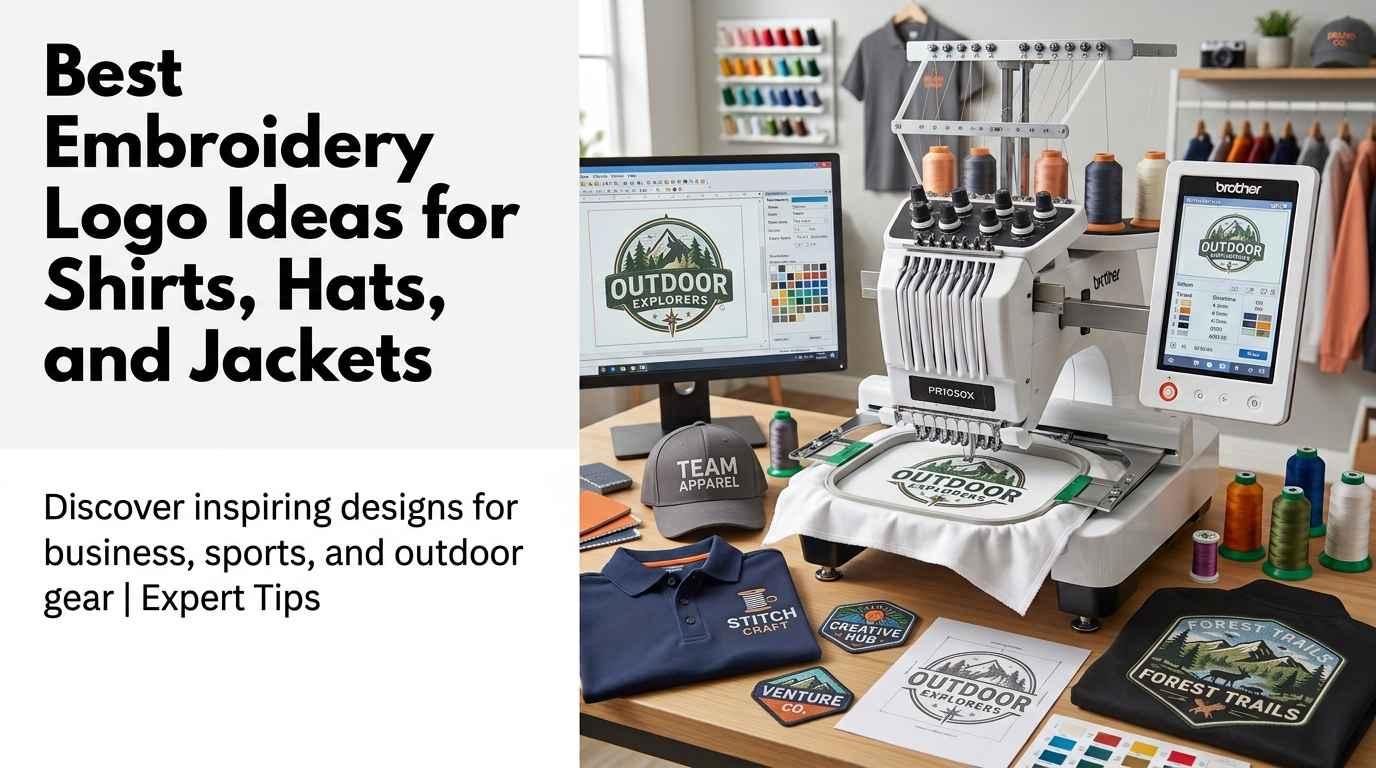
The best embroidery logo ideas for shirts, hats, and jackets combine clear design, readable lettering, suitable colors, and practical stitching requirements. Businesses use embroidered logos on employee uniforms, promotional merchandise, team apparel, and branded clothing to maintain consistent visual identity across different products.
However, a logo that looks good on a computer screen may need adjustments before it can be embroidered. Small lettering, thin lines, complex illustrations, and crowded layouts can become difficult to reproduce with thread, especially on smaller areas such as cap fronts and shirt pockets.
Choosing the right logo style for each garment helps maintain readability and balance. A simple company name may work well on a polo shirt, initials may suit a cap, and a larger emblem may be appropriate for a jacket back. The design should reflect your brand while accounting for the size, material, and construction of the garment.
This guide covers practical embroidery logo ideas for shirts, hats, and jackets, along with tips for selecting colors, preparing artwork, and achieving suitable results through professional digitizing.
Why Choose an Embroidery-Friendly Logo?
Embroidery creates designs with physical thread rather than printed ink. This gives logos a textured appearance, but it also introduces technical limitations that should be considered during design preparation.
An embroidery-friendly logo uses shapes, lettering, and spacing that can be reproduced at the intended size. Its most important elements remain recognizable, and the design fits the available stitching area.
For businesses, this can help create consistent branding across staff uniforms, workwear, event clothing, and promotional products.
A suitable logo does not have to be basic or lack personality. Detailed artwork can also work when the design is prepared correctly and any elements that are too small are adjusted.
1. Best Embroidery Logo Ideas for Shirts
<AsyncImageGroup query={["embroidered company logo left chest polo shirt professional uniform","minimal embroidered wordmark on cotton work shirt","embroidered business emblem on uniform polo shirt close up"]} aspectRatio="5:4" layout="bento" />
Shirts are among the most common products used for business logo embroidery. Polo shirts, work shirts, and T-shirts can carry company branding for employees, sales teams, hospitality staff, and promotional events.
The best shirt logo depends on the garment style, available space, and how the clothing will be used.
Minimal Left-Chest Logo
A small logo on the left chest is a practical choice for corporate uniforms, retail teams, restaurants, and service businesses. It can include a company symbol with a short business name.
This placement generally benefits from a balanced layout and readable lettering. Avoid including too many details in a small space, particularly if the company name is long.
Company Name With a Simple Symbol
Pairing the business name with a recognizable icon can help customers identify the company. A cleaning business might use a simple sparkle or cleaning-related symbol, while a landscaping company might use a leaf or plant graphic.
Choose an icon that remains recognizable when reduced to embroidery size. Complicated illustrations may require simplification before digitizing.
Department or Employee Name Embroidery
Businesses can combine a company logo with an employee's name or department label when the garment has enough space. This can be useful for hospitality, healthcare, retail, and customer-facing teams.
Keep the company logo and personal text visually balanced. If both elements are embroidered separately, ensure their placement and spacing are consistent across the uniform order.
Tone-on-Tone Shirt Logos
Tone-on-tone embroidery uses thread that is similar to the garment color. For example, navy thread on a navy shirt can create a subtle, textured effect.
This approach may suit premium workwear or understated branding. However, it reduces contrast, so it may not be appropriate when the logo needs to be easily visible from a distance.
2. Best Embroidery Logo Ideas for Hats and Caps
<AsyncImageGroup query={["embroidered minimalist logo on black baseball cap front","embroidered company initials on structured baseball hat","embroidered business logo on trucker cap close up"]} aspectRatio="5:4" layout="bento" />
Caps offer a compact area for business branding. They are popular for promotional campaigns, sports teams, outdoor businesses, staff uniforms, and merchandise.
Because cap fronts are curved and may include seams, designs should be prepared with particular attention to size, detail, and stitch sequence.
Initials or Monogram Logos
A monogram uses one or more letters to represent a business or brand. This can be a useful option when the full company name is too long for the cap's available space.
Choose letters with clear shapes and sufficient spacing. Decorative typography can work, but very thin strokes and tightly connected characters may become difficult to reproduce.
Bold Symbol Logos
A simple icon can work well on the front of a cap. Examples include a geometric mark, an animal silhouette, a sports symbol, or an industry-related graphic.
The design should remain recognizable without relying on small internal details. If the original logo is complex, a simplified cap version may be more practical.
Short Wordmark Logos
A short business name or brand wordmark can be suitable for cap embroidery when the lettering fits the available area.
Before digitizing, check the width of the front panel and the position of any center seam. A design should not be resized or positioned without considering the cap's construction.
Side-Panel Logo Ideas
The side of a cap may suit a small symbol, initials, or a short label. This placement can complement a larger front logo without overcrowding the main design.
Confirm the available area on the specific cap model before finalizing the artwork.
3. Best Embroidery Logo Ideas for Jackets
<AsyncImageGroup query={["embroidered company logo on left chest work jacket","large embroidered team emblem on back of varsity jacket","embroidered business logo on sleeve of softshell jacket"]} aspectRatio="5:4" layout="bento" />
Jackets offer several placement options, including the left chest, back, sleeve, and upper arm. They are commonly used for corporate workwear, construction teams, outdoor businesses, sports clubs, and promotional apparel.
The appropriate logo depends on the jacket material, construction, and intended use.
Professional Left-Chest Logo
A compact logo on the left chest is suitable for staff jackets and branded outerwear. It can include the company name, a symbol, or a combination of both.
The design should fit comfortably within the available area and remain readable when the jacket is worn. Avoid placing important details too close to pockets, zippers, or seams.
Large Back Logo
A larger logo on the back can provide more room for company names, team emblems, or detailed graphics. This placement may be suitable for event teams, sports groups, and businesses that need visible branding.
Larger designs may involve higher stitch counts and longer production times. The digitizer should consider the jacket's material and construction to avoid excessive density or stiffness.
Sleeve Logo
Sleeve embroidery can carry a small icon, initials, department label, or short brand name. Since sleeves have limited width and may curve around the arm, a compact design is usually easier to position.
Check how the logo will sit when the jacket is worn, not only when the garment is laid flat.
Team or Club Emblem
A badge-style logo can work well for sports teams, clubs, and organizations. It may include a symbol, team name, or founding year.
For embroidery, make sure the text remains readable and the border is suitable for the chosen dimensions. Very small lettering around a circular emblem may need adjustments.
4. Choose the Right Logo Style for Your Business
The most suitable embroidery logo style depends on your brand identity and the products you plan to use.
| Logo style | Suitable applications | Main consideration |
|---|---|---|
| Wordmark | Shirts, jackets, workwear | Lettering must remain readable |
| Monogram | Caps, sleeves, small placements | Letter shapes need sufficient spacing |
| Symbol or icon | Shirts, hats, jackets | The symbol should be recognizable |
| Combination logo | Uniforms and branded apparel | Text and symbol must fit together |
| Badge or emblem | Team jackets, clubs, workwear | Small text and borders need careful planning |
| Simplified logo | Small placements and caps | Preserve the most important brand features |
A business may use more than one version of its logo. For example, a complete logo can appear on a jacket back, while a simplified symbol is used on a cap.
The versions should maintain consistent brand elements, even when their layout or dimensions differ.
5. Select Thread Colors That Suit the Garment
Thread colors influence the visibility and overall appearance of embroidered logos. Choose colors that reflect the brand while providing enough contrast against the material.
Use High-Contrast Combinations
Light thread on dark fabric and dark thread on light fabric can make logos easier to read. However, the ideal combination depends on the brand's color requirements and the intended appearance.
If the business requires specific colors, review available thread charts and select suitable matches before production.
Keep the Color Palette Practical
A logo with several colors can be embroidered, but each additional color may require more thread changes and production time. A limited palette can simplify production and help maintain consistency across large uniform orders.
Do not remove an essential brand color simply to reduce complexity. Instead, review whether the design can be simplified without changing the company's identity.
Consider Different Garment Colors
If the logo will appear on black, white, navy, and other garment colors, check the contrast for each version. Alternate thread colors or an adjusted outline may be necessary to maintain readability.
Record the approved thread colors so repeat orders can follow the same specifications.
6. Choose Fonts and Details That Work With Thread
Lettering is often one of the most challenging elements of small embroidery logos. A font that looks clear on a screen may lose detail when converted into stitches.
Prefer Readable Lettering
Fonts with clear letter shapes and suitable stroke widths are often practical for embroidery. Extremely thin strokes, elaborate flourishes, and tightly spaced letters may be difficult to reproduce at small sizes.
The appropriate font depends on the final dimensions, stitch type, and fabric. Review the logo at its actual size before approving the design.
Avoid Overcrowding the Artwork
A logo that contains a business name, slogan, website address, telephone number, and multiple symbols may have too much information for a small placement.
Prioritize the information customers need to recognize. Use a complete version for larger areas and a simplified version for caps or small shirt placements when necessary.
Review Fine Lines and Small Gaps
Thin outlines and narrow gaps may disappear or become filled with stitches. The digitizer may need to widen certain shapes, adjust spacing, or remove details that do not affect brand recognition.
These changes should be made carefully to preserve the original design's identity.
7. Understand How Embroidery Digitizing Affects the Result
After choosing a logo, the artwork must be converted into a machine-readable embroidery file. This process is known as embroidery digitizing.
Digitizing determines the stitch types, directions, density, underlay, and sewing sequence used to construct the design. Appropriate planning helps the logo reproduce more accurately on the intended garment.
Stitch Types
Satin stitches are commonly used for lettering and narrow shapes. Fill stitches cover larger areas, while running stitches can be suitable for selected outlines and fine details.
The digitizer chooses a combination based on the artwork, dimensions, and fabric rather than applying the same method to every element.
Stitch Density
Stitch density affects how closely the stitches are placed together. Excessive density can contribute to stiffness, thread buildup, or puckering, while insufficient density may leave gaps or poor coverage.
Suitable settings depend on the design and production conditions.
Underlay and Stitch Direction
Underlay provides support beneath visible stitches. Stitch direction influences texture, coverage, and the appearance of different shapes.
These settings should be planned according to the material, design dimensions, and desired result.
Machine File Compatibility
Common embroidery formats include DST, PES, JEF, and EXP. The correct format depends on the embroidery machine or software being used.
Confirm the required format before ordering. Changing a filename extension does not convert an artwork file into a functional embroidery file.
8. Prepare Your Logo Before Ordering Embroidery
Clear artwork and accurate instructions help a digitizer understand the intended design. A vector file is often useful because it preserves defined shapes, although a high-resolution image may also be suitable.
Before placing an order, provide:
-
The clearest available version of the logo.
-
The garment type and material, if known.
-
The intended placement.
-
The desired width and height.
-
Required thread colors or brand color references.
-
The embroidery machine's required file format.
If the artwork includes gradients, tiny lettering, or intricate illustrations, ask whether any elements need to be simplified. Digitizing cannot automatically recover missing information from a blurry or incomplete image.
Also confirm whether artwork cleanup, additional formats, and revisions are included in the service price.
9. Test the Design Before Bulk Production
A digital preview helps you review the layout, but a test stitch provides a more realistic assessment of the finished embroidery. It allows you to check how the logo behaves on the intended garment or a comparable material.
During testing, review the lettering, spacing, color boundaries, alignment, and stitch coverage. Look for puckering, distorted shapes, or details that become unclear after stitching.
If the result is not satisfactory, review both the digitized file and the production setup. Hooping, stabilization, thread tension, needle choice, and machine settings can also affect the outcome.
Testing is particularly useful when preparing uniforms for a large team or ordering embroidered products for resale.
10. Common Embroidery Logo Mistakes to Avoid
Using too much detail: Intricate artwork may become unclear at small sizes. Simplify unnecessary elements while preserving brand recognition.
Choosing unreadable fonts: Thin lettering and tight spacing can make names difficult to read. Review the font at the intended dimensions.
Ignoring garment construction: Caps, jackets, and shirts have different materials and stitching areas. Prepare the design for the actual product.
Using unsuitable colors: Low contrast can make a logo difficult to see. Review the thread and garment combination before production.
Resizing a stitch file without review: Significant changes in size can affect stitch coverage and detail. The design may require additional digitizing adjustments.
Skipping the test stitch: A digital preview cannot reveal every production issue. Test the design when practical, particularly before bulk orders.
11. How to Choose an Embroidery Digitizing Service
If you need help preparing a logo, compare digitizing providers based on relevant experience, sample quality, communication, and service terms.
Review examples that match your intended garment. A provider experienced in cap embroidery may be better suited to a curved cap logo than a service that mainly prepares flat garment designs.
Ask whether the price includes the required machine file format, revisions, and artwork adjustments. Confirm delivery time and provide accurate details about the intended dimensions and material.
You should also understand how the provider handles issues discovered during a test stitch. A clear revision policy can help you determine what support is available if adjustments are required.
Consider overall value rather than price alone. A suitable file should meet the project's requirements and be prepared for the intended embroidery application.
Conclusion
The best embroidery logo ideas for shirts, hats, and jackets combine brand recognition with practical stitching requirements. A left-chest wordmark, a cap monogram, a jacket-back emblem, or a compact sleeve symbol can all work well when the design suits the garment and intended size.
Before ordering, review the logo's lettering, shapes, colors, and dimensions. Provide clear artwork, confirm the required embroidery format, and work with a digitizer who understands the material and placement. Testing the design before bulk production can help identify issues early.
For professional assistance preparing logos for machine embroidery, ZDigitizing.net is an option to consider when comparing digitizing providers. Choose a service that understands your requirements and prepares the file for your garments, equipment, and production needs.
Frequently Asked Questions
Q1: What are the best embroidery logo ideas for shirts?
Minimal left-chest logos, company names paired with simple symbols, and readable wordmarks are popular options for shirts. The best choice depends on the available space and the business's branding needs.
Q2: Which logos work best on hats and caps?
Monograms, bold symbols, and short wordmarks are often practical for caps because the front panel has limited space and a curved surface. Detailed designs may require simplification.
Q3: What type of logo is suitable for jacket embroidery?
Compact left-chest logos, sleeve symbols, team emblems, and larger back designs can work well on jackets. The design should suit the jacket's construction, available area, and material.
Q4: Can the same logo be used on shirts, hats, and jackets?
Yes, but the dimensions or digitizing settings may need adjustments. A simplified version may be more suitable for caps, while a larger version may work on a jacket back.
Q5: Which colors are best for embroidered business logos?
Choose thread colors that reflect your brand and provide sufficient contrast against the garment. Review the actual thread shades and fabric combination before approving production.
Q6: Why does an embroidery logo need digitizing?
Digitizing converts artwork into machine-readable stitch instructions. It determines stitch types, directions, density, underlay, and sewing sequence so the design can be embroidered.
Q7: Can detailed logos be embroidered on small garments?
Some detailed logos can be embroidered, but tiny text, thin lines, and narrow gaps may need adjustment. The final result depends on the design, dimensions, fabric, and digitizing quality.
Q8: Should I test an embroidered logo before ordering in bulk?
Yes, whenever practical. A test stitch helps assess readability, alignment, coverage, and fabric behavior before using the design for a large production order.
 Dutch
 English
 Arabic
 French
 Spanish
 Portuguese
 Deutsch
 Turkish
 Italiano
 Russian
 Romaian
 Portuguese (Brazil)
 Greek