


DHI Direct Hair Implant in Dubai Consultation Guide
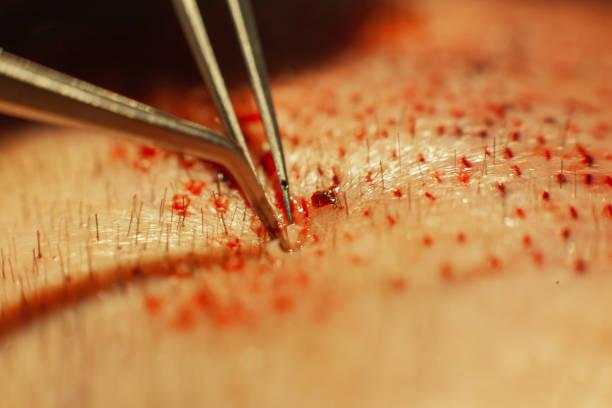
A good hair-transplant consultation should answer more than “How many grafts do I need?” Before choosing DHI Direct Hair Implant in Dubai, patients should understand their hair-loss pattern, donor capacity, proposed recipient areas, treatment limitations, and long-term plan.
The consultation is where technical details become specific to the individual. A standardized graft number or generic before-and-after image cannot replace an assessment of the actual scalp and donor region.
What Happens During a DHI Direct Hair Implant in Dubai Consultation
A detailed consultation generally begins with the patient's hair history.
The clinician may discuss when thinning started, which areas have changed, previous procedures, family patterns, styling practices, and previous treatments.
Examining the Recipient Area
The recipient area is assessed for:
- Existing density
- Hair calibre
- Follicular-unit characteristics
- Hair direction
- Areas of reduced coverage
- Frontal and temporal structure
- Crown or mid-scalp changes
The purpose is to determine what actually needs treatment rather than assuming that every visible area requires grafts.
Assessing the Donor Area
The donor region is equally important.
A clinician may evaluate density, follicular-unit composition, hair calibre, scalp characteristics, and the amount of harvesting that can reasonably be considered without compromising the donor area's appearance.
Questions to Ask About DHI Direct Hair Implant in Dubai
Patients can take several practical questions into their consultation.
Ask About Your Diagnosis
“Why is my hair thinning in this pattern?”
Understanding the likely pattern of hair loss helps distinguish between localized thinning and a broader process affecting native follicles.
Ask About Donor Capacity
“How many suitable grafts do I realistically have?”
The important word is realistically. A graft estimate should relate to the actual donor region rather than being presented as an arbitrary target.
Ask About Graft Distribution
“Where will the grafts be placed?”
A treatment plan should explain how follicles will be allocated between priority areas and why certain regions receive more attention than others.
Ask About Native Hair
“What happens to the hair I still have?”
This is particularly important when transplantation is planned between existing follicles. The treatment strategy should consider how native hair may change over time.
DHI Direct Hair Implant in Dubai and Technique Questions
Patients often hear the term DHI without understanding what it describes.
DHI generally refers to direct implantation of extracted follicular units using an implanter device. In many modern workflows, the follicles are obtained through follicular-unit extraction, while DHI describes the implantation approach.
Ask Who Performs Each Stage
Patients can ask who is responsible for:
- Donor assessment
- Hairline or recipient design
- Follicular extraction
- Graft handling
- Implantation
- Post-treatment monitoring
Understanding the clinical workflow can make the consultation more informative.
Ask About Graft Handling
Grafts are delicate structures.
It is reasonable to ask how they are handled between extraction and implantation and how the clinical team aims to protect graft integrity throughout the procedure.
Understanding the Expected Timeline
Hair transplantation is not an instant cosmetic change.
The newly implanted follicles require time to progress through their growth cycle.
Early Period
The scalp can undergo temporary changes after treatment, and patients should follow the treating team's instructions rather than judging the outcome immediately.
Growth Phase
Visible growth develops progressively.
The timing and density of growth vary between individuals, so clinicians should avoid promising a specific result on a fixed schedule.
Maturation
The appearance of transplanted hair can continue to evolve as the follicles mature.
This is why before-and-after comparisons are most useful when the timing of each photograph is known.
Questions About Long-Term Planning
A useful consultation should also address what happens beyond the first procedure.
Patients can ask:
- Could my native hair continue thinning?
- How much donor hair should be preserved?
- If additional treatment becomes necessary, what options could remain?
- Which areas should receive priority today?
- How does the proposed plan account for future hair changes?
These questions help shift the discussion from short-term density to long-term donor management.
Dubai Lifestyle Questions
Patients living in Dubai may also want to discuss practical matters around their schedule.
Questions can include:
- When can normal work routines resume?
- How should direct sunlight be managed?
- When can exercise be restarted?
- How should travel be planned?
- When are follow-up visits required?
- What scalp-care products are recommended?
The answers should come directly from the treating clinical team because recovery instructions vary between patients.
Red Flags in Hair-Transplant Discussions
Patients should be cautious about guarantees of unlimited density or claims that a particular technique produces identical results for everyone.
A responsible consultation should acknowledge donor limitations, individual biology, ongoing native hair loss, and the fact that outcomes vary.
Why Graft Numbers Need Context
“More grafts” is not automatically equivalent to “better restoration.”
The distribution, follicular-unit composition, recipient-site design, donor condition, and long-term strategy all influence the clinical plan.
Building a Better DHI Treatment Plan
The most useful consultation is one where the patient understands what is being proposed and why.
A personalized assessment can establish whether DHI is suitable, which areas should be prioritized, how donor follicles may be allocated, and what limitations should be expected.
Patients considering DHI Direct Hair Implant in Dubai can explore Tajmeels Clinic for consultation and individualized hair-restoration planning.
 Dutch
Dutch
 English
 Arabic
 French
 Spanish
 Portuguese
 Deutsch
 Turkish
 Italiano
 Russian
 Romaian
 Portuguese (Brazil)
 Greek
Greek