


When Can You See Results After Hair Fillers Treatment in Dubai
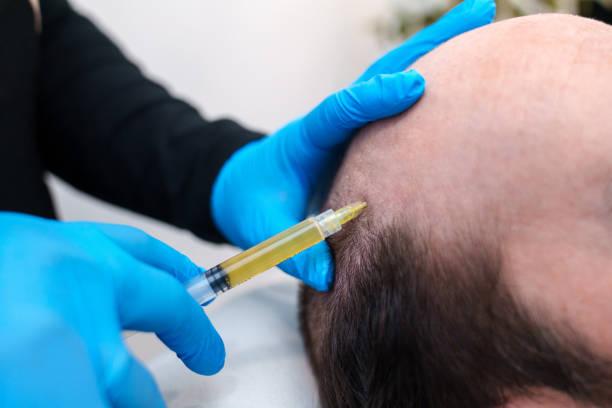
Seeing a change after an injectable hair treatment is not always an overnight process. With Hair Fillers Treatment in Dubai, patients may notice different types of changes at different stages, and the timing can depend on the formulation, baseline hair condition and individual response.
Tajmeels Clinic reports that some patients may observe initial results around 15 days after the first session, while further improvement can depend on follow-up care and maintenance.
Early Changes Are Not the Same as Final Results
One of the most important points to understand is that an early visible change should not automatically be interpreted as the final treatment outcome.
Immediately after injections, temporary swelling, redness or puffiness can alter how the scalp looks. These effects are related to the procedure itself and should not be confused with longer-term changes in hair appearance.
As the scalp settles, the patient can begin evaluating the treatment more accurately.
What Can Influence the Timeline
There is no single biological clock that applies to every patient.
The timeline can be influenced by:
- The specific filler formulation
- Baseline hair density
- Degree and pattern of thinning
- Scalp condition
- Underlying cause of hair loss
- Individual biological response
- Number of treatment sessions
- Maintenance strategy
- Compliance with aftercare
This is why an online promise of a specific result on a specific day should be treated cautiously.
The First Few Days After Treatment
The initial days are primarily about recovery rather than judging hair growth.
Tajmeels Clinic lists temporary effects such as redness, swelling, itching, puffiness and numbness among possible side effects.
Patients should follow their dermatologist’s aftercare instructions and avoid manipulating the treated area unnecessarily.
The scalp may look or feel slightly different during this period, but that does not indicate whether the longer-term treatment has succeeded.
What Around Two Weeks May Mean
Tajmeels Clinic states that initial results may become observable around 15 days after the first session.
At this stage, some patients may begin noticing changes in the appearance or feel of their hair and scalp. However, these early observations should still be interpreted within the context of the overall treatment plan.
A visible difference at two weeks does not mean that every patient will experience the same degree of improvement.
Why Hair Growth Takes Time
Hair is produced through a biological cycle rather than appearing instantly after a treatment.
Existing follicles have their own growth patterns, and visible changes in hair thickness or density can take time to become noticeable. The condition of the follicle, ongoing hair-loss process and individual biology all influence what becomes visible.
This is particularly important for patients who expect a sudden transformation after one injection session.
Measuring Progress More Accurately
A mirror is useful for everyday appearance, but it is not always the best way to monitor gradual change.
A more structured approach can include:
- Taking baseline photographs before treatment.
- Photographing the same scalp areas during follow-up.
- Keeping lighting and camera angles consistent.
- Tracking changes in shedding or hair appearance.
- Discussing the findings with the dermatologist.
Consistent documentation can make subtle changes easier to identify.
The Difference Between Hair Appearance and Hair Biology
Patients often use the phrase “hair growth” to describe several different things.
They may mean:
- Hair appearing thicker
- Reduced visibility of the scalp
- Improved texture
- Better-looking density
- Reduced breakage
- New visible growth
These outcomes are not interchangeable.
A treatment may improve the appearance or condition of existing hair without creating entirely new follicles. Patients should therefore ask their dermatologist exactly which outcome the treatment is intended to address.
Why the Underlying Cause Still Matters
Hair fillers should not be viewed separately from the diagnosis of hair loss.
Genetic pattern hair loss, temporary shedding, nutritional problems, inflammatory scalp conditions and other causes can behave differently. If the underlying driver continues, maintaining or improving the appearance of hair may require a broader treatment strategy.
A dermatologist can help determine whether an injectable approach fits the diagnosis.
When Progress May Need Reassessment
If a patient sees no meaningful change, experiences unexpected symptoms, or notices continued rapid hair loss, follow-up is important.
The answer is not necessarily another injection. The dermatologist may reassess the diagnosis, treatment formulation, scalp condition or the suitability of another hair-restoration approach.
This is one reason professional follow-up is more valuable than simply repeating treatment on a fixed timetable.
Clinic note: Tajmeels Clinic reports initial visible results after approximately 15 days, but individual response can vary. The clinic also emphasizes maintenance and follow-up when evaluating longer-term outcomes.
Setting Realistic Expectations for Hair Filler Results
A realistic expectation is gradual assessment rather than an instant transformation.
Patients should understand that:
- Early post-treatment changes may reflect temporary injection effects.
- Initial improvement does not equal final results.
- Different patients can respond differently.
- Hair cycles influence visible changes.
- Maintenance may be recommended.
- Continued hair loss may require additional management.
This approach makes it easier to evaluate treatment without relying on unrealistic before-and-after expectations.
When to Contact Your Dermatologist
Most temporary injection-related effects are expected to settle, but unexpected or worsening symptoms should be discussed with the treating clinician.
Patients should seek professional advice if they develop significant pain, increasing swelling, signs of infection, unusual skin changes or other symptoms that concern them.
Prompt assessment is particularly important after any injectable procedure when symptoms are unexpected.
Hair Fillers as Part of a Broader Hair Plan
For some patients, injectable treatment may form one part of a broader strategy for managing hair thinning.
Depending on the diagnosis, a dermatologist may discuss medical therapy, PRP, scalp-focused treatments, lifestyle factors or transplantation. Tajmeels Clinic itself lists multiple hair restoration approaches, emphasizing the need for individualized assessment.
The objective should be to match treatment with the patient’s actual hair-loss pattern.
Frequently Asked Questions About Hair Filler Results
How soon can initial results appear
Tajmeels Clinic states that some patients may notice initial results around 15 days after the first session, although individual response varies.
Are changes visible immediately after treatment
Temporary swelling or redness can occur immediately after injections, but these effects should not be interpreted as final hair-growth results.
Why do two people get different results
Hair condition, scalp health, formulation, underlying hair-loss cause and individual biological response can all influence the outcome.
What should I do if I do not notice improvement
Arrange a follow-up with the treating dermatologist so the scalp and original diagnosis can be reassessed before deciding on further treatment.
Can hair fillers create completely new follicles
Hair filler treatment should not be described as creating new follicles. Its intended role depends on the formulation and may focus on supporting existing hair and scalp conditions.
Track Your Progress With Clinical Guidance
The most meaningful results are assessed over time rather than judged from a single mirror check. If you are considering Hair Fillers Treatment in Dubai, Tajmeels Clinic can evaluate your scalp and discuss a treatment and follow-up plan based on your individual condition.
 Spanish
 English
 Arabic
 French
 Portuguese
 Deutsch
 Turkish
 Dutch
Dutch
 Italiano
 Russian
 Romaian
 Portuguese (Brazil)
 Greek
Greek