

How Can FUT Hair Transplant in Dubai Create a Natural Hairline?
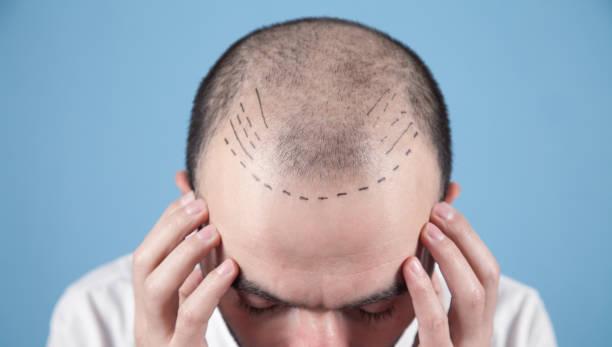
A natural-looking FUT Hair Transplant in Dubai starts with hairline design, not simply filling an empty area. The surgeon considers facial proportions, existing hair, donor quality, graft characteristics, and the direction in which hair naturally grows before placing follicular units.
A well-designed hairline should look appropriate from the front, sides, and different distances. It should also remain compatible with future hair loss rather than being designed only around today's appearance.
What Makes a Hairline Look Natural?
The frontal hairline is one of the most visible parts of a hair restoration result. Small design errors can therefore become noticeable even when graft survival is good.
A natural hairline usually has:
- Subtle irregularity rather than a perfectly straight edge
- Softer single-hair grafts toward the front
- Gradual increases in density behind the first few rows
- Appropriate temple transitions
- Hair angles that follow natural growth patterns
- A position that suits the patient's facial proportions
The objective is not to create an artificially dense wall of hair. It is to recreate the visual transition between forehead and scalp.
How Does FUT Help With Hairline Restoration?
During FUT, a strip of donor scalp is removed from the donor region and carefully divided into individual follicular units.
This can provide the surgeon with grafts containing different numbers of hairs. The smaller units can be useful when creating the delicate frontal transition, while larger follicular units may be positioned farther behind the hairline when additional coverage is required.
The value of the technique depends heavily on how those grafts are selected and distributed.
Why Hair Direction Matters
Hair does not grow straight upward from the scalp.
At the frontal region, the angle and direction gradually change as hair moves from the hairline toward the mid-scalp. If transplanted grafts are placed at an inappropriate angle, the result can look artificial even when the graft count is sufficient.
Surgeons therefore consider:
- Exit angle
- Direction of neighboring hairs
- Existing hair pattern
- Temple orientation
- Hair caliber
- Curl or wave characteristics
This is particularly important when transplanting into areas that still contain native hair.
How Are Facial Proportions Considered?
A hairline should not be designed independently from the face.
The forehead height, temple position, facial length, eyebrow location, and overall facial proportions can all influence where a reconstructed hairline appears balanced.
For this reason, simply lowering a receded hairline as much as possible is not necessarily the best approach.
A conservative design can sometimes provide a more natural long-term result because it preserves donor resources for future areas of concern.
What Happens During Hairline Graft Placement?
Once the recipient design is finalized, the surgeon creates recipient sites that correspond with the intended hair direction and density.
The grafts are then placed carefully into those sites.
The front may use finer follicular units, while progressively fuller grafts can be used behind it. This creates a density gradient rather than an abrupt change.
The process can be summarized as:
- Assess the existing hairline.
- Map the frontal and temporal regions.
- Evaluate donor graft characteristics.
- Design the transition zone.
- Determine graft distribution.
- Place grafts according to natural growth direction.
Can FUT Restore a Receding Hairline Without Making It Look Too Low?
Yes, but the design needs to be individualized.
A common mistake is to treat recession by simply moving the entire hairline forward. A more thoughtful approach evaluates which portions of the frontal region actually need restoration.
For some patients, strengthening the temples creates a meaningful improvement without significantly lowering the central hairline.
For others, the central hairline itself may require reconstruction.
The correct approach depends on facial proportions, donor availability, age, hair-loss pattern, and long-term planning.
What About the Temples?
The temples are often where an otherwise good transplant can appear unnatural.
Temple hair usually transitions at a different angle from the central frontal hairline. The grafts must therefore be placed with careful attention to direction and density.
Using overly thick grafts in this region may create an abrupt appearance. Fine graft selection and gradual transitions can help maintain a more natural frame around the face.
Is FUT Suitable for a Mature Hairline?
A mature hairline does not necessarily need to be completely straight or positioned extremely low.
Many adults naturally develop some frontal recession as they age. Hair restoration planning should account for this normal variation rather than attempting to recreate a teenage hairline.
This is particularly relevant for younger patients because aggressive lowering can consume donor grafts that may later be needed elsewhere.
Planning the Result Around Future Hair Loss
Hair transplantation does not stop the underlying progression of androgenetic hair loss.
Native hair around the transplanted region can continue to thin over time.
That is why a responsible hairline plan considers both:
- The hair that is being transplanted
- The hair that may be lost later
This long-term view can help prevent an isolated transplanted hairline from appearing disconnected from future thinning.
What Should You Discuss During Consultation?
Before undergoing treatment, ask about:
- Proposed hairline position
- Temple design
- Number and type of grafts required
- Donor density
- Expected coverage
- Future hair-loss planning
- Scar considerations
- Whether medical treatment may be appropriate
A detailed consultation allows the plan to be based on your actual scalp rather than a generic template.
Final Thoughts
A natural hairline is created through careful design, appropriate graft selection, and precise placement. FUT Hair Transplant in Dubai can be part of that process when the technique is selected for the patient's donor characteristics and long-term restoration goals.
For treatment planning, you can explore FUT Hair Transplant in Dubai at Tajmeels Clinic and discuss whether the approach suits your pattern of hair loss.
 Turkish
 English
 Arabic
 French
 Spanish
 Portuguese
 Deutsch
 Dutch
Dutch
 Italiano
 Russian
 Romaian
 Portuguese (Brazil)
 Greek
Greek