


Repair or Sell? How Edmonton Drivers Can Decide What to Do With an Old Car
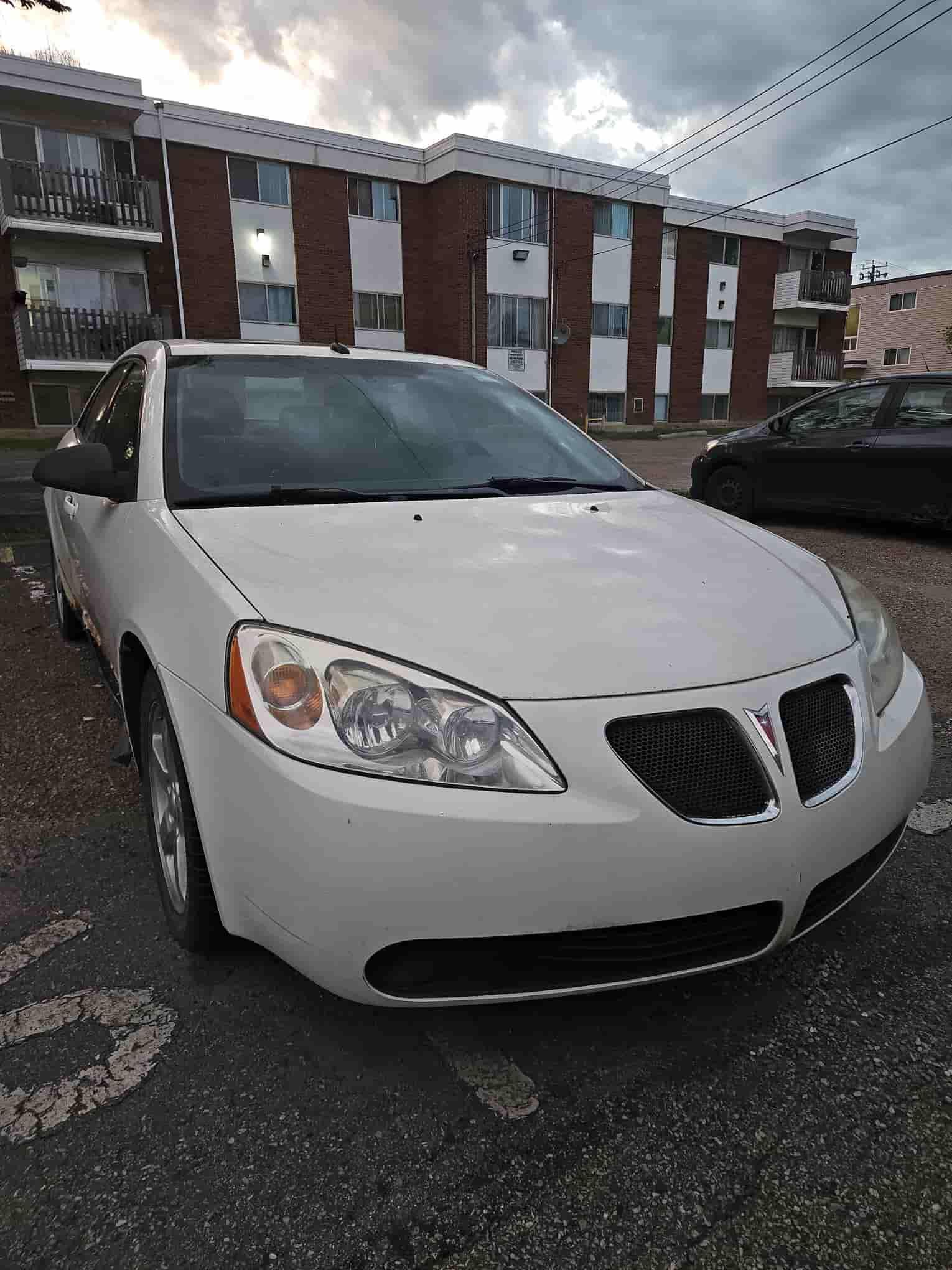
There is a frustrating moment every old-car owner eventually faces.
Your vehicle is already getting up there in mileage. Then the mechanic gives you another repair estimate. You look at the number, look at the car, and start wondering:
“Should I fix this car again, or is it finally time to let it go?”
The answer is not always obvious.
A $900 repair on a reliable older vehicle may be completely reasonable. But if that same vehicle needs a transmission, tires, suspension work, and exhaust repairs within the same year, the situation is very different.
For Edmonton drivers, this decision can be even more complicated because vehicles deal with cold winters, road salt, potholes, gravel, temperature changes, and long periods of winter driving.
Instead of making the decision based only on the repair bill, look at the whole financial picture.
Start With One Simple Question: What Is the Car Worth Today?
Before deciding whether to repair your vehicle, find out what it is actually worth in its current condition.
Don't start with what you paid for it.
Don't start with what you hope to get for it.
And don't automatically use the highest online listing you can find as its value.
Look at the vehicle's year, make, model, mileage, trim, condition, accident history, mechanical problems, rust, tire condition, and overall demand.
A 15-year-old vehicle with 180,000 kilometres and a failing transmission should not be valued the same way as another vehicle of the same year with lower mileage and excellent maintenance.
The current condition matters.
Calculate the Real Cost of the Repair
A mechanic might tell you that your car needs $2,000 of immediate work.
But that's not necessarily the full cost of keeping the vehicle.
Ask what other repairs may be coming soon.
For example, your car might currently need:
- Brake work
- New tires
- Suspension components
- Battery replacement
- Exhaust repairs
- Oil leak repairs
- Cooling-system work
One repair can be manageable.
Several repairs happening close together can change the economics completely.
Ask your mechanic to separate the problems into urgent, soon, and optional repairs. This gives you a much clearer picture than simply looking at one invoice.
The 50% Rule Isn't a Universal Rule
You may have heard people say you should never spend more than 50% of a car's value on repairs.
That's a useful starting point, but it isn't a universal rule.
Imagine you own a vehicle worth $10,000 and it needs $2,500 in repairs. If the car has been reliable, has no major rust, and you expect to drive it for several more years, the repair may be reasonable.
Now imagine a $4,000 vehicle requiring $3,000 in repairs while the transmission is already showing symptoms and the body has significant rust.
The same percentage-based rule does not tell the whole story.
What matters is what you get after spending the money.
Look at the Car's Next 12 Months
This is one of the most useful ways to make the decision.
Don't ask:
“Can I afford this repair today?”
Ask:
“What will this car probably cost me over the next year?”
Consider:
Immediate repair: $1,500
Likely maintenance: $800
Possible tire replacement: $900
Expected insurance and operating costs: additional ongoing expenses
Suddenly, your decision isn't about a $1,500 repair.
It is about the total cost of continuing to own the vehicle.
This approach helps prevent the common mistake of fixing one problem without considering the next one.
Edmonton Winters Can Change the Equation
An older vehicle in Edmonton has to deal with some challenging conditions.
Extremely cold temperatures can put additional stress on batteries, fluids, belts, hoses, electrical components, and starting systems. Winter driving also means exposure to road salt, moisture, ice, gravel, and potholes.
For an older car, those conditions can accelerate wear in areas such as:
- Suspension components
- Brakes
- Exhaust systems
- Undercarriage components
- Tires
- Battery and charging systems
This doesn't mean an old car automatically needs to be sold because winter is coming.
It means Edmonton drivers should consider future seasonal repairs, not just the problem sitting in front of them today.
Don't Ignore Rust
Rust deserves special attention when deciding whether to repair an older vehicle.
Surface rust on a body panel is one thing.
Corrosion affecting structural areas, brake components, suspension mounting points, or the underbody can be a much bigger concern.
A vehicle can look reasonably clean from the driver's seat while having substantial corrosion underneath.
If a mechanic identifies significant rust, ask what it means for the vehicle's remaining usable life.
Spending thousands on mechanical repairs may be difficult to justify if corrosion is also becoming a major issue.
Mileage Matters, But It Isn't Everything
High mileage can reduce a vehicle's market value, but mileage alone should not determine whether you repair or sell.
A well-maintained vehicle with 220,000 kilometres can sometimes be more dependable than a poorly maintained vehicle with considerably fewer kilometres.
Look at the complete history.
Has the transmission been serviced?
Has the cooling system been maintained?
Has the timing belt or chain received appropriate attention?
Are there recurring warning lights?
Has the vehicle regularly overheated?
Has it been involved in major accidents?
Mileage is one piece of the puzzle—not the entire puzzle.
When a Repair May Make Sense
Repairing your old car can be reasonable when the vehicle still has a strong foundation.
For example, you may want to repair it when:
- The engine and transmission are healthy
- The body and frame are in good condition
- The repair is relatively predictable
- The vehicle has been reliable
- You know its maintenance history
- You would have to spend significantly more replacing it
There is also value in knowing your current vehicle.
You know its history, its quirks, and the maintenance it has received.
Buying another used vehicle means accepting another vehicle's unknown history.
When Selling May Deserve Serious Consideration
On the other hand, selling becomes more attractive when several expensive problems start appearing together.
Watch for combinations such as:
Transmission problems + major rust
Engine problems + overheating
Suspension repairs + worn tires + brake problems
Electrical issues + repeated no-start situations
High mileage + multiple warning lights + recurring breakdowns
One major repair doesn't necessarily mean the car is finished.
Several major systems failing around the same time can indicate that your vehicle is entering a more expensive stage of ownership.
Compare Repair Value With As-Is Value
Here's a simple calculation that can help.
Suppose your old vehicle could sell for approximately $6,000 if it were running properly.
You receive a $3,500 repair estimate.
Don't automatically assume that repairing it creates $3,500 of additional value.
The vehicle might still have high mileage, cosmetic damage, worn tires, or other mechanical problems after the repair.
Instead, compare:
Current as-is value
Cost of repairs
Expected value after repairs
Cost of owning the vehicle afterward
This gives you a much more realistic picture.
Get an As-Is Offer Before Spending Thousands
If you're uncertain, there is no harm in finding out what the vehicle could be worth in its present condition.
This is where cash for cars Edmonton services can provide another number for your comparison.
Depending on the vehicle and buyer, an old, damaged, non-running, or high-mileage car may still have value for parts, resale, repairs, or scrap.
You don't have to assume that a car with major problems has no value.
Getting an as-is offer can simply give you another data point before you approve a major repair.
Don't Spend Money Just to Make the Car Look Sellable
Another common mistake is putting money into cosmetic repairs before making the bigger decision.
You might consider:
- Professional detailing
- Paint correction
- New floor mats
- Minor body repairs
- Expensive replacement parts
But if the vehicle has a failing transmission or serious engine problem, cosmetic improvements probably won't solve the main issue.
Determine the vehicle's mechanical and financial situation first.
Then decide whether appearance-related spending makes sense.
Think About Your Replacement Budget
Selling your old car doesn't automatically mean buying a brand-new vehicle.
But you should still consider what replacing it would cost.
If your current car needs $2,000 in repairs, replacing it with another dependable used vehicle may require substantially more money.
On the other hand, if you are spending $4,000 or $5,000 every year keeping an unreliable vehicle alive, replacement may become easier to justify.
The key is comparing total ownership costs, not just one repair invoice.
A Quick Repair-or-Sell Checklist
Before making your decision, answer these questions:
1. What is my car worth in its current condition?
2. How much will the immediate repairs cost?
3. What repairs are likely within the next 12 months?
4. Is the engine and transmission still healthy?
5. How serious is the rust or body damage?
6. How reliable has the vehicle been recently?
7. What would another dependable used vehicle cost me?
8. What could I get for this car as-is?
If you can answer all eight, your decision becomes much less emotional and much more practical.
Prepare the Car Before Getting an Offer
If you decide to sell, gather the information a buyer will need.
Have your ownership documents available and be ready to explain the vehicle's condition. Mention known mechanical issues rather than trying to hide them.
Remove personal belongings, clean out the interior, and collect maintenance records if you have them.
You don't necessarily need to repair everything.
You need to provide an accurate picture of what you're selling.
Final Thoughts
Deciding whether to repair or sell an old car is rarely about age alone.
A 12-year-old car isn't automatically a bad investment, just as a newer vehicle isn't automatically worth repairing.
Look at the bigger picture: repair costs, future repairs, mileage, rust, reliability, current value, and replacement costs.
If the vehicle still has a solid mechanical foundation, repairing it may keep you on the road for years.
But when major problems keep appearing and every repair seems to lead to another bill, it may be time to investigate what the vehicle is worth as-is.
For Edmonton drivers, comparing repair estimates with an as-is offer from cash for cars Edmonton providers can help you understand your options before putting more money into an aging vehicle.
The goal isn't simply to spend less today.
It's to make a decision that makes financial sense for the vehicle you actually have.
 Romaian
 English
 Arabic
 French
 Spanish
 Portuguese
 Deutsch
 Turkish
 Dutch
Dutch
 Italiano
 Russian
 Portuguese (Brazil)
 Greek
Greek