


Can You Sell a Car in Red Deer If the Engine Is Burning Oil?
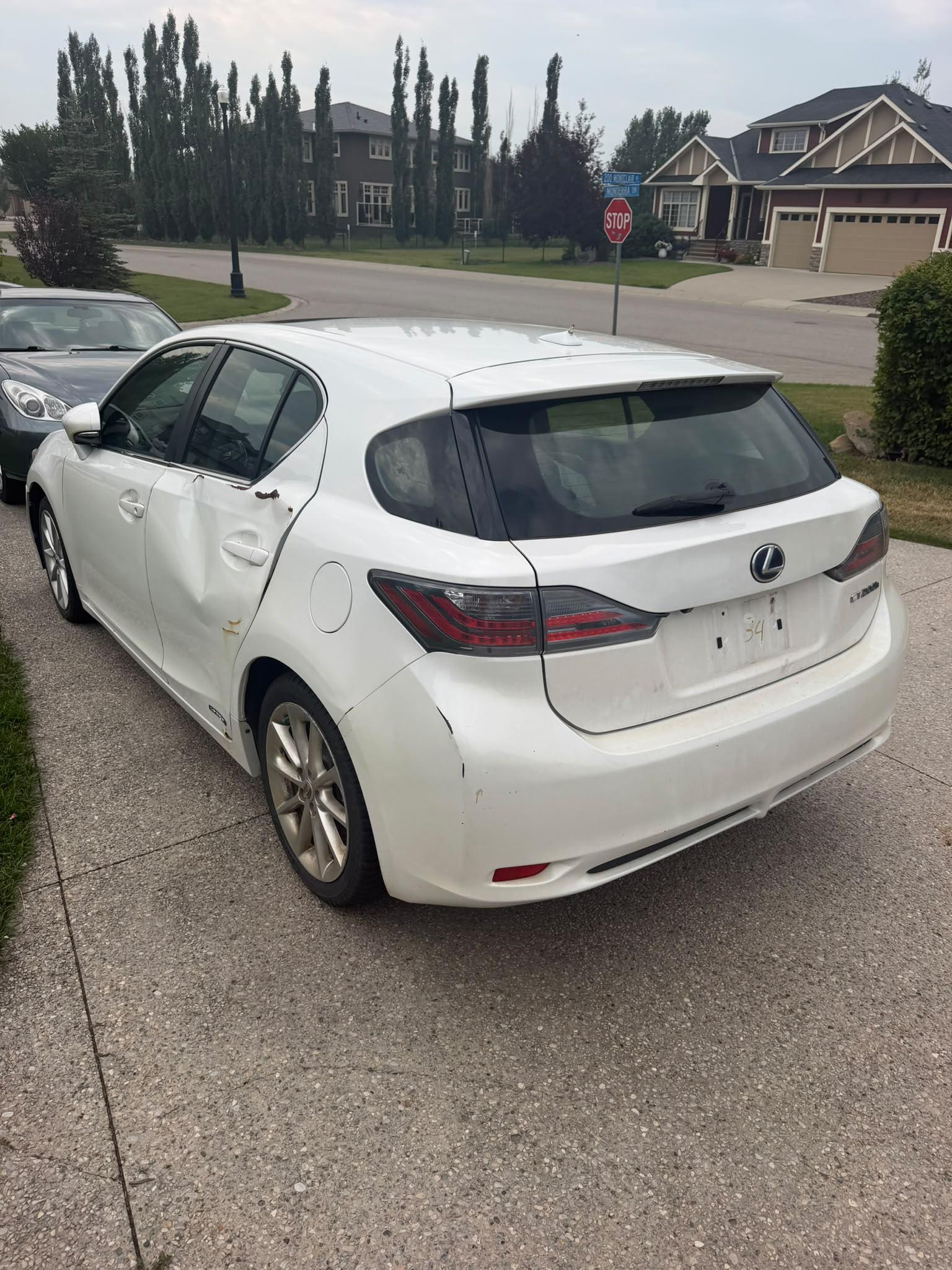
You check the oil in your car and notice that the level has dropped again.
You topped it up recently, so you start wondering, “Where is all that oil going?”
Then you notice blue smoke from the exhaust, an oil-burning smell, or a mechanic tells you that the engine is consuming oil.
At that point, many Red Deer vehicle owners assume they have only two choices: spend thousands repairing the engine or scrap the car.
But there is another option.
Yes, you can sell a car in Red Deer even if the engine is burning oil.
The problem may reduce the vehicle's value, but it doesn't automatically make the car worthless. The amount it affects your offer depends on the severity of the oil consumption, the cause of the problem, the vehicle's age, mileage, overall condition, and the cost of putting the engine right.
Before you spend a large amount of money on repairs, it helps to understand what is actually happening to your engine.
What Does It Mean When a Car Is Burning Oil?
An engine needs oil to lubricate moving components and reduce friction.
Normally, engine oil stays within the lubrication system. When oil gets into the combustion chamber and burns with the fuel, the engine is considered to be consuming or burning oil.
You may notice several warning signs:
- The oil level drops between oil changes
- Blue or grayish smoke comes from the exhaust
- The engine smells like burning oil
- Spark plugs become fouled
- The engine runs roughly
- The check engine light comes on
- Engine performance decreases
- You need to add oil more frequently
However, don't automatically assume that low oil means the engine is burning it.
An external oil leak can also cause the oil level to fall.
That distinction is important because an oil leak can sometimes be repaired for considerably less than an internal engine problem.
Is the Engine Actually Burning Oil or Leaking It?
This is the first thing you should determine.
Oil can escape from components such as seals, gaskets, the oil pan, valve cover, or other areas.
If you see oil underneath the vehicle after it has been parked, there could be an external leak.
If the oil is disappearing without an obvious external leak and the vehicle produces blue smoke, internal oil consumption becomes more likely.
A mechanic can help identify the source.
Knowing the difference can prevent you from making an expensive decision based on an incorrect assumption.
Why Do Older Cars Burn Oil?
Oil consumption can develop for different reasons.
Worn piston rings can allow oil to enter the combustion chamber. Worn valve seals can also allow oil into areas where it shouldn't be.
Cylinder wear, engine damage, poor maintenance, and other mechanical problems can contribute as well.
Some engines are also known for developing oil-consumption issues as they accumulate mileage.
The important point is that burning oil does not automatically mean the entire engine needs to be replaced.
The severity matters.
An engine that consumes a small amount of oil but otherwise runs smoothly is very different from an engine that is producing heavy smoke, losing power, misfiring, and consuming large amounts of oil.
Does Burning Oil Make a Car Worthless?
No.
This is a common misconception.
An engine problem can reduce a vehicle's value, but an older car is worth more than just its engine.
The vehicle may still have a functioning transmission, usable body panels, wheels, tires, interior components, electronics, catalytic converter, suspension components, and other parts.
Even the engine itself may have recoverable value depending on its condition.
For that reason, don't assume that an oil-burning engine means your car has no cash value.
How Much Value Can an Oil-Burning Engine Lose?
There isn't one universal deduction.
The impact depends on the vehicle.
Imagine two Red Deer vehicles.
The first is a 10-year-old car with 160,000 kilometres. It consumes a small amount of oil but starts easily, drives normally, has good tires, and has little rust.
The second is a 17-year-old car with 290,000 kilometres. It burns large amounts of oil, produces visible smoke, has a slipping transmission, worn suspension, and significant rust.
Both vehicles have oil consumption.
But their overall conditions are completely different.
The second vehicle will generally require much more work and investment, which can significantly affect what a buyer is willing to pay.
Should You Repair the Engine Before Selling?
This is where you need to slow down and do the math.
Engine repairs can become expensive.
Depending on the cause, you could be looking at anything from a relatively straightforward repair to major engine work.
Suppose your vehicle is currently worth $4,000 as-is and you receive an estimated $3,500 repair bill.
Don't automatically assume you should spend the money.
Ask yourself:
How much will the vehicle realistically be worth after the repair?
If the repaired vehicle would only be worth $5,000, spending $3,500 may not make sense purely to increase its resale value.
But if you plan to keep the vehicle for several more years, the calculation could be different.
You're not simply investing in resale value. You're investing in continued transportation.
Consider the Vehicle's Mileage
Mileage is particularly important when evaluating an oil-burning engine.
A high-mileage engine may have wear in multiple areas.
Even if you repair the current oil-consumption problem, another component may eventually need attention.
Check the entire vehicle:
- Engine
- Transmission
- Suspension
- Brakes
- Cooling system
- Exhaust
- Tires
- Battery
- Electrical system
- Body and undercarriage
If the engine is the only significant problem, repairing it may be reasonable.
If the engine is just one item on a long repair list, selling the vehicle may deserve more consideration.
Red Deer Weather Can Add to Vehicle Wear
Older vehicles in Red Deer experience significant seasonal changes.
Cold winters can place additional stress on batteries, engine fluids, starting systems, and other components. Snow, road salt, gravel, potholes, and moisture can also contribute to wear and corrosion.
This matters when you're deciding whether to invest heavily in an aging vehicle.
A car that burns oil but has a solid body and well-maintained mechanical components may still have useful life.
A vehicle with oil consumption plus serious rust, suspension problems, and repeated breakdowns may be approaching a different stage of ownership.
Can You Sell the Car As-Is?
Yes.
Selling a car "as-is" means you don't spend money repairing every existing problem before selling it.
For an older vehicle with an oil-burning engine, this can be worth considering.
Instead of putting several thousand dollars into an engine repair, you can disclose the condition and allow the buyer to determine what the vehicle is worth in its current state.
The important part is honesty.
Don't describe an oil-burning engine as "perfect."
Tell the buyer how much oil the vehicle appears to consume, whether it produces smoke, whether it starts normally, and whether there are other known mechanical problems.
What Should You Tell a Cash Car Buyer?
If you're researching cash for cars Red Deer, prepare the vehicle's important details before contacting a buyer.
Give them information such as:
Vehicle details: Year, make, model, trim, and mileage.
Engine condition: Explain that it consumes or burns oil.
Starting condition: Does it start immediately, require a boost, or have trouble starting?
Driving condition: Can it be driven normally?
Smoke: Is there visible exhaust smoke?
Warning lights: Is the check engine light or another warning light illuminated?
Other problems: Mention transmission, brake, suspension, tire, rust, or electrical issues.
Storage: Explain if the vehicle has been sitting for a long period.
Photos can also help. Take clear pictures of the exterior, interior, engine bay, odometer, tires, and any visible damage.
What If the Car Still Runs Normally?
This is an important distinction.
Some vehicles consume oil while continuing to start, idle, and drive normally.
If the engine has good performance and the oil consumption is relatively minor, the vehicle may retain considerably more value than an engine that is smoking heavily and losing power.
However, you should never ignore a low oil level.
Running an engine without adequate lubrication can cause serious damage.
If you're continuing to drive the car before selling it, monitor the oil level and follow the manufacturer's maintenance recommendations.
Should You Get a Second Mechanical Opinion?
If you're quoted thousands of dollars for an engine repair, a second opinion can be useful.
Ask the mechanic:
- What exactly is causing the oil consumption?
- How severe is it?
- Is the engine internally damaged?
- What repair is actually required?
- What happens if the vehicle continues to consume oil?
- Are there other major problems with the vehicle?
A second opinion may give you a clearer understanding of whether the engine needs major work or whether the problem can be addressed more economically.
When Does Selling Make More Sense?
Selling can become more attractive when the vehicle has several expensive problems at once.
For example:
Your engine burns oil.
The transmission is beginning to slip.
The suspension needs work.
The tires are worn.
The body has significant rust.
The vehicle has very high mileage.
At that point, repairing one problem may not solve the bigger issue.
You could spend thousands on the engine and then face another major repair shortly afterward.
This is why cash for cars can be one option to compare when an older vehicle has become expensive to maintain.
The goal isn't to avoid every repair.
It's to avoid putting more money into a vehicle than the situation reasonably justifies.
Don't Try to Hide the Oil Problem
Trying to conceal an engine problem can create bigger problems during the sale.
If a buyer discovers heavy oil consumption after being told the engine is in excellent condition, trust disappears quickly.
Instead, be straightforward.
Explain what you know.
If you have a mechanic's report, provide it.
If you're unsure about the exact cause, say that you know the engine is consuming oil but haven't had a complete diagnosis.
Accurate information allows the buyer to evaluate the vehicle properly.
A Simple Repair-or-Sell Calculation
Before deciding, write down these four numbers:
1. Current as-is value: What could the vehicle realistically be worth today?
2. Repair cost: How much will the engine repair actually cost?
3. Value after repair: What could the vehicle realistically sell for after the repair?
4. Other expected repairs: What else is likely to require money because of age, mileage, rust, or wear?
Now compare them.
If a $4,000 repair only adds $2,000 to the vehicle's realistic selling value, repairing it purely for resale may not make financial sense.
If the vehicle is otherwise excellent and you intend to keep it for years, the calculation changes.
The decision should be based on the whole vehicle, not just the engine.
What Can You Do Before Selling?
You don't need to rebuild the vehicle before requesting an offer.
Instead:
Clean out your personal belongings.
Wash the exterior if possible.
Clean the interior.
Gather the ownership documents and available maintenance records.
Take clear photographs.
Write down the known mechanical issues.
Check the current mileage.
Keep any inspection or diagnostic reports.
This makes it easier for a potential buyer to understand exactly what they're evaluating.
Final Thoughts
Yes, you can sell a car in Red Deer if the engine is burning oil.
The bigger question is whether repairing the engine before selling is financially sensible.
Start by determining whether the vehicle is actually burning oil or simply leaking it. Find out how severe the problem is and get a realistic repair estimate if necessary.
Then look at the entire vehicle.
Consider its age, mileage, transmission, suspension, brakes, tires, rust, body condition, and maintenance history.
If the engine is the only major problem and the repair is affordable, fixing it may be worth considering.
But if an oil-burning engine is just one of several expensive problems, selling the vehicle as-is may be a more practical route.
For Red Deer owners researching cash for cars Red Deer, the key is to understand that an engine problem doesn't automatically eliminate your vehicle's value.
Don't spend thousands of dollars repairing an old car simply because you assume you have to. First calculate what the vehicle is worth, what the repair will cost, and what you'll realistically gain from fixing it.
Sometimes the better decision is repairing the car.
Sometimes it is selling it as-is.
The numbers and the vehicle's overall condition should guide that decision.
 Italiano
 English
 Arabic
 French
 Spanish
 Portuguese
 Deutsch
 Turkish
 Dutch
Dutch
 Russian
 Romaian
 Portuguese (Brazil)
 Greek
Greek