


White & Ivory Linen Curtains: Styling & Buying Guide
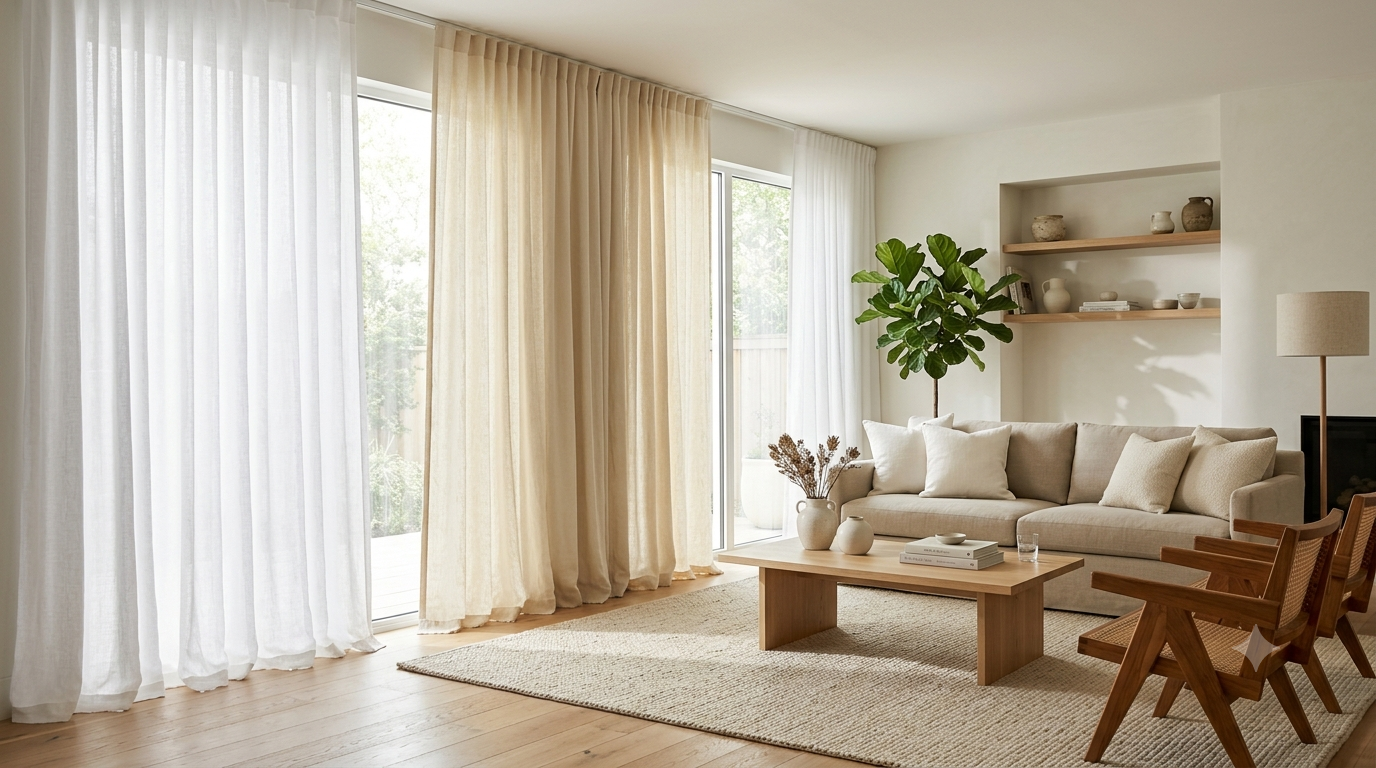
White and ivory linen curtains have become popular choices for homeowners who want window treatments that feel light, natural, and timeless. Their subtle texture can add warmth to an otherwise simple room, while neutral shades make them easy to coordinate with different furniture, wall colors, and decorating styles.
From contemporary living rooms to cozy bedrooms and practical home offices, linen curtains can provide both visual softness and useful light control. However, choosing between bright white and warmer ivory tones involves more than color preference. Room lighting, furniture finishes, curtain length, fabric construction, and privacy requirements all play a role.
This guide explores how to choose and style white and ivory linen curtains while considering the practical needs of different rooms.
Why Choose Linen Curtains for Your Home?
Linen is valued for its naturally textured appearance and relaxed character. Unlike very smooth curtain fabrics, linen and linen-look materials can introduce subtle variation that makes a window treatment feel less formal and more connected to natural home décor.
Linen curtains can also work across a wide range of interior styles, including minimalist interiors, modern spaces, farmhouse décor, coastal-inspired rooms, and warm neutral homes. Their versatility makes them useful when homeowners want a window treatment that does not dominate the rest of the room.
Before choosing a curtain, consider several practical factors:
-
How much natural light should enter the room?
-
How much privacy is required?
-
Does the room need additional light blocking?
-
Will the curtains be used alone or layered with blinds or shades?
-
Does the fabric need frequent cleaning?
-
Will the curtain color complement the existing walls and furniture?
These considerations help ensure that appearance and functionality work together.
White Linen Drapes for a Bright and Airy Interior
White linen drapes can make a room feel brighter and more open, particularly when they are paired with light-colored walls and natural daylight. White reflects a significant amount of available light, making it a common choice for spaces where an airy appearance is desired.
In a living room, white curtains can soften large windows without visually making the space feel heavy. They can be paired with wooden furniture, neutral upholstery, woven baskets, indoor plants, and simple decorative accessories.
White also works naturally with minimalist interiors. A simple white curtain panel combined with light wood flooring and neutral furniture can create a clean appearance without requiring excessive decoration.
However, not every white curtain looks the same. Bright white can feel crisp and contemporary, while warmer whites can create a softer appearance. Looking at the curtain fabric in the actual room's lighting is useful because daylight, warm bulbs, and surrounding colors can change how the shade appears.
Choosing Linen Curtain Panels Ivory for Warmth and Softness
For homeowners who find bright white too stark, linen curtain panels ivory can offer a warmer alternative. Ivory generally contains subtle warm undertones, making it particularly suitable for rooms decorated with beige, cream, tan, brown, or natural wood finishes.
Ivory linen curtains can create a relaxed and comfortable atmosphere in bedrooms and living areas. They can also work well with traditional furniture and farmhouse-inspired décor, where warmer neutrals often complement the overall color palette.
The difference between white and ivory may appear small, but it can influence the character of a room:
-
White: Brighter, cleaner, and more contemporary.
-
Ivory: Warmer, softer, and more traditional or relaxed.
-
White: Works well with cool gray and crisp neutral schemes.
-
Ivory: Complements beige, cream, warm wood, and earthy tones.
-
White: Can emphasize a bright, open appearance.
-
Ivory: Can introduce visual warmth without using a strong color.
Neither option is universally suitable. The better choice depends on the room's existing palette and the atmosphere you want to create.
Are Linen White Blackout Curtains Right for Your Room?
Decorative appearance is only one part of choosing window treatments. Some rooms also require significant light control.
Linen white blackout curtains may be considered for bedrooms, nurseries, media rooms, and other areas where reducing incoming light is important. Blackout construction can provide greater light control than standard light-filtering panels, although the exact performance depends on the curtain's construction and installation.
It is important not to assume that a curtain with a linen appearance automatically provides blackout performance. When shopping for blackout curtains, check the product specifications, lining, fabric construction, and stated light-control properties.
In bedrooms, blackout curtains can also be combined with blinds or shades. Layering allows homeowners to adjust privacy and daylight throughout the day while maintaining the soft appearance of linen-style panels.
How to Style Ivory Linen Curtains in Different Rooms
Living Room
In the living room, ivory curtains can soften windows while complementing sofas, wood furniture, rugs, and neutral accessories. Hang panels high and wide around the window when appropriate to create a more spacious visual effect.
For a relaxed look, combine ivory panels with natural wood, woven textures, and muted colors.
Bedroom
Bedrooms often benefit from softer colors and comfortable textures. Ivory linen curtains can work particularly well with beige bedding, upholstered furniture, warm wood, and neutral rugs.
If morning light is a concern, consider combining decorative linen panels with blackout shades or lined curtains.
Dining Room
Dining rooms can benefit from the understated appearance of natural-fabric curtains. White or ivory panels can frame windows without competing with a dining table, artwork, lighting fixture, or centerpiece.
Ivory can be especially suitable when the dining room contains wooden furniture or warm metallic accents.
Kitchen
In kitchens, window treatments should be selected with practicality in mind. Linen curtains can provide a softer alternative to heavier drapes, particularly around windows that are not directly exposed to cooking splashes.
Shorter panels, café-style curtains, or carefully positioned full-length curtains may work depending on the kitchen layout.
Home Office
A home office needs a balance between comfort and visual concentration. White curtains can help maintain a bright environment, while ivory panels can add warmth to a room containing wood desks, shelves, and neutral office furniture.
If glare affects computer screens, pair curtains with adjustable shades or blinds so that daylight can be controlled more precisely.
White vs. Ivory Linen Curtains: What Should You Choose?
| Consideration | White Linen Curtains | Ivory Linen Curtains |
|---|---|---|
| Color character | Crisp and bright | Warm and soft |
| Overall atmosphere | Airy and clean | Cozy and relaxed |
| Works well with | Cool neutrals, modern décor | Beige, cream, wood, earthy tones |
| Natural light | Helps maintain a bright appearance | Creates a warmer visual effect |
| Interior styles | Minimalist, contemporary, coastal | Farmhouse, traditional, warm modern |
| Furniture pairing | White, gray, light wood | Natural wood, beige, brown, cream |
The choice ultimately depends on the colors already present in the room and the mood you want to establish.
Curtain Styling Tips for a Polished Look
Even a beautiful curtain fabric can look unbalanced if the installation is not considered carefully. Curtain length, width, and hardware all influence the finished appearance.
Consider curtain length: Floor-length panels often create a more finished appearance in bedrooms and living rooms. Make sure the length works with the floor and surrounding furniture.
Think about fullness: Wider panels can create fuller folds when closed. Measuring the window and considering the desired amount of gathering can help achieve a balanced appearance.
Choose suitable hardware: Curtain rods and finials should complement the room rather than compete with the fabric. Simple metal, wood, or understated hardware can work well with neutral linen curtains.
Consider layering: Linen panels can be combined with blinds, shades, or additional lined curtains when privacy and light control vary throughout the day.
Coordinate with the room: Match the curtain undertones with nearby furniture, rugs, wall colors, and accessories. A warm ivory curtain may look more cohesive beside natural wood than a very cool white.
Exploring White Linen Curtain Styles
There are many variations of white linen curtains, ranging from lightweight panels designed primarily for visual softness to lined options intended for greater privacy and light control.
When researching products online, shoppers may encounter search phrases such as cultiver white linen curtain while exploring different white linen curtain styles and design ideas. Rather than focusing only on a brand name, it is useful to compare fabric appearance, panel dimensions, lining, opacity, care requirements, hanging style, and intended room use.
Some homeowners prefer loosely woven panels that allow filtered daylight into the room, while others need lined or blackout construction for bedrooms and media spaces. Understanding these differences can make the selection process more practical.
Incorporating Natural Window Treatments into Your Home
White and ivory curtains pair naturally with other organic-looking materials. Wood furniture, rattan, jute rugs, cotton bedding, ceramic accessories, and indoor greenery can all complement the understated texture of linen.
This approach works particularly well in homes that use neutral colors and natural materials throughout several rooms. Instead of treating curtains as an isolated decorative feature, consider them part of the overall textile palette.
For homeowners exploring natural home textiles, All Cotton and Linen is one example of a brand offering cotton and linen products across areas such as curtains, bedding, table linens, kitchen textiles, and home décor. Looking at a broader range of natural-fabric products can help create consistency between window treatments and other soft furnishings.
Conclusion
White and ivory linen curtains can bring texture, softness, and a natural character to many types of interiors. White linen drapes can support a bright and contemporary atmosphere, while ivory linen curtains can introduce warmth and complement beige, cream, wood, and earthy tones.
The right choice should also consider practical requirements. Bedrooms and media rooms may need stronger light control, while living rooms, dining rooms, kitchens, and home offices may benefit from lighter, more flexible window treatments.
Before purchasing, consider the curtain's fabric construction, length, fullness, opacity, hardware, maintenance requirements, and compatibility with the existing décor. Whether you prefer crisp white or warm ivory, thoughtful selection and installation can help window treatments become a cohesive part of the room rather than simply an afterthought.
 Romaian
 English
 Arabic
 French
 Spanish
 Portuguese
 Deutsch
 Turkish
 Dutch
Dutch
 Italiano
 Russian
 Portuguese (Brazil)
 Greek
Greek