


How to Keep Commercial Concrete Areas Clean and Presentable
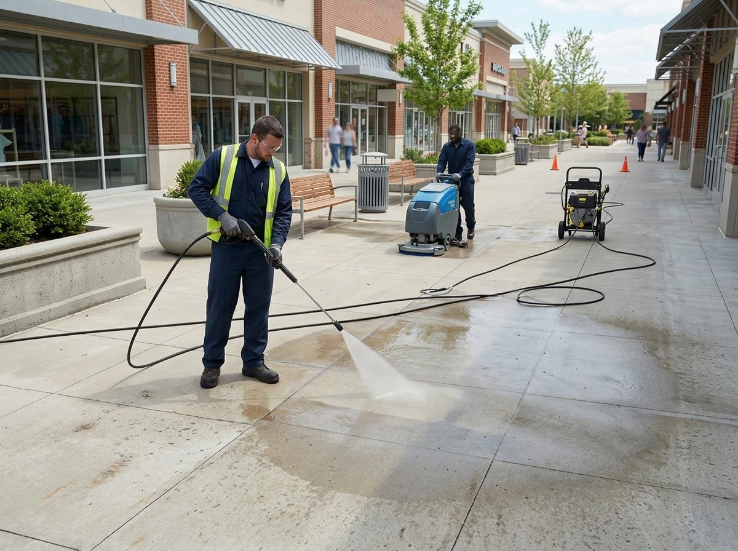
Concrete surfaces are common around commercial properties because they can support regular foot traffic, vehicles, equipment, and outdoor activity. Parking areas, sidewalks, entryways, loading zones, and service areas can all collect dirt as part of normal business operations.
Over time, oil, mud, tire marks, food residue, dust, and weather-related buildup can make concrete look neglected. A consistent maintenance plan helps keep these areas cleaner while making it easier to spot cracks, stains, drainage problems, and other surface concerns.
Why Commercial Concrete Gets Dirty Quickly
Commercial concrete often experiences much more activity than residential surfaces. Customers, employees, deliveries, vehicles, and outdoor equipment can introduce dirt throughout the day.
Rain can also move soil across the surface, while vehicle traffic may leave oil or rubber residue behind. Areas close to dumpsters, loading zones, entrances, and parking spaces can require more frequent cleaning because they experience higher levels of use.
Understanding how a commercial property is used helps determine which areas need the most attention.
Focus on High-Traffic Areas First
Not every concrete surface needs the same cleaning frequency. Main entrances and walkways usually deserve priority because they are the first areas customers and employees see.
Heavy-use zones can also show wear faster than less active spaces. A targeted maintenance schedule allows property managers to focus cleaning efforts where dirt and staining are most visible.
Cleaning high-traffic sections regularly can help prevent heavy buildup from spreading across larger areas.
Deal With Stains Before They Become Harder to Remove
Oil, grease, food residue, and other spills can become more difficult to address when they remain on concrete for long periods. Prompt attention can reduce the chance of a stain becoming deeply established.
The type of stain matters. Different substances may respond differently to cleaning products and pressure. Using one aggressive method for every type of mark can damage the surface without producing the desired result.
A controlled approach is more useful than simply increasing pressure whenever a stain remains.
Choose the Right Cleaning Method
Concrete can tolerate more pressure than many delicate surfaces, but that does not mean the strongest setting should always be used. Surface age, condition, finish, cracks, and the type of contamination all influence the appropriate cleaning method.
Homeowners and property managers considering commercial concrete cleaning should look at the specific condition of the concrete instead of treating every area as identical.
A consistent method can improve appearance while helping reduce unnecessary surface wear.
Check Entrances and Walkways Often
Entrance areas deserve special attention because they combine high visibility with frequent foot traffic. Dirt can quickly build up around doors, steps, ramps, and covered walkways.
These locations should also be inspected for trip hazards and surface changes. Cracks, uneven sections, loose materials, and drainage problems can become more noticeable once the area is cleaned.
Keeping these surfaces clean makes routine inspections easier and helps separate simple dirt buildup from maintenance issues that need repair.
Do Not Ignore Parking Areas
Parking lots and driveways can collect tire marks, dirt, oil, and debris. Heavy vehicle use can spread these materials across larger areas, especially during wet weather.
Regular inspection helps identify spots that need focused attention. Not every parking area needs the same schedule, so cleaning frequency can be based on traffic volume, business type, surrounding conditions, and the visible rate of buildup.
A well-maintained parking area also contributes to a more orderly appearance across the entire property.
Keep Loading and Service Areas Clean
Loading zones can experience heavier contamination than customer-facing areas. Deliveries, equipment, pallets, carts, and vehicles may introduce dirt and spills that ordinary sweeping cannot completely remove.
Because these areas can accumulate different types of residue, they may require more targeted cleaning. Cleaning should be planned around the property's operations so that the area is accessible and safe during the process.
A maintenance schedule can reduce the need for emergency cleanup after severe buildup occurs.
Be Careful Around Cracks and Damaged Concrete
Cleaning can reveal existing cracks and surface deterioration, but pressure should not be used to force water aggressively into damaged areas.
Older concrete may have weakened sections, chipped edges, or worn surfaces. These areas may need repair rather than stronger cleaning.
A careful inspection before work begins can help identify vulnerable spots and prevent cleaning from being treated as a solution to a structural issue.
Maintain Drainage Paths
Commercial properties need effective drainage to move rainwater away from walking and working areas. Dirt, leaves, and debris can collect near drains and low sections, especially after storms.
Blocked drainage can leave concrete damp for longer periods and contribute to recurring staining. Keeping drains and surrounding areas clear should therefore be part of broader exterior maintenance.
Cleaning surfaces without addressing drainage issues may result in the same buildup returning quickly.
Create a Practical Maintenance Schedule
A commercial property benefits from a cleaning plan based on actual use. A busy retail location may need more frequent attention at entrances and parking areas than a low-traffic facility.
Instead of waiting until every surface looks heavily soiled, managers can inspect high-use areas on a regular basis and schedule deeper cleaning when buildup becomes noticeable.
This approach helps spread maintenance work throughout the year rather than handling large amounts of buildup all at once.
Consider the Whole Property
Commercial concrete should not be treated as a collection of unrelated surfaces. Parking areas, walkways, entrances, service zones, and outdoor gathering areas all contribute to how a property appears and functions.
A consistent maintenance approach can make the property look more organized and can help employees identify changes that deserve further attention.
The goal is not to make every surface look new. It is to keep the property clean, usable, and easier to maintain.
Final Thoughts
Commercial concrete cleaning works best when it is part of a broader maintenance routine. Regular attention to traffic areas, spills, drainage, cracks, entrances, and service zones can help keep concrete surfaces cleaner and make developing problems easier to spot.
This approach is closely related to facility management, which includes maintaining buildings, property, and supporting environments so they remain functional and usable. Cleaning is one practical part of that larger process.
 Portuguese
 English
 Arabic
 French
 Spanish
 Deutsch
 Turkish
 Dutch
Dutch
 Italiano
 Russian
 Romaian
 Portuguese (Brazil)
 Greek
Greek