


How Long Does Family Sponsorship Take in the USA
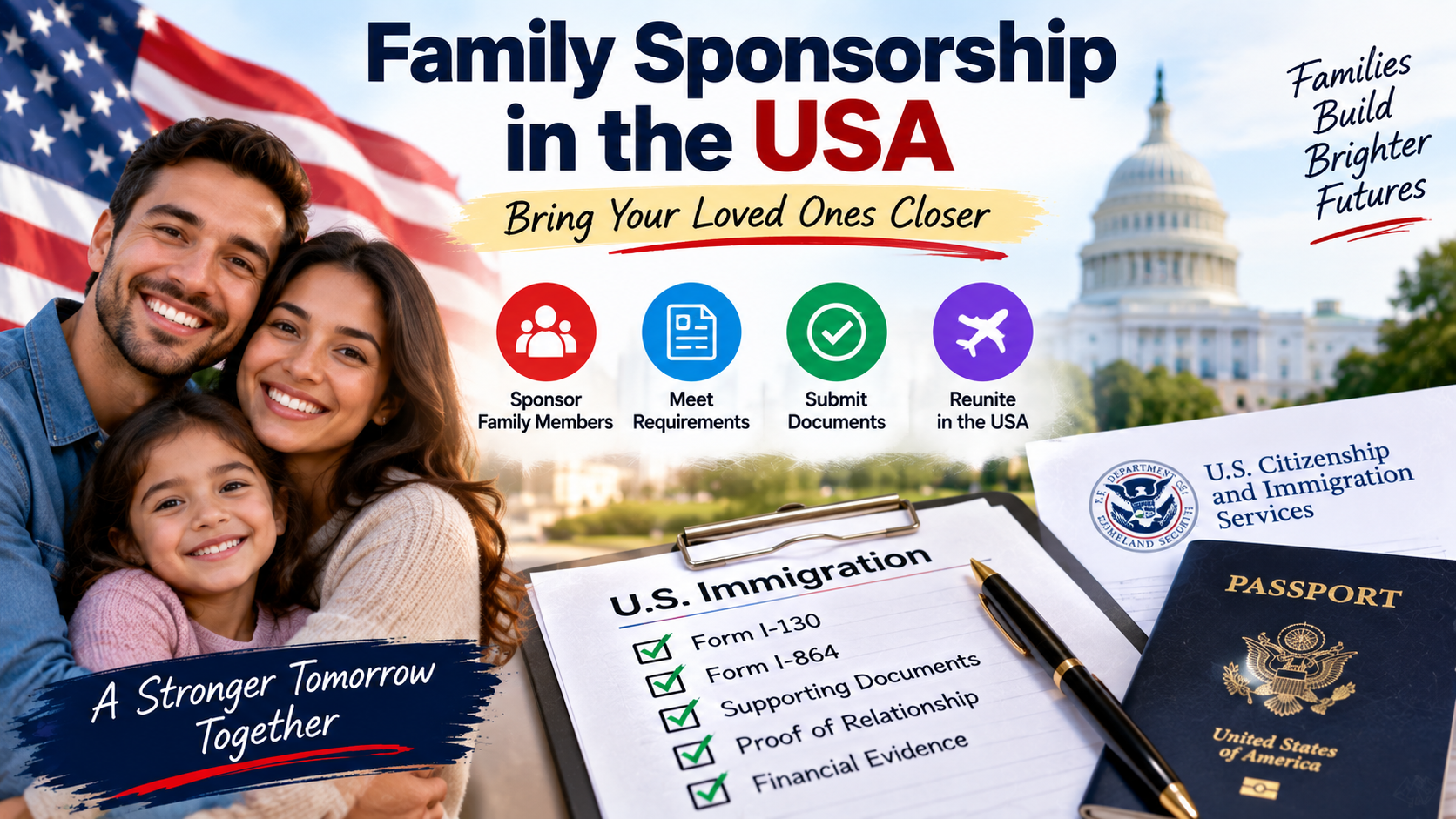
Family sponsorship is one of the most common ways people move to the United States, but it's also one of the slowest immigration paths out there. If you're planning to sponsor a parent, spouse, sibling, or child, understanding the real timeline helps you plan your life around it instead of just guessing.
This article breaks down how long family sponsorship actually takes, what affects the timeline, and what you can do to avoid unnecessary delays.
What Is Family Sponsorship?
Family sponsorship allows U.S. citizens and green card holders to petition for certain relatives to immigrate legally. The sponsor takes on financial responsibility for the relative and confirms the family relationship through official documentation filed with immigration authorities.
This process isn't instant, and it isn't the same for everyone. The timeline depends heavily on your relationship to the sponsor, your current immigration status, and the country you're applying from.
Immediate Relatives vs. Preference Categories
The biggest factor in how long family sponsorship takes comes down to which category the relationship falls into.
Immediate relatives of U.S. citizens, including spouses, unmarried children under 21, and parents, don't face annual visa limits. This means their applications typically move faster, often within 8 to 14 months from start to finish. Everyone else falls into a preference category, which comes with yearly caps that create long waiting lists, sometimes stretching several years depending on the relationship and country of origin.
Average Processing Times by Relationship
Processing times vary a lot depending on who is being sponsored. Here's a general breakdown of what applicants typically experience.
- Spouse of a U.S. citizen: around 12 to 18 months
- Parent of a U.S. citizen: around 8 to 12 months
- Unmarried child under 21 of a U.S. citizen: around 10 to 14 months
- Married child of a U.S. citizen: often 5 to 10 years
- Sibling of a U.S. citizen: often 10 to 15 years, sometimes longer
- Spouse or unmarried child of a green card holder: typically 2 to 5 years
These numbers shift regularly based on demand, so they should be treated as general guidance rather than a fixed promise.
Why Some Cases Take So Much Longer Than Others
A lot of people assume the process should move at roughly the same speed for everyone, but that's not how it works. Annual visa caps mean that certain categories, especially siblings and married children, face long backlogs simply because there aren't enough visas available each year to match demand.
Country of origin plays a big role too. Countries with historically high application volumes, like Mexico, India, and the Philippines, often face longer waits than countries with fewer applicants in the same category. This is one of the more frustrating parts of the process, since two people in the exact same relationship category can face very different timelines purely based on where they're from.
For anyone trying to get a realistic estimate for their specific situation, looking at a detailed Family Sponsorship Processing Time breakdown can help clarify where a particular case is likely to fall based on category and country, instead of relying on general averages that don't always apply.
Common Reasons for Delays
Even within the expected timeline, certain issues can push a case back further than necessary.
- Incomplete forms or missing documents, which trigger Requests for Evidence
- Inconsistent information across different forms in the same application
- Unreported changes, like a new address or updated marital status
- Missed deadlines when responding to requests from immigration officials
- High application volume at certain times of year, which slows overall processing
Most of these delays are avoidable with careful preparation before filing, but they catch a surprising number of applicants off guard.
Steps in the Family Sponsorship Process
- Filing the petition – The sponsor submits Form I-130 to establish the qualifying relationship.
- Waiting for a visa number – If the relative falls under a preference category, they wait until a number becomes available based on the Visa Bulletin.
- Application processing – This includes background checks, medical exams, and required interviews.
- Affidavit of Support – The sponsor proves they can financially support the relative once they arrive.
- Final decision – Once everything clears, the relative receives their visa or green card.
Each step adds its own processing time, and delays at any single stage can affect the overall timeline significantly.
How to Avoid Unnecessary Delays
Staying organized from the start makes a real difference. Double check every form before submitting it, keep copies of everything, and respond to any government requests as quickly as possible. Waiting even a few extra weeks to respond to a Request for Evidence can add months to an already long process.
It also helps to check your case status periodically rather than obsessively. Immigration systems update at their own pace, and refreshing your status every day won't speed anything up. Checking every few weeks is usually enough to stay informed without adding unnecessary stress.
What to Expect While You Wait
Long waiting periods are one of the hardest parts of family sponsorship, especially for categories with multi-year backlogs. It helps to plan around the estimated timeline rather than treating it as something that might resolve unexpectedly early.
Families going through this process often describe the uncertainty as harder than the paperwork itself. Knowing the general timeline for your specific category, even if it's several years out, at least gives you something concrete to plan around instead of guessing indefinitely.
Final Thoughts
Family sponsorship timelines vary widely depending on the relationship, the applicant's country of origin, and how well the application is prepared from the start. Immediate relatives usually see faster results, while preference categories can involve years of waiting due to annual visa caps.
Understanding where your case falls before you begin, and avoiding common paperwork mistakes along the way, puts you in a much better position to manage the wait with realistic expectations instead of constant uncertainty.
 English
 Arabic
 French
 Spanish
 Portuguese
 Deutsch
 Turkish
 Dutch
Dutch
 Italiano
 Russian
 Romaian
 Portuguese (Brazil)
 Greek
Greek