


Direct to Consumer Laboratory Testing: How to Choose the Right Testing Option for Your Health Needs
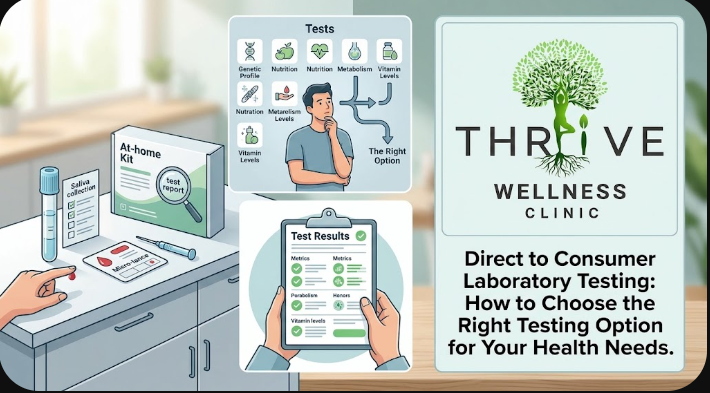
Many people want a better understanding of their health without waiting for a routine medical visit or experiencing symptoms before seeking answers. Laboratory testing can provide useful information about areas such as blood sugar, cholesterol, nutrient levels, hormones, and other health markers. However, with many testing options available, it can be difficult to know which tests are appropriate and how to interpret the results.
Direct to consumer laboratory testing gives individuals more convenient access to certain health tests without always requiring a traditional doctor's visit first. Understanding what these tests can and cannot tell you, which testing options may be appropriate for your goals, and when professional guidance is important can help you make more informed healthcare decisions.
What Is Direct to Consumer Laboratory Testing?
Direct to consumer laboratory testing refers to laboratory tests that individuals can order or access without first obtaining a traditional healthcare provider's order, depending on local regulations and the specific testing service. These tests may evaluate biomarkers related to general wellness, metabolic health, hormones, nutrition, cardiovascular risk, and other areas.
The convenience of direct to consumer laboratory testing can make it easier for people to monitor selected health markers. However, a laboratory result is only one part of a complete health assessment. Your symptoms, medical history, medications, lifestyle, family history, and other clinical information may all be important when determining what a result means.
Why Do People Consider At-Home or Consumer Lab Testing?
Convenience is one of the main reasons people explore consumer-accessible laboratory testing. Some individuals may want to monitor an existing health concern, establish baseline measurements, investigate general wellness questions, or prepare for a conversation with a healthcare professional.
Depending on the service, testing may help people explore areas such as:
- Blood glucose and metabolic markers
- Cholesterol and cardiovascular health markers
- Vitamin and nutrient levels
- Thyroid-related markers
- Hormone levels
- Liver and kidney function
- Inflammation-related markers
- General wellness measurements
Direct to consumer laboratory testing can provide useful information, but more testing is not necessarily better. A qualified healthcare professional can help determine whether a particular test is relevant to your individual circumstances.
How to Choose the Right Laboratory Test
Choosing a laboratory test should begin with your health goals rather than simply selecting the largest available testing panel. A broad panel may include markers that are not relevant to your concerns and could produce results that require additional evaluation.
When comparing testing options, consider:
- Your health goal: Identify what you are actually trying to understand or monitor.
- Test quality: Look for testing performed through a reputable laboratory.
- Sample requirements: Understand whether the test requires blood, urine, saliva, or another sample.
- Result interpretation: Determine whether professional support is available to explain your results.
- Follow-up care: Consider what happens if a result is outside the expected range.
- Privacy: Review how your personal and laboratory information is handled.
- Timing: Some tests may need specific preparation or timing for meaningful results.
With direct to consumer laboratory testing, understanding the purpose and limitations of each test is just as important as obtaining the result itself.
Understanding Your Laboratory Results
Receiving laboratory results can be helpful, but numbers should not automatically be interpreted as a diagnosis. Reference ranges can vary between laboratories, and a result outside a reference range does not always mean that a person has a medical condition.
Similarly, a result within a reference range does not necessarily explain every symptom or rule out every health concern. Direct to consumer laboratory testing is most useful when results are considered alongside personal health information and, when appropriate, professional clinical evaluation.
If you receive an unexpected or concerning result, discuss it with a qualified healthcare professional rather than making major treatment decisions based on the laboratory report alone.
Our Membership Program for Ongoing Personalized Care
Our membership program is designed for people who want convenient, ongoing support rather than relying only on occasional healthcare appointments. Members can benefit from access to at-home healthcare services, wellness monitoring, personalized care based on individual health needs, and preventive health support. This approach can make it easier to keep track of relevant health information and discuss changes with a healthcare professional over time.
Ongoing membership-based care can also provide greater continuity and convenience for individuals interested in long-term health optimization. Rather than treating every laboratory result as an isolated event, personalized care can help place testing and wellness information within the broader context of an individual's goals, history, and daily life, without promising a specific health outcome.
What Happens After Laboratory Testing?
Laboratory testing is generally most valuable when there is a clear plan for what to do with the information. Depending on the results and the reason for testing, a healthcare professional may recommend monitoring, additional evaluation, lifestyle changes, or appropriate treatment.
For example, a healthcare professional may consider:
- Reviewing symptoms and medical history
- Repeating a test when appropriate
- Ordering additional diagnostic evaluations
- Reviewing medications or supplements
- Developing an individualized nutrition or activity plan
- Monitoring specific biomarkers over time
- Referring the patient for additional medical care when necessary
Direct to consumer laboratory testing can therefore be a starting point for a more informed healthcare conversation rather than a replacement for comprehensive medical care.
Lifestyle Habits That Support Preventive Health
Laboratory results are only one component of overall health. Daily habits can also influence many aspects of physical and metabolic well-being. Building sustainable routines can complement appropriate testing and professional healthcare.
Useful habits may include:
- Eating a balanced diet with a variety of nutrient-dense foods
- Staying physically active according to your abilities and health needs
- Maintaining a consistent sleep schedule
- Drinking adequate fluids
- Managing stress through healthy coping strategies
- Attending recommended preventive screenings
- Monitoring relevant health measurements when advised
- Following an individualized healthcare plan
Regular health monitoring can help identify changes that deserve further discussion, while healthy daily habits support a proactive approach to wellness.
When Should You Speak With a Healthcare Professional?
Consumer-accessible laboratory testing should not replace medical evaluation when symptoms are significant, persistent, or rapidly worsening. Professional care is particularly important when laboratory results are abnormal, difficult to understand, or inconsistent with how you feel.
People with ongoing medical conditions, those taking prescription medications, pregnant individuals, or anyone considering treatment based on laboratory results should discuss appropriate testing and follow-up with a qualified healthcare professional. A clinician can help determine whether further testing or evaluation is appropriate.
Frequently Asked Questions
What is direct to consumer laboratory testing?
Direct to consumer laboratory testing allows individuals to access certain laboratory tests without necessarily going through a traditional healthcare appointment first. Availability and requirements vary depending on the test and location.
What types of tests can consumers order?
Available options may include tests related to metabolic health, cholesterol, hormones, thyroid function, nutrition, and other health markers. The exact selection depends on the laboratory and applicable regulations.
Can laboratory testing diagnose a health condition?
A laboratory test can provide important information, but a single result may not be enough to establish a diagnosis. Healthcare professionals generally consider laboratory findings alongside symptoms, medical history, physical findings, and other relevant information.
Is at-home laboratory testing accurate?
Accuracy depends on the specific test, laboratory procedures, sample collection, and handling. Choosing a reputable testing provider and following sample-collection instructions carefully can help support reliable results.
Should I order a large health testing panel?
Not necessarily. The most useful testing approach depends on your health concerns, goals, history, and clinical circumstances. Testing should be purposeful rather than based simply on the number of biomarkers included.
Can consumer laboratory testing be part of ongoing healthcare?
Yes. When appropriately selected and professionally interpreted, laboratory testing can be incorporated into ongoing health monitoring. Direct to consumer laboratory testing may be particularly useful when combined with personalized follow-up and preventive care.
Conclusion
Direct to consumer laboratory testing can provide convenient access to selected health information and may help people become more engaged in their healthcare. However, choosing appropriate tests, understanding laboratory results, considering individual health circumstances, and arranging suitable follow-up are essential for using testing responsibly.
A proactive approach combines relevant laboratory testing with professional guidance, healthy lifestyle habits, preventive care, and ongoing monitoring. If you are looking for convenient, personalized support for your health goals, explore healthcare services that can help you understand your testing options and determine appropriate next steps.
 Turkish
 English
 Arabic
 French
 Spanish
 Portuguese
 Deutsch
 Dutch
 Italiano
 Russian
 Romaian
 Portuguese (Brazil)
 Greek