


Can FUE Hair Transplant in Dubai Plan Future Grafts Safely?
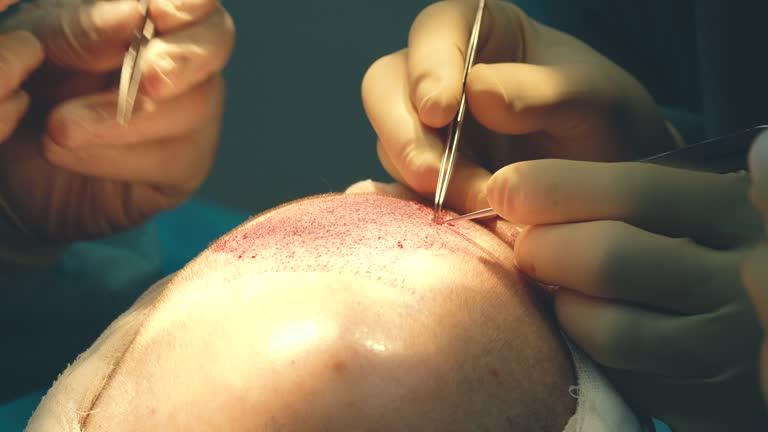
Hair restoration should account for more than the amount of hair missing at the time of treatment. For suitable patients, FUE Hair Transplant in Dubai can be planned with future graft requirements in mind, allowing the initial restoration to work within the patient's available donor reserve rather than treating that reserve as unlimited.
This becomes particularly important when natural hair loss may continue. A carefully designed first procedure can leave room for potential future needs by considering the donor zone, current miniaturization, hairline position, crown progression, and likely areas of later thinning.
Why Future Graft Planning Matters
The donor area contains a finite number of follicles that may be suitable for transplantation. Once a follicular unit has been removed, it cannot simply be returned to the donor zone for another procedure.
Today's Hair Loss May Not Be the Final Pattern
Pattern hair loss can progress beyond the areas that are currently visible as thin or bald. A patient who primarily notices frontal recession may later develop mid-scalp or crown thinning.
Planning only for the current defect can therefore produce a restoration that becomes difficult to maintain as surrounding native hair changes.
Donor Supply Needs a Long-Term Perspective
A donor assessment should consider how much usable follicular supply exists and which portions of that supply may need to remain available for later restoration.
The objective is not to predict the exact number of future grafts required. It is to avoid making today's design unnecessarily restrictive for tomorrow.
How a Future-Oriented Donor Assessment Works
Before FUE, the donor region should be examined for characteristics that influence both the initial procedure and possible later sessions.
Mapping the Stable Donor Region
The specialist evaluates the distribution and characteristics of follicles across the back and sides of the scalp. The assessment can identify areas that appear suitable for extraction and distinguish them from regions where long-term stability may be less certain.
This creates a more realistic picture of the donor reserve than simply measuring the thickest portion of the scalp.
Examining Hair Caliber
Hair diameter affects the visual coverage produced by transplanted follicles. A donor area containing relatively fine hair may provide a different restoration potential from one containing thicker shafts.
Future planning should therefore consider the quality of available follicles as well as their quantity.
Identifying Existing Miniaturization
Miniaturization within or near the donor region can change how much of the area is considered dependable for long-term planning. A donor zone should not automatically be treated as permanently stable simply because it is located toward the back or sides.
Designing the First Hairline With Future Loss in Mind
The frontal hairline is one of the most visible elements of a restoration, but it also has to coexist with the patient's future hair pattern.
A Hairline Should Match the Patient's Stage
A very low or aggressively youthful hairline can require substantial graft allocation. If the patient's native hair behind it continues to recede, maintaining the original design may eventually require additional donor resources.
A more age-appropriate design can sometimes provide greater flexibility for future changes.
Transition Zones Need Strategic Planning
The frontal transition should not be viewed as an isolated line. It connects with the frontal scalp, temples, and mid-scalp, all of which may change over time.
Planning these regions together can help prevent a transplanted hairline from becoming visually disconnected from later native-hair loss.
Future Graft Planning for the Crown
The crown can be especially important in long-term planning because vertex loss may expand gradually.
Crown Loss Can Progress Outward
A small thinning crown can develop into a broader vertex deficit. If a patient uses a substantial portion of the available donor reserve to create dense coverage at an early stage, fewer follicles may remain for later expansion.
The treatment boundary should therefore reflect both current appearance and potential progression.
The Whorl Needs to Remain Consistent
If a future session becomes necessary, new grafts may need to extend an existing crown pattern. Initial recipient-site direction and density should therefore be designed with the possibility of later work in mind.
A coherent vertex pattern is easier to maintain when the first restoration does not create an isolated density block.
Staged Restoration Versus Treating Everything at Once
Future planning does not necessarily mean that multiple procedures will be required. It means that the initial strategy acknowledges the possibility of change.
When a Focused First Session May Make Sense
A patient with localized frontal or crown loss may not need every potentially thinning area treated immediately. Concentrating on the most established deficiency can preserve donor flexibility.
The appropriate treatment boundary depends on the patient's age, pattern of loss, donor characteristics, and clinical findings.
Why Maximum Immediate Coverage Is Not Always the Goal
Using the largest possible amount of donor hair during one procedure may provide broader short-term coverage, but it can reduce the reserve available for future needs.
Long-term restoration often requires balancing immediate improvement with donor conservation.
Native Hair Is Part of the Future Plan
Transplanted follicles are only one component of the scalp's overall appearance. Native hairs surrounding the restoration may continue to change.
Miniaturized Hair Can Continue to Thin
A transplanted region may remain stable while adjacent native follicles progressively become finer. This can alter the visual relationship between transplanted and original hair.
The initial plan should therefore identify areas of active miniaturization rather than assuming every existing follicle will remain unchanged.
Medical Management May Be Discussed
Depending on the diagnosis and individual circumstances, a clinician may discuss medical approaches intended to support existing native hair or manage ongoing loss.
Such treatment is separate from FUE and requires individualized medical evaluation.
How Recipient Priorities Affect Future Grafts
When donor supply is limited, the areas with the greatest visual importance may need to receive priority.
Frontal Coverage Often Influences Overall Appearance
The frontal region frames the face and is visible from multiple angles. Carefully selected grafts can establish a natural transition while preserving donor resources for potential later requirements.
Mid-Scalp Can Connect Different Regions
The mid-scalp can become important when frontal and crown areas develop different degrees of thinning. A future-oriented plan considers how these regions may eventually connect.
Crown Restoration Requires Its Own Allocation
Because the crown has a circular growth pattern and may expand over time, its donor requirements should be considered separately from frontal restoration.
Can Previous FUE Be Accommodated in a Future Plan?
Yes, but a later procedure must account for what happened during the initial extraction and implantation.
The Donor Area Changes After Extraction
Previously harvested follicles are no longer available. The remaining donor region must be reassessed before additional extraction is considered.
This is why documentation of the original treatment can be useful when planning later procedures.
Previous Recipient Sites Matter Too
Existing transplanted follicles influence where new grafts can be placed. Additional grafts may need to reinforce density, extend coverage, or address areas that have changed because native hair continued to thin.
A second procedure should therefore not simply repeat the original design.
Factors That Can Change Future Graft Requirements
Long-term planning involves uncertainty because hair loss does not progress identically in every patient.
Age and Pattern of Loss
The current stage of hair loss and its distribution can influence how much future change is anticipated. Younger patients with an evolving pattern may require especially conservative planning.
Family Hair-Loss Pattern
Family history can provide useful context regarding how hair loss may develop, although it cannot precisely determine an individual's future progression.
Hair Characteristics
Hair caliber, color, texture, curl, and density all affect how much scalp visibility occurs as native hair becomes thinner.
A patient with substantial visual coverage may require a different long-term strategy from someone with fine, high-contrast hair.
What Makes Future Graft Planning Safer?
No planning method can guarantee that a patient will never need another procedure or that future hair loss will follow a particular pattern. Safety depends on respecting the biological limitations of both donor and recipient areas.
Avoiding Overharvesting
Extraction should remain within a plan that protects the appearance and long-term usefulness of the donor region. A future session should not be assumed to be available if the initial extraction uses the donor supply too aggressively.
Avoiding Excessive Recipient Density
The highest possible density is not always necessary or appropriate. Recipient tissue, existing follicles, graft characteristics, and future donor requirements all influence how densely grafts should be placed.
Recording the Initial Plan
Photographic documentation, donor mapping, recipient design, and treatment records can provide useful references if future assessment becomes necessary.
Dubai-Specific Planning for Long-Term Hair Restoration
Patients living in Dubai may have demanding professional schedules, frequent travel, outdoor exposure, and regular changes between hot outdoor conditions and air-conditioned environments.
These factors do not determine candidacy, but they can influence how patients schedule procedures and manage recovery. Strong sunlight and high temperatures make postoperative scalp protection particularly relevant after each session.
Planning future procedures should also account for work commitments, exercise routines, travel schedules, and the time required for each recovery period.
What Patients in Dubai Should Do Next
A future-oriented FUE consultation should begin with more than the question of how much hair is missing today. The specialist should evaluate the donor reserve, current recipient density, miniaturization, hairline position, crown pattern, and likely areas of progression.
Patients should also discuss what they would want preserved if additional hair loss occurs later. A long-term hair restoration assessment can help establish which areas deserve priority now while keeping the broader donor reserve in consideration.
Questions to discuss include:
Can FUE be planned around future hair loss?
Yes. The initial design can consider current loss, donor capacity, native-hair miniaturization, and potential future restoration needs.
Does having FUE mean another session will always be possible?
No. Future procedures depend on the remaining donor supply, the pattern of hair loss, and the condition of the scalp.
Should all thinning areas be treated during the first procedure?
Not necessarily. A focused restoration may be appropriate when future progression and donor limitations need to be considered.
Can the original hairline affect future graft planning?
Yes. Hairline position and density influence how much donor supply remains available for later frontal, mid-scalp, or crown restoration.
The Strategic Investment
Planning for future grafts is fundamentally about preserving options. A well-designed first FUE procedure considers not only today's visible loss but also the donor reserve, native-hair progression, recipient priorities, and the possibility that additional areas may require attention later.
There is no universal template for staged restoration because donor characteristics and hair-loss patterns vary between patients. For those considering FUE Hair Transplant in Dubai, Tajmeels Clinic can assess the current pattern and build a treatment strategy that takes potential future graft requirements into account.
 French
 English
 Arabic
 Spanish
 Portuguese
 Deutsch
 Turkish
 Dutch
Dutch
 Italiano
 Russian
 Romaian
 Portuguese (Brazil)
 Greek
Greek