


Can PRP Hair Treatment in Abu Dhabi Suit Women With Thinning
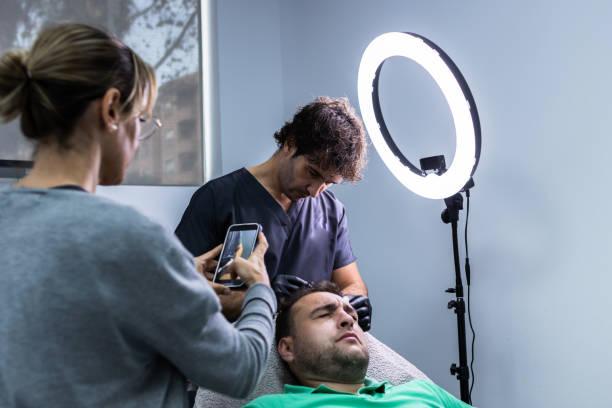
Women experiencing gradual hair thinning may be candidates for PRP Hair Treatment in Abu Dhabi, particularly when viable follicles are still producing finer or weaker hairs. The important first step is determining whether the thinning reflects follicular miniaturization, temporary shedding, breakage, nutritional factors, hormonal changes, or another scalp condition before treatment is planned.
Why Female Hair Thinning Needs a Different Assessment
Female hair loss does not always follow the classic frontal-to-crown pattern commonly associated with male pattern hair loss. Many women notice reduced density around the central part, upper scalp, crown, or several areas simultaneously while the frontal hairline remains relatively preserved.
Central Scalp Thinning
A widening central part can be an early sign that individual follicles are producing progressively finer hairs. Because the scalp becomes more visible between neighboring hairs, the apparent loss of density can become noticeable before a woman experiences obvious bald patches.
Diffuse Reduction in Density
Some women develop a more generalized reduction in hair volume. In this situation, examining several scalp zones is more useful than focusing on a single area because the underlying pattern may involve the frontal, mid-scalp, and crown regions to different degrees.
Hair Shaft Breakage
Not every reduction in hair volume originates at the follicle. Heat styling, chemical processing, traction from tight hairstyles, and environmental exposure can damage the shaft and create shorter broken hairs that resemble thinning.
A clinical assessment should therefore distinguish follicular miniaturization from mechanical hair damage before PRP is considered.
How PRP Hair Treatment in Abu Dhabi Is Planned for Women
PRP treatment is not simply a matter of injecting platelet-rich plasma across the entire scalp. The treatment area should be determined from the woman's individual pattern of thinning and the condition of the follicles within those zones.
Scalp Mapping
A clinician can assess the part line, frontal region, mid-scalp, crown, and surrounding areas to identify where density has changed. Trichoscopy can provide additional information about hair shaft diameter, follicular units, miniaturization, and the presence of different hair-growth patterns.
Injection Depth and Distribution
The scalp contains multiple anatomical layers, so injection placement needs to be controlled. Treatment planning should account for the targeted follicular region, scalp thickness, spacing between injection points, and the pattern of hair loss rather than using an identical grid for every patient.
Follicle Viability
PRP is intended as a supportive treatment for follicles that remain biologically active. It cannot recreate a follicle that has been permanently destroyed or replace substantial areas where follicles are no longer present.
This distinction is particularly important when a woman has experienced progressive thinning for many years.
Pattern Differences That Can Change PRP Suitability
| Hair-thinning pattern | What assessment looks for | Potential PRP role |
|---|---|---|
| Widening central part | Reduced caliber and density around the part | May support existing miniaturized follicles |
| Diffuse upper-scalp thinning | Changes across several scalp zones | May be considered when viable follicles remain |
| Crown-focused thinning | Reduced density around the vertex | Can target follicles within the affected zone |
| Hairline preservation with mid-scalp loss | Distribution of density behind the frontal hairline | Requires pattern-specific mapping |
| Breakage-related volume loss | Short broken hairs and shaft damage | Underlying cause should be addressed first |
| Sudden shedding | Recent change in hair-cycle behavior | Cause should be investigated before treatment |
The table highlights why the same PRP protocol should not automatically be applied to every woman with reduced hair density.
What Can Affect Hair Thinning in Abu Dhabi
The local environment can influence how hair and scalp problems are perceived and managed. Strong sunlight, high outdoor temperatures, perspiration, and prolonged exposure to indoor air conditioning can create additional scalp and hair-care considerations.
Heat and Scalp Perspiration
Frequent sweating can leave the scalp feeling oily or irritated, particularly when combined with styling products or infrequent cleansing. This does not by itself establish the cause of hair loss, but scalp condition remains relevant when planning any injectable scalp procedure.
Strong Sun Exposure
Repeated ultraviolet exposure can affect the hair shaft and scalp surface. Women who spend substantial time outdoors should discuss appropriate scalp protection and post-treatment sun precautions with their clinician.
Air-Conditioned Environments
Long periods in air-conditioned environments can contribute to a dry-feeling scalp and hair. Hair-care routines should therefore consider both outdoor heat and indoor environmental changes rather than treating them as separate issues.
When PRP May Be Considered for Female Thinning
PRP may be considered when assessment indicates that thinning follicles are still present and the treatment objective is to support the existing growth environment.
Early Miniaturization
When hairs have become finer but follicles remain active, treatment may be incorporated into a broader hair-management plan. Earlier assessment can also establish a useful baseline for monitoring future changes.
Stable but Reduced Density
Some women have persistent thinning without obvious rapid progression. In these cases, the goal may be to support existing hair rather than attempt to replace absent follicles.
Diffuse Thinning With Identifiable Follicles
Diffuse thinning requires careful mapping because treatment should follow the actual distribution of follicular change. A broad scalp problem does not necessarily mean every region needs identical treatment.
Women can also review the broader approach to hair restoration and scalp care through the hair restoration services available at Tajmeels Clinic before deciding which treatment pathway fits their condition.
Situations That Need Further Investigation First
PRP should not automatically be the first response to every case of female hair thinning. The underlying cause matters because different conditions require different management strategies.
Sudden or Unexplained Shedding
A rapid increase in shedding can have many potential causes. A clinician may need to investigate recent illness, major physiological changes, nutritional concerns, medication effects, hormonal factors, or other relevant history before selecting a treatment.
Scalp Inflammation
Persistent redness, scaling, tenderness, itching, or other scalp changes may indicate an underlying dermatological problem. Treating the follicles without addressing an active scalp disorder may not provide the intended result.
Significant Follicle Loss
When examination shows extensive areas where functioning follicles are no longer present, PRP has an important limitation. It can support viable follicles but cannot restore follicles that have been permanently lost.
How Treatment Progress Is Monitored
Hair changes occur gradually because follicles operate through biological growth cycles. Immediate visual changes should therefore not be used as the main measure of whether treatment is working.
Standardized Photography
Consistent photographs can help compare the part line, crown, frontal region, and overall scalp coverage over time. Lighting, hair position, and camera distance should remain as consistent as possible.
Trichoscopic Comparison
Where appropriate, magnified scalp assessment can help track changes in hair caliber and follicular characteristics that may not yet be obvious in ordinary photographs.
Hair-Cycle Timing
A meaningful assessment requires sufficient time for biological changes to become visible. The appropriate review interval depends on the individual's diagnosis, treatment plan, and baseline condition.
Questions Women Should Clarify Before PRP
Is PRP appropriate for every type of female hair thinning?
No. Suitability depends on the cause of thinning, follicle viability, scalp condition, and the overall pattern of hair loss.
Can PRP restore follicles that are completely gone?
No. PRP may support viable follicles, but it cannot recreate follicles that have been permanently destroyed or removed.
Does female hair thinning always require the same injection pattern?
No. Injection areas and distribution should reflect the individual's thinning pattern and scalp anatomy.
Can breakage be mistaken for hair loss?
Yes. Hair-shaft breakage can reduce visible hair volume without representing the same follicular process as progressive miniaturization.
What Women in Abu Dhabi Should Do Next
Choosing PRP should begin with diagnosis rather than with a predetermined injection schedule.
Start With a Scalp and Follicle Assessment
The first step is to identify where density has changed and whether the affected follicles remain active. A detailed scalp examination can distinguish pattern-related thinning from breakage, temporary shedding, or scalp disorders.
Build the Plan Around the Thinning Pattern
The treatment approach should correspond to the actual distribution of follicular change. Central-part thinning, diffuse loss, and crown-focused thinning can require different mapping and monitoring strategies.
Arrange a Consultation Before Choosing PRP
A consultation gives the clinician an opportunity to review the history of the thinning, examine the scalp, discuss previous treatments, and establish realistic objectives. This is particularly useful when hair loss has been gradual or has multiple possible contributing factors.
For women travelling from Abu Dhabi to Dubai for assessment, planning the consultation around a complete scalp evaluation can make the visit more useful than selecting treatment solely from the appearance of reduced hair density.
The Strategic Investment
Female hair thinning is easier to manage when the treatment decision is based on follicular condition rather than appearance alone. For women considering a structured evaluation and individualized PRP plan, Tajmeels Clinic provides a clinical setting where the scalp, hair pattern, treatment objectives, and longer-term restoration strategy can be assessed together.
 English
 Arabic
 French
 Spanish
 Portuguese
 Deutsch
 Turkish
 Dutch
Dutch
 Italiano
 Russian
 Romaian
 Portuguese (Brazil)
 Greek
Greek