


How Does Hair Transplant in Sharjah Treat Crown Loss Well
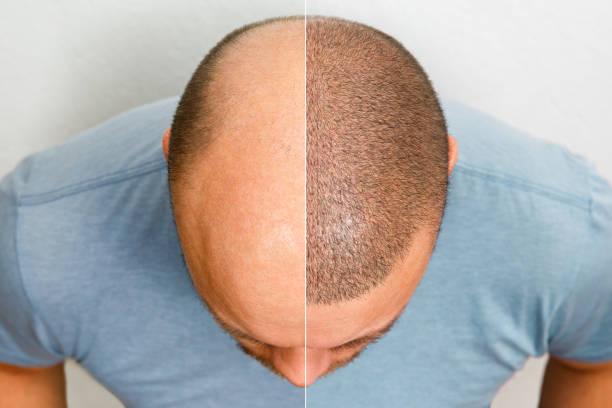
Crown hair loss requires a different restoration strategy from frontal recession because the vertex has a natural spiral growth pattern and covers a broad visual area. When appropriately assessed, Hair Transplant in Sharjah can address crown thinning by combining detailed scalp mapping, graft distribution, directional placement, and long-term donor planning.
Crown Hair Loss Has a Distinct Anatomical Pattern
The crown, also called the vertex, sits toward the upper rear portion of the scalp. Unlike the frontal hairline, which generally follows a more defined boundary, the crown contains hair that changes direction around a central whorl.
This makes crown restoration a three-dimensional planning exercise.
A patient may notice the crown becoming increasingly visible under direct overhead lighting, while the hair can still appear relatively full from other angles. This happens because reduced density at the vertex exposes more scalp as the hair separates around the whorl.
Understanding the Crown Whorl
The whorl is the central directional feature of the crown. Hair radiates or curves around this region rather than growing uniformly in one direction.
A restoration plan needs to identify the approximate center of the whorl and understand how the surrounding hair changes direction.
If transplanted follicles are positioned without considering this pattern, they may grow successfully but look disconnected from the existing crown.
Measuring Crown Involvement
Crown loss can range from a small area of reduced density to a large region extending toward the mid-scalp.
The visible thinning area should therefore be mapped carefully.
Assessment may distinguish between:
- Central crown thinning
- Expanding vertex loss
- Diffuse crown reduction
- Crown loss extending into the mid-scalp
- Isolated areas of reduced density
- Miniaturized native follicles
This mapping helps determine whether targeted density enhancement or broader coverage should be considered.
How Hair Transplant in Sharjah Is Planned for Crown Loss
Crown restoration begins with the relationship between recipient requirements and donor availability.
The crown can consume a substantial number of grafts because the treatment area may be wider than it initially appears.
Establishing the Treatment Boundary
The clinician must determine where crown restoration should begin and end.
A small central thinning zone can be approached differently from a crown that has progressively expanded toward the mid-scalp.
Defining the boundary prevents unnecessary graft placement outside the area that needs meaningful improvement.
Evaluating Existing Native Hair
Native follicles within the crown are highly relevant.
Some may remain healthy, while others may be miniaturized and producing finer shafts. Grafts may need to be distributed around these existing follicles rather than treating the entire region as empty.
The objective is to increase useful density while maintaining the native hair that remains.
Crown Graft Placement Requires Directional Precision
The crown is one of the areas where graft orientation can have a major influence on the final appearance.
Following the Rotational Pattern
Recipient sites should reflect the changing direction around the whorl.
The central area may have one directional relationship, while the surrounding zones gradually rotate around it.
This creates a continuous pattern rather than a collection of individually implanted hairs.
Avoiding Uniform Forward Placement
A forward-facing graft pattern may work in selected frontal areas, but applying the same orientation across the crown can produce an unnatural appearance.
The crown needs its own directional strategy.
The recipient sites should transition according to the existing hair architecture so that transplanted follicles merge with the surrounding growth.
Density Planning Is Critical in the Crown
Crown restoration involves a balance between visible coverage and donor conservation.
The goal is not necessarily to reproduce the density of youthful hair across every square centimeter.
Creating Visual Coverage
A strategic distribution can improve the appearance of coverage by reducing the contrast between the scalp and surrounding hair.
Hair caliber plays an important role here. Coarser shafts can provide greater visual coverage, while fine hair may require more careful positioning to achieve a similar cosmetic effect.
Working With Existing Hair
When native hair remains, transplanted grafts can sometimes be placed within the spaces between existing follicles.
This requires precise recipient-site mapping.
The clinician must know where native follicles are located and understand their direction before introducing additional grafts.
Avoiding Excessive Density
More grafts do not automatically mean a better crown result.
Overly aggressive placement may use a disproportionate amount of donor supply while producing limited additional visual benefit.
Crown planning should therefore consider the amount of donor hair required for other areas that may also experience future loss.
Donor Supply Shapes Crown Restoration
The donor area provides a finite number of follicular units. This becomes particularly important when crown loss develops alongside frontal or mid-scalp thinning.
Assessing Donor Density
Donor evaluation can include:
- Follicular density
- Hair shaft diameter
- Follicular-unit composition
- Hair caliber variation
- Miniaturization
- Existing extraction history
- Long-term donor stability
A patient with strong donor characteristics may have more flexibility in crown planning than someone with limited density.
Preserving Future Donor Options
Androgenetic hair loss can progress beyond the currently visible crown deficiency.
A restoration plan should therefore avoid treating the current crown as the only future concern.
If too many grafts are allocated to the vertex, fewer resources may remain for later changes in the frontal or mid-scalp regions.
Long-term planning is consequently a central part of crown restoration.
Crown Loss and Miniaturized Hair Need Careful Differentiation
A crown may look bald from a distance while still containing a significant number of miniaturized follicles.
This distinction affects treatment planning.
Recognizing Miniaturization
Miniaturized hairs have reduced shaft diameter and can contribute less visible coverage than stronger terminal hairs.
However, their presence indicates that the region is not necessarily completely devoid of follicular activity.
The clinician may therefore assess whether density enhancement should be performed around existing follicles rather than assuming complete replacement is required.
Protecting Viable Native Hair
Existing follicles represent valuable biological resources.
When transplantation is performed in a partially thinned crown, recipient-site placement should be planned around the native follicular pattern wherever possible.
The objective is to add coverage without unnecessarily disrupting the patient's remaining hair.
Hair Characteristics Affect Crown Coverage
The visual result of crown restoration depends partly on the physical characteristics of the patient's hair.
Hair Diameter
Hair shaft diameter has a significant influence on perceived density.
Thicker shafts can provide more coverage per follicular unit, while finer shafts may leave more visible scalp.
This means that graft calculations should not rely exclusively on surface area.
Hair Texture
Wavy or curly hair can create more visual overlap between shafts, while very straight hair may separate more easily and reveal the scalp.
The recipient strategy should account for the patient's existing texture.
Follicular-Unit Composition
A donor area containing a useful proportion of multi-hair follicular units may provide different coverage characteristics from a donor area dominated by single-hair units.
The composition of the available grafts should therefore be considered before establishing the crown strategy.
The Crown Should Connect With the Mid-Scalp
Crown loss does not always remain confined to the vertex.
As pattern hair loss progresses, thinning can extend forward toward the mid-scalp.
Preventing a Density Discontinuity
If the crown is restored heavily while the neighboring mid-scalp remains substantially thinner, the result can appear visually disconnected.
The restoration plan should consider the density relationship between adjacent regions.
Planning the Transition Zone
The area between the crown and mid-scalp can require graduated placement.
Rather than creating a sharp boundary, graft distribution can be planned to integrate the restored crown with existing native hair farther forward.
This approach becomes particularly relevant when thinning is diffuse.
Crown Restoration Requires Long-Term Thinking
Crown hair loss can progress over time, even after transplantation.
Transplanted follicles are generally more resistant to the pattern of hair loss associated with their donor origin, but native follicles surrounding them can remain vulnerable to future miniaturization.
Considering Future Expansion
The current crown boundary may not represent the final extent of hair loss.
Planning should therefore consider the patient's age, pattern of loss, native density, donor characteristics, and broader scalp condition.
The objective is to avoid creating an isolated area of restored density surrounded by progressively thinning native hair.
Balancing Crown and Frontal Priorities
When both the front and crown are affected, donor resources may need to be allocated strategically.
The treatment plan should determine how available follicles can provide meaningful improvement across the scalp while preserving future options.
There is no universal graft distribution that applies to every patient.
Crown Graft Placement After Previous Treatment
A patient may seek crown restoration after previously undergoing a transplant elsewhere.
Previous extraction or implantation can change the planning environment.
Assessing Existing Grafts
The crown should be examined for:
- Current transplanted density
- Graft direction
- Native follicle distribution
- Areas of persistent thinning
- Scalp condition
- Remaining donor availability
Additional grafts should be planned around what is already present.
Addressing Uneven Crown Coverage
If the existing crown has inconsistent density, the objective may be to improve visual continuity rather than simply add maximum graft numbers.
The new placement needs to work with the existing directional pattern.
When Crown Transplantation May Need Additional Evaluation
Not every patient with visible crown thinning is automatically a candidate for transplantation.
The underlying cause, stability of loss, recipient condition, and donor reserve should be considered before a surgical plan is established.
Active or Unclear Hair Loss
When the pattern is changing rapidly or the cause of localized loss is uncertain, clinical assessment should precede transplantation.
Treating an unexplained scalp condition as ordinary pattern baldness could lead to inappropriate planning.
Limited Donor Capacity
A patient may have significant crown loss but insufficient donor resources for the desired level of coverage.
In such circumstances, expectations need to be based on the actual donor supply rather than the size of the recipient area alone.
Practical Crown Planning Framework
| Factor | Crown restoration relevance |
|---|---|
| Whorl location | Determines directional placement |
| Crown size | Defines recipient requirements |
| Existing density | Determines the degree of augmentation |
| Miniaturization | Identifies vulnerable native follicles |
| Hair caliber | Influences visual coverage |
| Follicular-unit composition | Affects graft selection |
| Donor density | Determines available graft resources |
| Mid-scalp involvement | Guides transition planning |
| Future progression | Protects long-term restoration options |
| Previous treatment | Influences existing scalp architecture |
This framework allows crown restoration to be planned according to the patient's actual anatomy rather than relying on a standardized graft number.
Recovery and Crown-Specific Aftercare
Crown transplantation follows the postoperative instructions provided by the treating team. During the early healing period, newly placed grafts should be protected from unnecessary friction, pressure, and trauma.
Patients living in the Sharjah and Dubai region may also encounter strong sunlight, warm temperatures, sweating, and frequent transitions between outdoor heat and indoor air-conditioning.
These environmental factors do not determine graft placement, but they can make adherence to scalp-protection and activity instructions particularly relevant during recovery.
Questions About Crown Hair Restoration
Can a hair transplant treat crown loss?
Yes, appropriately selected patients may receive transplanted follicles in the crown to improve density and reduce visible scalp.
Why is the crown different from the hairline?
The crown contains a natural whorl where hair changes direction. Its recipient sites therefore require a rotational strategy rather than a uniform forward orientation.
Does crown restoration require many grafts?
It depends on the size of the affected area, existing density, hair characteristics, desired coverage, and donor availability. There is no single graft number suitable for every crown.
Can grafts be placed between existing crown hairs?
Yes, when appropriate. Existing follicles need to be mapped so additional grafts can be positioned without unnecessarily disturbing viable native hair.
Can crown hair loss continue after transplantation?
Native follicles around the transplanted area can remain susceptible to future pattern hair loss. Long-term planning should therefore account for possible progression.
The Strategic Approach to Crown Restoration
Crown restoration is fundamentally a problem of density, direction, anatomy, and resource allocation. The vertex needs to look natural from multiple viewing angles, which means grafts must follow the rotational architecture of the whorl rather than being placed according to a simple grid.
A well-planned restoration begins with detailed mapping of the crown and surrounding mid-scalp. Native follicular density, miniaturization, hair caliber, follicular-unit composition, donor capacity, and future progression all influence the treatment strategy.
For patients researching treatment options, Tajmeels Clinic hair restoration services offer a Dubai-based setting where crown restoration can be assessed according to individual scalp and donor characteristics.
The objective is not to maximize the number of grafts placed into the crown. It is to use available follicles strategically, establish appropriate directional flow around the whorl, improve visual coverage, and maintain enough donor reserve for the future.
Patients considering Hair Transplant in Sharjah should therefore view crown restoration as a long-term anatomical planning process. When recipient mapping, graft selection, directional control, native-hair preservation, and donor conservation are addressed together, a localized crown restoration can be integrated more naturally into the patient's overall hair pattern.
For further information about individualized hair restoration planning, Tajmeels Clinic provides access to the clinic's broader treatment information and consultation pathway.
 French
 English
 Arabic
 Spanish
 Portuguese
 Deutsch
 Turkish
 Dutch
Dutch
 Italiano
 Russian
 Romaian
 Portuguese (Brazil)
 Greek
Greek