


Mohair and Wool: A Recurring Material in Raf Simons Knitwear
A good sweater does more than keep you warm. The yarn, surface, weight, and shape can completely change how an outfit looks and feels.
Mohair and wool appear repeatedly across Raf Simons knitwear, with documented pieces showing different fiber ratios, knit structures, and silhouettes. The combination works because it can bring warmth, texture, softness, and visual depth to a single garment.
Why Mohair and Wool Keep Appearing in Raf Simons Knitwear
Mohair and wool are useful for very different reasons.
Wool naturally gives knitwear substance and warmth. Mohair adds a distinctive surface quality, often creating the slightly fuzzy appearance associated with textured luxury knitwear.
The interesting part is how the fibers can be adjusted to change the character of a garment.
For example, one documented Raf Simons ribbed sweater uses 43% mohair, 40% wool, and 17% nylon. Another AW22 sweater uses 69% wool, 17% mohair, 10% viscose, and 4% nylon. These examples show that there is no single formula behind the material combination.
What the combination can offer
-
Warmth: Wool contributes insulation and body.
-
Texture: Mohair creates a soft, fuzzy surface.
-
Visual depth: Hairy fibers catch light differently from smooth yarns.
-
Structure: Wool-heavy blends can produce a more substantial hand.
-
Styling flexibility: Textured knitwear can work as the main visual element of an outfit.
That last point is particularly important for streetwear. You do not always need graphics or accessories to make a sweater noticeable. Sometimes the fabric itself does the work.
Mohair Gives Simple Silhouettes More Character
One reason textured knitwear works well within the Raf Simons design language is that surface detail can complement strong proportions.
A plain crewneck can look completely different when the yarn has a visible halo. The silhouette remains simple, but the surface creates movement whenever the wearer changes position.
Documented pieces range from slim ribbed sweaters to relaxed designs with dropped shoulders and bulky fisherman rib construction. This variety shows how the material can be used across different proportions rather than being tied to one particular fit.
For younger streetwear buyers, that creates an easy styling advantage.
A textured sweater can become the focal point without requiring a complicated outfit.
Think about texture and proportion together
If the knit is:
-
Slim: Pair it with relaxed trousers for contrast.
-
Oversized: Keep the lower half relatively controlled.
-
Bulky: Avoid stacking too many heavy layers.
-
Highly textured: Let the rest of the outfit stay visually simple.
This approach makes the fabric feel intentional rather than excessive.
[Internal link suggestion: Raf Simons Knitwear Collection]
The Archive Shows That Mohair Is More Than a Passing Trend
The strongest evidence that mohair has a meaningful place in Raf Simons' design history comes from the archive.
The AW1997 lookbook documents loose-knit mohair sweaters alongside tailored wool pieces and youth-culture-inspired clothing. That collection marked an important early point in the designer's development and connected textured knitwear with his broader interest in youth culture, subcultures, and menswear proportions.
This historical detail changes how we should view later mohair pieces.
Rather than treating mohair as simply a seasonal fabric, it can be understood as one material that has repeatedly allowed Raf Simons to explore texture and silhouette.
Later documented examples continue that material interest. An AW21 knit listed as 75% virgin wool, 18% mohair, and 7% polyamide demonstrates another variation, with wool taking the larger share while mohair remains visually important.
The percentages matter because they affect how the garment should be understood. A wool-dominant sweater and a mohair-dominant sweater will not necessarily feel or behave the same way.
How to Choose a Mohair-Wool Knit for Streetwear
Buying textured knitwear is easier when you look beyond the product name.
The first thing to check is the fiber composition. Two sweaters described as mohair blends can contain very different proportions. That difference can influence softness, weight, appearance, and how the knit feels against the body.
Next, consider construction.
A ribbed sweater creates a different visual effect from an open-knit design. A dropped shoulder changes the silhouette. A high neckline creates more coverage, while a V-neck leaves more room for layering.
A practical buying checklist
1. Check the composition.
Do not assume that every mohair blend contains a large amount of mohair.
2. Look at the knit structure.
Ribbing, fisherman rib, and looser knitting produce different textures and amounts of visual volume.
3. Consider your layering habits.
A bulky knit needs more room underneath and above it.
4. Think about proportion.
Choose a silhouette that works with the trousers and outer layers you already wear.
5. Read the care instructions.
Hairy and delicate fibers can require more careful handling than everyday cotton garments.
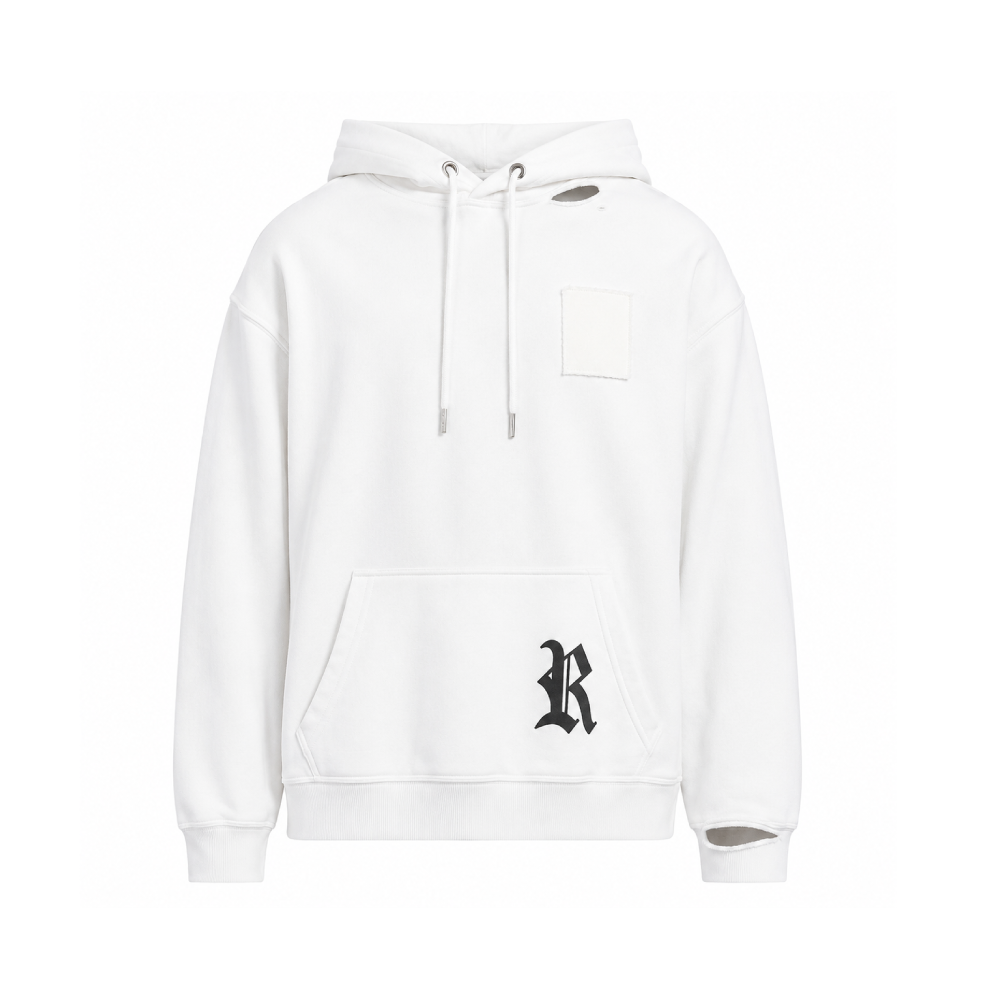
A Raf Simons Hoodie can provide a more casual base layer, while a textured knit can take the outfit in a more refined direction. A Raf Simons T-shirt works particularly well underneath when you want a lighter first layer.
Why the Material Still Matters for 2026 Wardrobes
The appeal of mohair and wool is not dependent on a short-lived trend. Their usefulness comes from the relationship between material and construction.
For a winter streetwear wardrobe, texture can add interest without forcing the outfit into a complicated direction. A muted knit with a fuzzy surface may have more visual character than a completely smooth sweater in the same color.
The important distinction is between material identity and styling hype.
A mohair-wool knit should not be purchased simply because the fiber name sounds luxurious. Look at the actual composition, construction, fit, and condition of the garment.
That is especially important when buying archive pieces or second-hand clothing, where labels, measurements, and fabric condition can vary.
FAQ
1. Why is mohair used in Raf Simons knitwear?
Mohair adds a distinctive fuzzy texture and visual softness to knitwear, while wool can provide warmth and structure. Documented Raf Simons pieces use different fiber ratios, showing that the combination is adapted to individual garment designs.
2. Is mohair warmer than wool?
Warmth depends on more than the fiber name. Fiber percentages, yarn thickness, knit density, garment construction, and layering all influence insulation. A wool-heavy blend and a mohair-heavy knit can therefore perform differently.
3. Does Raf Simons use mohair in oversized knitwear?
Yes, documented pieces include relaxed and bulky knit silhouettes, while other mohair sweaters are slimmer. This shows that mohair is used across different proportions rather than being limited to one particular fit.
4. Can a Raf Simons Hoodie work with a mohair sweater?
Yes. Use the hoodie as a casual base layer when the sweater has enough room. If both garments are oversized, keep the trousers cleaner to prevent excessive volume throughout the outfit.
5. Can a Raf Simons T-shirt be layered under textured knitwear?
Absolutely. A T-shirt provides a lightweight first layer and allows the knit to remain the main visual feature. This is particularly useful during transitional weather when a heavy base layer is unnecessary.
Conclusion: Material Is Part of the Design
Mohair and wool have appeared across different periods and constructions within Raf Simons knitwear, from early loose-knit examples to later sweaters using carefully varied fiber percentages.
The real appeal is the combination of material and silhouette. Mohair can provide texture and visual softness, while wool can add body and warmth. The final result depends on the exact blend and construction.
For men building a practical designer streetwear wardrobe, that makes fabric composition worth studying rather than treating it as a small detail on the care label.
Whether you are choosing a Raf Simons Hoodie, a Raf Simons T-shirt, or a textured knit, pay attention to fiber content, proportions, layering space, and care requirements.
CTA: Explore Raf Simons knitwear with a focus on fabric, construction, and fit, and choose pieces that add both warmth and character to your everyday wardrobe.
 Spanish
 English
 Arabic
 French
 Portuguese
 Deutsch
 Turkish
 Dutch
Dutch
 Italiano
 Russian
 Romaian
 Portuguese (Brazil)
 Greek
Greek