


Why Modular Cleanroom Solutions Are Reshaping Manufacturing in Singapore
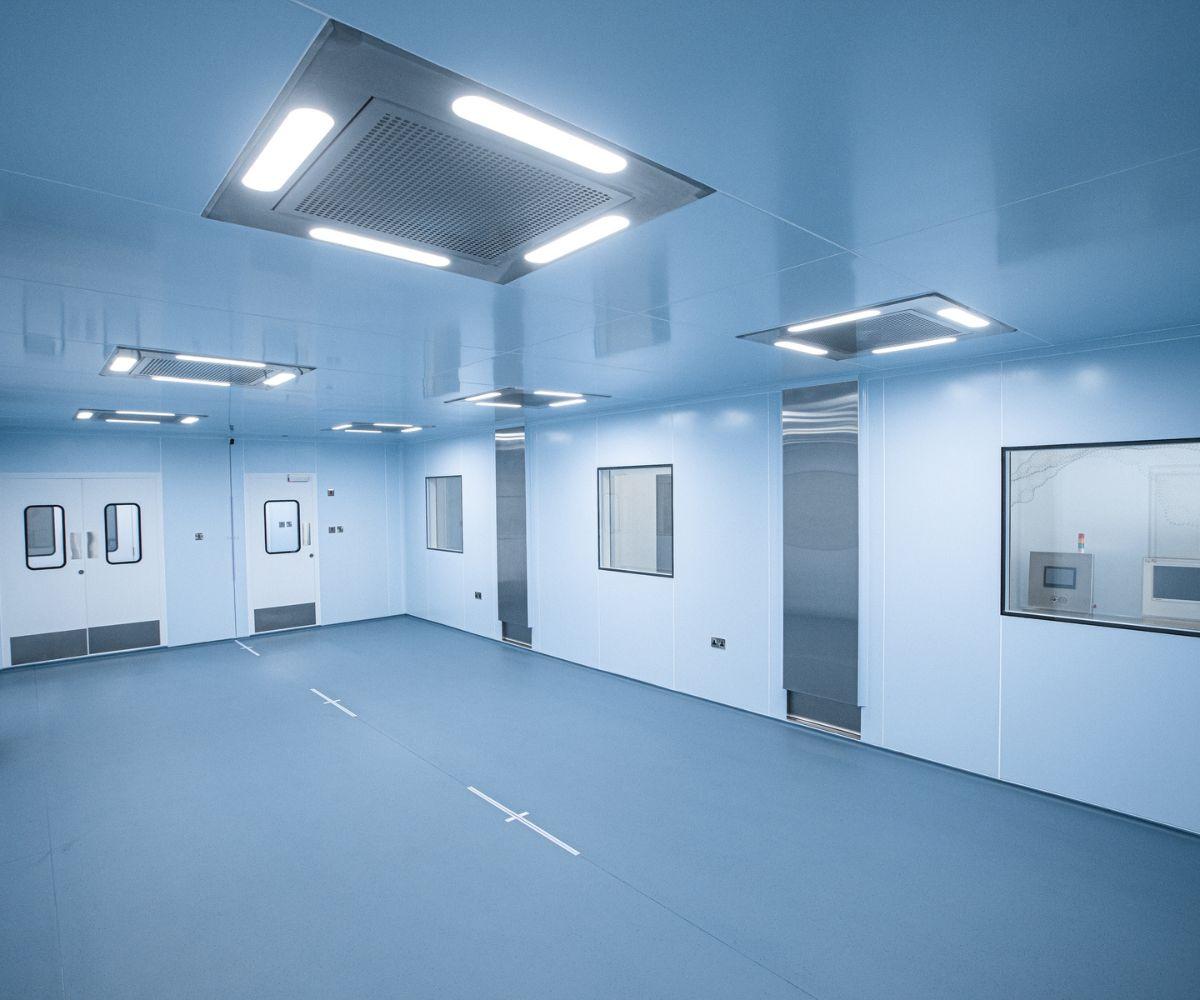
Singapore doesn't have room to waste, and neither do the companies building inside it. A country with roughly the land area of a mid-sized city is home to some of the world's most advanced semiconductor fabs, biologics plants, and medical device factories — and every square metre of contamination-controlled space costs more here than almost anywhere else in Asia. That's the backdrop against which modular cleanroom solutions have moved from a niche alternative to something close to the default choice for manufacturers who need controlled environments fast, without gutting a budget in the process.
The Space Problem Manufacturers Can't Design Around
JTC Corporation, which manages most of Singapore's industrial land, has spent the past decade pushing vertical developments and shared infrastructure precisely because horizontal expansion isn't really an option anymore. A pharmaceutical company setting up in Tuas Biomedical Park, or a chipmaker expanding near Woodlands, isn't choosing a construction method in isolation — it's working inside a footprint that was probably tight before the project even started. Traditional stick-built cleanrooms, poured and framed on site, don't handle that constraint well. Every wall panel, every HVAC run, every piece of stainless steel has to be built in place, often on a site where room for staging materials is as scarce as the floor space the cleanroom will eventually occupy.
What "Modular" Actually Means Here
A modular cleanroom is manufactured off-site, in controlled factory conditions, then shipped and assembled on location. Wall panels arrive pre-finished. HVAC components come pre-wired. Floor systems are levelled to tolerances that are genuinely difficult to hit with wet trades working on-site under time pressure. None of this is exotic — it's the same logic that made prefabricated construction popular in housing, applied to a far less forgiving environment where airflow, particle counts, and pressure differentials have to work as designed from day one, not after a round of snagging.
The practical upshot for a Singapore-based operation is that installation can often be compressed from many months down to a matter of weeks, because most of the fabrication risk — the part that used to cause delays — has already been retired in a factory before the components ever reach the site.
Where This Fits Across Singapore's Industrial Mix
Singapore's manufacturing base isn't one industry pretending to be several — it's genuinely diverse, and modular cleanroom solutions show up across most of it. Semiconductor fabs need ISO Class 1 to Class 5 environments for photolithography and wafer handling, with airflow and vibration control that leaves almost no tolerance for error. Biologics and vaccine manufacturers, many clustered around Tuas Biomedical Park, need GMP-compliant spaces that can pass a Health Sciences Authority inspection without a redesign halfway through commissioning. Medical device makers sit somewhere in between, often needing Class 7 or Class 8 environments that still have to be validated and documented to the same rigour as their larger pharma neighbours.
What ties these together isn't the classification level — it's timeline pressure. A fab that can't get its cleanroom commissioned on schedule isn't just late; it's burning capital on equipment that can't be qualified, on staff who can't start production runs, on a facility earning nothing while it sits half-finished.
Meeting the Regulatory Bar Without Slowing Down
None of the speed advantage matters if the finished space doesn't hold up under inspection. Singapore's regulatory environment is thorough by design — the Building and Construction Authority sets structural and fire safety requirements, the National Environment Agency has its own expectations around effluent and air handling, and HSA's GMP standards apply directly to anything touching pharmaceutical production. A modular cleanroom still has to satisfy every one of these, and the components need to arrive with documentation that proves it: material certifications, weld records, airflow validation data — the full paper trail an auditor will ask for.
Good modular suppliers build this into the fabrication process rather than bolting it on afterwards. That distinction matters more than most buyers realise, until they're the ones trying to reconstruct compliance paperwork for a wall panel that was installed eight months earlier.
Speed Is a Competitive Advantage, Not Just a Convenience
There's a temptation to treat faster construction as a nice-to-have. In Singapore's manufacturing sector, it's closer to a strategic lever. Contract manufacturers competing for pharma clients are often judged partly on how quickly they can stand up new capacity. Semiconductor companies riding demand cycles that shift in months, not years, can't afford an eighteen-month build when the market window might close in twelve. A modular approach that gets a validated cleanroom operational in a fraction of the time a conventional build would take isn't just cheaper on paper — it changes what's commercially possible.
Read Also: Can a Free App Really Become a Profitable Business?
Choosing a Partner Who Understands the Market
The gap between modular cleanroom solutions that perform and ones that generate six months of remedial work usually comes down to the supplier's familiarity with Singapore's specific regulatory and climatic conditions — tropical humidity control isn't an afterthought here; it's central to the design. Look for a partner who can show completed projects in the same industry vertical, who treats validation and documentation as part of delivery rather than an extra line item, and who's still answering the phone after commissioning, when the real test of the system — day-to-day performance under production load — actually begins.
Singapore's manufacturers don't have the luxury of slow, over-engineered construction timelines. Modular cleanroom solutions were never really a trend here. They were an answer to a problem the market had already made unavoidable.
 Dutch
Dutch
 English
 Arabic
 French
 Spanish
 Portuguese
 Deutsch
 Turkish
 Italiano
 Russian
 Romaian
 Portuguese (Brazil)
 Greek
Greek