


Animal Lick Salt: A Natural Mineral Supplement for Farm Animals and Wildlife
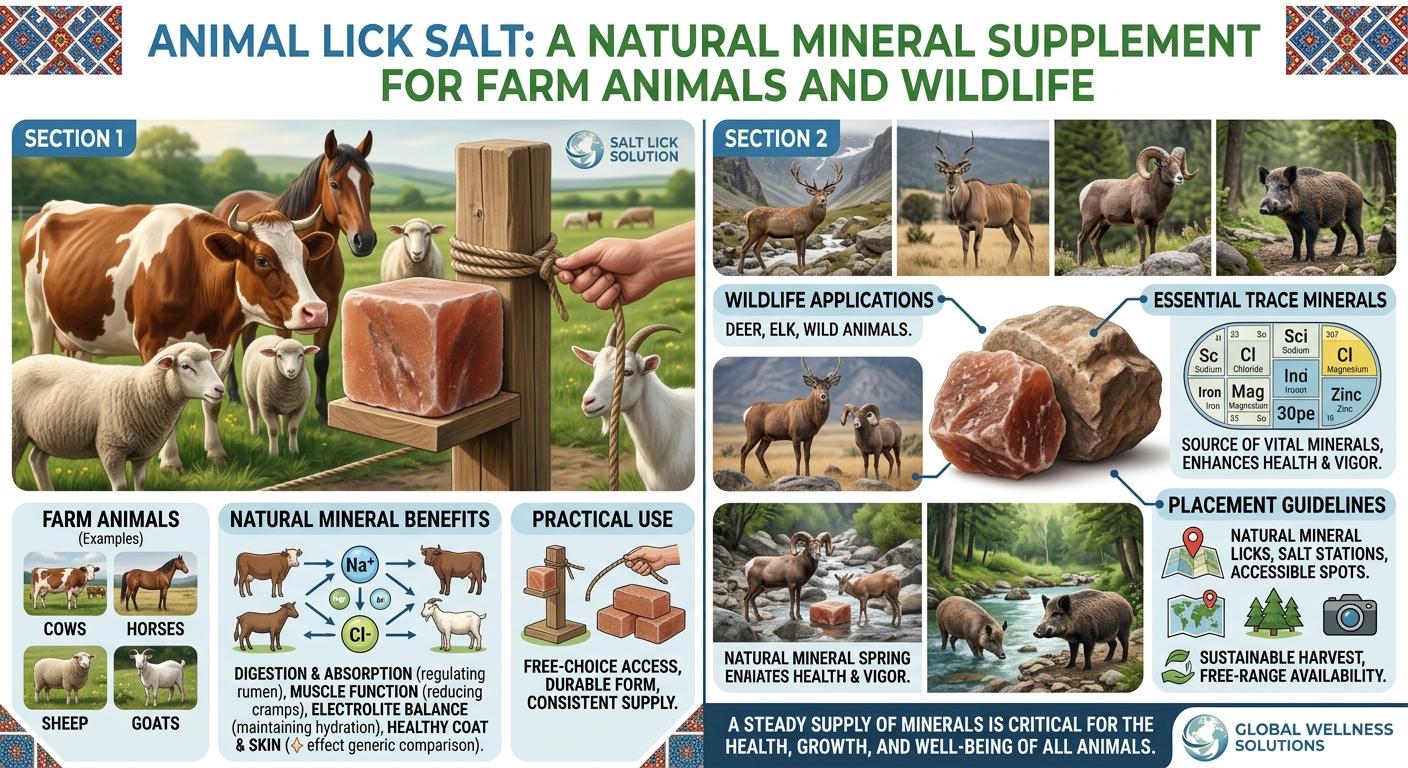
Animals need essential minerals as part of a balanced diet. Salt is one of the most important minerals because it provides sodium and chloride. These minerals support normal body functions and help animals maintain proper fluid balance.
Animal lick salt provides a convenient way for livestock and some wildlife to access salt according to their needs. Different animals may have different requirements, so the type and amount of salt should always match the animal and its diet.
Natural salt products can come in several forms, including blocks, rocks, granules, and loose salt. Choosing the right product depends on the animal, environment, and feeding system.
What Is Animal Lick Salt?
Animal lick salt is a salt product designed for animals to lick as part of their mineral intake. It is commonly provided to livestock such as cattle, horses, goats, and sheep.
Salt blocks can be placed in an accessible location where animals can reach them safely. Many blocks are designed to withstand outdoor conditions and regular use.
Some products contain only salt, while others include additional minerals. Always read the product label to understand its ingredients and intended animal species.
Benefits of Providing Salt Licks
Salt supports normal physiological functions in animals. Sodium and chloride are involved in fluid balance, nerve function, and other important processes.
Providing salt licks can also offer a convenient feeding method. Instead of mixing loose salt into every meal, farmers can provide a suitable block or lick separately.
However, salt licks should complement a balanced feeding program rather than replace proper nutrition.
Salt Lick for Cattle
A salt lick for cattle can be useful when cattle require supplemental salt in their diet.
Cattle may consume salt according to their individual needs, although intake can vary based on diet, weather, forage, and access to other mineral sources.
A salt lick for cattle should be placed where animals can easily access it without creating unnecessary competition.
Fresh, clean drinking water should always be available because adequate water intake is essential when animals consume salt.
Salt Lick for Horses
A salt lick for horses provides a simple way to offer supplemental salt.
Horses may lose electrolytes through sweating, particularly during hot weather or periods of exercise. Their complete diet should be considered when deciding whether a salt block or another salt source is appropriate.
A horse salt lick can be placed in a secure and accessible location. Monitor the horse's water supply and general eating and drinking habits.
The needs of individual horses can vary, so owners should consult a veterinarian or equine nutrition professional when they are unsure about supplementation.
Horses and Salt Licks
Horses and salt licks are often discussed together because salt can be an important part of equine nutrition.
Some horses regularly use a salt block, while others may prefer loose salt. Individual preferences can differ.
When choosing salt for horses, consider the product's ingredients, size, hardness, and intended use.
Do not assume that every mineral block is suitable for every horse. Always check the label before offering it.
Salt Lick Round Rock
A salt lick round rock can provide a natural-looking option for farms, pastures, and outdoor feeding areas.
Round salt rocks are often easy to position in a feeding space. Their solid structure also makes them convenient for outdoor use.
Before placing a salt lick round rock, choose an area that remains reasonably clean and dry. This helps reduce contamination from mud, manure, or other materials.
Deer Salt Lick
A deer salt lick is commonly associated with wildlife observation and supplemental mineral sites.
Salt naturally attracts many animals because sodium is an essential mineral. However, wildlife feeding practices can have local rules and ecological considerations.
A deer salt lick should never be treated as a substitute for the animal's natural diet.
Anyone considering supplemental feeding for wildlife should first check local regulations and wildlife-management guidance.
Salt Lick for Deer
A salt lick for deer may attract deer to a specific area because of the salt's mineral content.
Hunters, wildlife observers, and landowners sometimes discuss salt-based mineral sites, but their legality and environmental effects vary by location.
If salt is used around wildlife, avoid placing it near roads, homes, water sources, or areas where animals could become vulnerable to traffic or predators.
Deer Licking Salt Block
A deer licking salt block can be made from compressed or natural salt.
The block gradually wears down as animals lick it. Outdoor conditions can also affect how quickly it dissolves.
For wildlife applications, responsible placement is important. Excessive concentrations of animals around one location can create sanitation and environmental concerns.
Why Salt Is Important for Livestock
Sodium and chloride play important roles in normal animal nutrition. They help maintain fluid balance and support several biological functions.
For this reason, farmers often include salt within a broader mineral-feeding program.
The appropriate amount depends on the species, age, diet, climate, and production conditions. A mineral program should therefore be planned carefully rather than based on one general amount for all animals.
Salt Licks for Horses
Salt licks for horses can be offered as part of a balanced equine feeding plan.
Some owners prefer blocks because they are simple to provide and can remain available for longer periods. Others use loose salt because it can be measured more precisely.
Both approaches have advantages depending on the horse and feeding system.
Always make sure the horse has access to fresh water. If a horse's salt intake or hydration is a concern, professional nutritional advice can help.
Choosing the Right Animal Salt Lick
Choosing an animal salt lick starts with identifying the species that will use it.
A product designed for cattle may not have the same formulation as one designed for horses or other animals.
Before buying, check:
- Intended animal species
- Ingredients
- Salt concentration
- Added minerals
- Block size
- Product weight
- Feeding instructions
- Storage requirements
A clear product label makes it easier to select a suitable option.
Himalyan Pink Salt for Animal Licks
Himalyan pink salt is sometimes used as a natural salt source for animal products. Its distinctive pink appearance comes from naturally occurring minerals in the salt.
However, color alone does not determine whether a salt product is suitable for animals.
When choosing Himalyan pink salt for an animal lick, look for a product specifically prepared and labeled for animal use. The animal's overall mineral intake should also be considered.
Natural appearance should never replace proper product information.
Natural Salt Licks for Outdoor Areas
Outdoor salt licks need to withstand changing weather conditions.
Rain can gradually dissolve salt blocks, while mud and dirt can contaminate products placed directly on the ground.
A sheltered feeding location can help extend the useful life of a block. It can also make the lick easier for farmers to monitor.
For livestock, keep the salt source in an area that animals can reach comfortably without crowding.
Monitoring Salt Intake
Providing salt does not mean that more salt is always better.
Animals should receive an appropriate amount based on their nutritional needs. Excessive salt intake can become a problem, particularly when adequate water is not available.
Farmers should monitor the condition of salt blocks and observe whether animals are using them excessively or not at all.
Changes in drinking behavior, appetite, or general condition should be discussed with a veterinarian or qualified animal nutrition professional.
Animal Salt Lick and Fresh Water
Fresh water is an essential part of any salt supplementation program.
Animals consuming salt need reliable access to clean drinking water. Water containers should be checked regularly and kept free from contamination.
This is especially important during hot weather, when animals can have increased water requirements.
A good feeding setup therefore includes suitable feed, appropriate mineral supplementation, and dependable access to clean water.
Final Thoughts
Animal lick salt can provide a practical source of supplemental salt for livestock and, in some circumstances, wildlife.
Products such as a salt lick for cattle, horse salt lick, deer salt lick, and salt lick round rock serve different purposes and should be selected according to the intended animal.
Himalyan pink salt may be used in some animal salt products, but the product must be specifically suitable for animal consumption.
Whether you choose blocks, rocks, or loose salt, always follow product directions and consider the animal's complete diet. Most importantly, provide clean drinking water and seek professional advice when nutritional needs are uncertain.
Frequently Asked Questions
1. What is animal lick salt?
Animal lick salt is a salt product provided to animals as a supplemental source of sodium and chloride.
2. Can cattle use salt licks?
Yes, suitable salt licks for cattle are commonly used as part of livestock mineral management.
3. Is a horse salt lick suitable for every horse?
Not necessarily. Horses have different diets and nutritional needs, so the product should be appropriate for the individual horse.
4. Can deer use a salt lick?
Deer may be attracted to salt, but wildlife feeding and mineral sites can be regulated. Check local wildlife rules before using a salt lick for deer.
5. Is Himalyan pink salt suitable for animals?
Some animal products use Himalyan pink salt, but only use a product that is specifically labeled and formulated for the intended animal.
 French
 English
 Arabic
 Spanish
 Portuguese
 Deutsch
 Turkish
 Dutch
Dutch
 Italiano
 Russian
 Romaian
 Portuguese (Brazil)
 Greek
Greek