


How Contractors Can Manage Valuable Assets Throughout a Construction Project
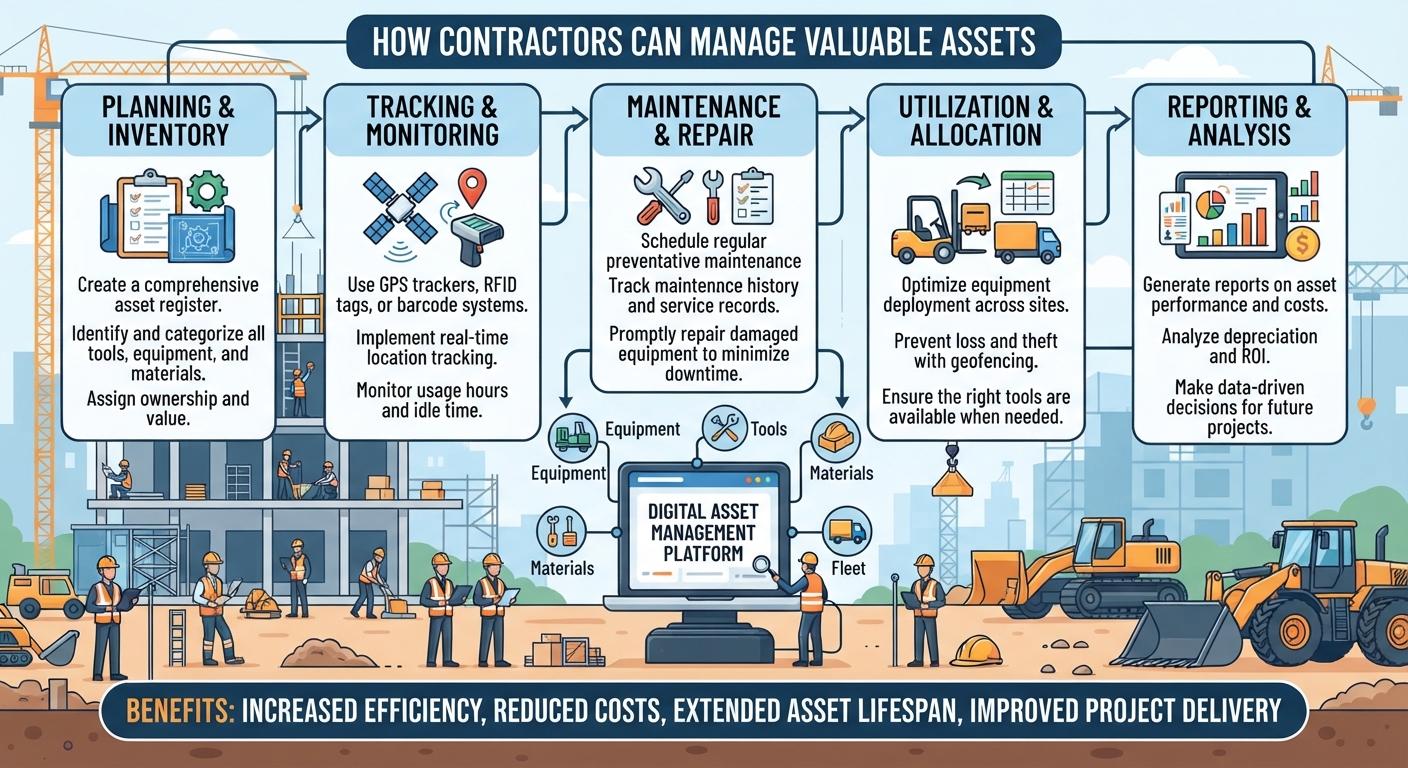
Construction projects depend on a wide range of valuable assets to keep daily site activities moving. Equipment, tools, attachments, generators, pumps, temporary resources, and other items may move between work areas as project requirements change.
When contractors do not have clear information about these assets, teams can spend valuable time searching for resources, dealing with shortages, or purchasing items that are already available somewhere on the site.
For contractors looking for a more organized approach, Construction asset tracking software can help maintain visibility into asset location, status, assignment, condition, availability, and movement throughout the project. Better asset information allows site teams to make more informed decisions and maintain stronger control over valuable resources.
Why Asset Management Matters on Construction Sites
Construction assets represent a significant investment. Losing track of an item or leaving it unused can affect both productivity and project costs.
Poor asset control can lead to:
-
Time spent searching for resources
-
Unnecessary purchases
-
Duplicate rentals
-
Unclear responsibility
-
Delayed construction activities
-
Poor utilization
-
Difficulty locating valuable assets
-
Limited visibility into asset condition
Managing assets effectively helps contractors make sure resources are available when they are needed and used where they provide the most value.
Create a Complete Asset Inventory
The first step in managing construction assets is knowing exactly what is available.
A useful asset record can include:
-
Asset identification
-
Asset type
-
Current location
-
Assigned activity
-
Current status
-
Condition
-
Availability
-
Maintenance requirements
-
Usage information
This creates a reliable foundation for managing assets throughout the project.
An inventory should be updated as assets are added, transferred, repaired, stored, or removed from service.
Track Where Assets Are Located
Construction sites are constantly changing. An asset may start in a storage area, move to a work zone, then be transferred to another section of the site.
Without accurate location information, finding that asset can take unnecessary time.
Location records can help supervisors determine:
-
Where the asset is currently located
-
Which work area is using it
-
Who is responsible for it
-
Whether it is available
-
Where it needs to go next
This can make daily site coordination much easier.
Organize Assets by Status
Knowing the location of an asset is useful, but location alone does not tell the full story.
Assets may be:
-
Available
-
Assigned
-
In use
-
Idle
-
Stored
-
Under inspection
-
Under maintenance
-
Awaiting repair
Clear status categories help supervisors understand whether an asset can actually support another activity.
For example, an item may be physically present at the construction site but already assigned to another crew.
Assign Assets to Specific Activities
Whenever practical, assets should be connected to the work they support.
An asset assignment can identify:
-
Work activity
-
Work area
-
Responsible team
-
Expected duration
-
Required date
-
Current user
This improves accountability and gives supervisors better visibility into when assets may become available again.
Clear assignments can also reduce conflicts when several teams need the same resources.
Monitor Asset Condition
Asset control should include condition information as well as location.
An item may be available but not suitable for use because it is damaged, incomplete, or waiting for inspection.
Condition records can help identify assets that are:
-
Ready for use
-
Damaged
-
Under inspection
-
Awaiting repair
-
Missing components
-
Restricted from use
This helps site teams make better decisions before assigning an asset to an important activity.
Connect Asset Tracking With Equipment Operations
Construction assets do not always operate independently.
Attachments, generators, pumps, tools, and supporting resources may be linked to equipment used for specific construction activities.
Keeping this information connected can make resource planning easier.
For example, a particular attachment may be needed alongside a specific piece of equipment for an upcoming activity. Knowing where both resources are located can prevent unnecessary searching or last-minute arrangements.
Improve Accountability Across Teams
Construction assets often move between workers, supervisors, crews, and work areas.
When movement is not recorded, responsibility can become unclear.
A structured asset process can document:
-
Who received the asset
-
Where it was assigned
-
When it moved
-
When it was returned
-
Its condition when transferred
This creates a clearer history and can reduce confusion when assets are shared.
Standardize Asset Requests
A consistent process for requesting assets can improve allocation.
A request might include:
-
Asset type
-
Quantity
-
Construction activity
-
Required location
-
Required date
-
Expected duration
-
Priority
Standardized requests provide supervisors with enough information to determine whether the requested asset is available and how it should be allocated.
Reduce Unnecessary Purchases and Rentals
Poor visibility can result in unnecessary spending.
A team may request a new tool or rental resource simply because they do not know that a suitable asset already exists elsewhere on the project.
Before purchasing or renting additional resources, supervisors can review current asset availability.
This does not eliminate the need for new purchases or rentals, but it helps ensure decisions are based on accurate information.
Track Asset Transfers
Assets may move several times during a construction project.
For example, a generator may support one work area before being transferred to another location. Tools and attachments may also move between crews as activities progress.
Recording transfers helps maintain an accurate picture of where resources are and how they are being used.
Transfer records can include:
-
Previous location
-
New location
-
Transfer date
-
Responsible person
-
New assignment
-
Current condition
Improve Asset Utilization
Asset availability is only one part of effective management.
Contractors should also consider how often assets are actually being used.
Utilization information can highlight:
-
Frequently used resources
-
Underused assets
-
Long idle periods
-
High-demand asset categories
-
Resources frequently transferred between activities
This information can help contractors make better allocation decisions and improve the value they receive from their existing resources.
Coordinate Assets With Maintenance
Maintenance can affect asset availability throughout a project.
An item may require inspection or repair before it can be assigned to another activity.
Asset records should therefore include maintenance status where appropriate.
This helps supervisors avoid assigning resources that are not currently ready for use.
Keep Field Information Current
Asset information should be updated whenever an important change occurs.
Updates may be needed when an asset:
-
Changes location
-
Receives a new assignment
-
Becomes unavailable
-
Enters maintenance
-
Returns to service
-
Is transferred between teams
Regular updates keep asset records useful and reduce the risk of decisions being made from outdated information.
Use Historical Data for Better Planning
Asset history can provide insights beyond daily tracking.
Over time, contractors can identify patterns such as:
-
Assets frequently needed in certain work areas
-
Resources with high demand
-
Assets that remain idle
-
Repeated transfer activity
-
Items that frequently require maintenance
These insights can support better planning on future projects and help contractors understand where resources are being used most effectively.
Improve Communication Between Site Teams
Asset management often involves many people, including project managers, supervisors, operators, maintenance personnel, and field workers.
A shared asset process can reduce information gaps between these groups.
When everyone works with consistent information, it becomes easier to coordinate transfers, respond to requests, and determine which resources are available.
Build Better Project Accountability
A well-organized asset process also creates stronger project accountability.
Managers can use asset information to understand what resources were assigned, where they were used, and how their status changed throughout the project.
This can be particularly valuable when assets are shared between multiple work areas.
Use Technology to Simplify Asset Management
As the number of assets and active work areas increases, manual tracking becomes harder to maintain.
Construction asset tracking software can help bring asset records, location information, assignments, status, condition, and movement into one structured workflow.
The objective is not simply to create another database. The value comes from making important asset information easier for site teams to access and use when making operational decisions.
Prepare for Changing Project Requirements
Construction projects rarely follow exactly the same plan from beginning to end.
Work priorities can change, new activities can begin, and resources may need to be reassigned quickly.
Accurate asset information gives supervisors a stronger foundation for responding to these changes.
When teams know what is available and where it is located, they can adapt resource allocation without relying entirely on manual searches or informal communication.
Conclusion
Managing valuable construction assets requires more than maintaining a simple inventory. Contractors need visibility into asset location, status, condition, assignments, transfers, availability, maintenance, and utilization throughout the project.
A structured asset management process can reduce unnecessary searching, improve accountability, support better allocation, and help contractors make more informed decisions about purchases, rentals, and resource use.
Construction asset tracking software can support this approach by bringing important asset information into one organized system. With better visibility and consistent processes, contractors can maintain stronger control over valuable resources and keep construction-site operations more organized and productive.
 Spanish
 English
 Arabic
 French
 Portuguese
 Deutsch
 Turkish
 Dutch
Dutch
 Italiano
 Russian
 Romaian
 Portuguese (Brazil)
 Greek
Greek