


TDS Meter: A Smart Guide to Checking Water Quality
Introduction
Water may look clean and clear, but its appearance does not always tell you what is dissolved inside it. Minerals, salts and other dissolved substances can affect water quality, which is why many people use a TDS Meter for a quick and convenient check.
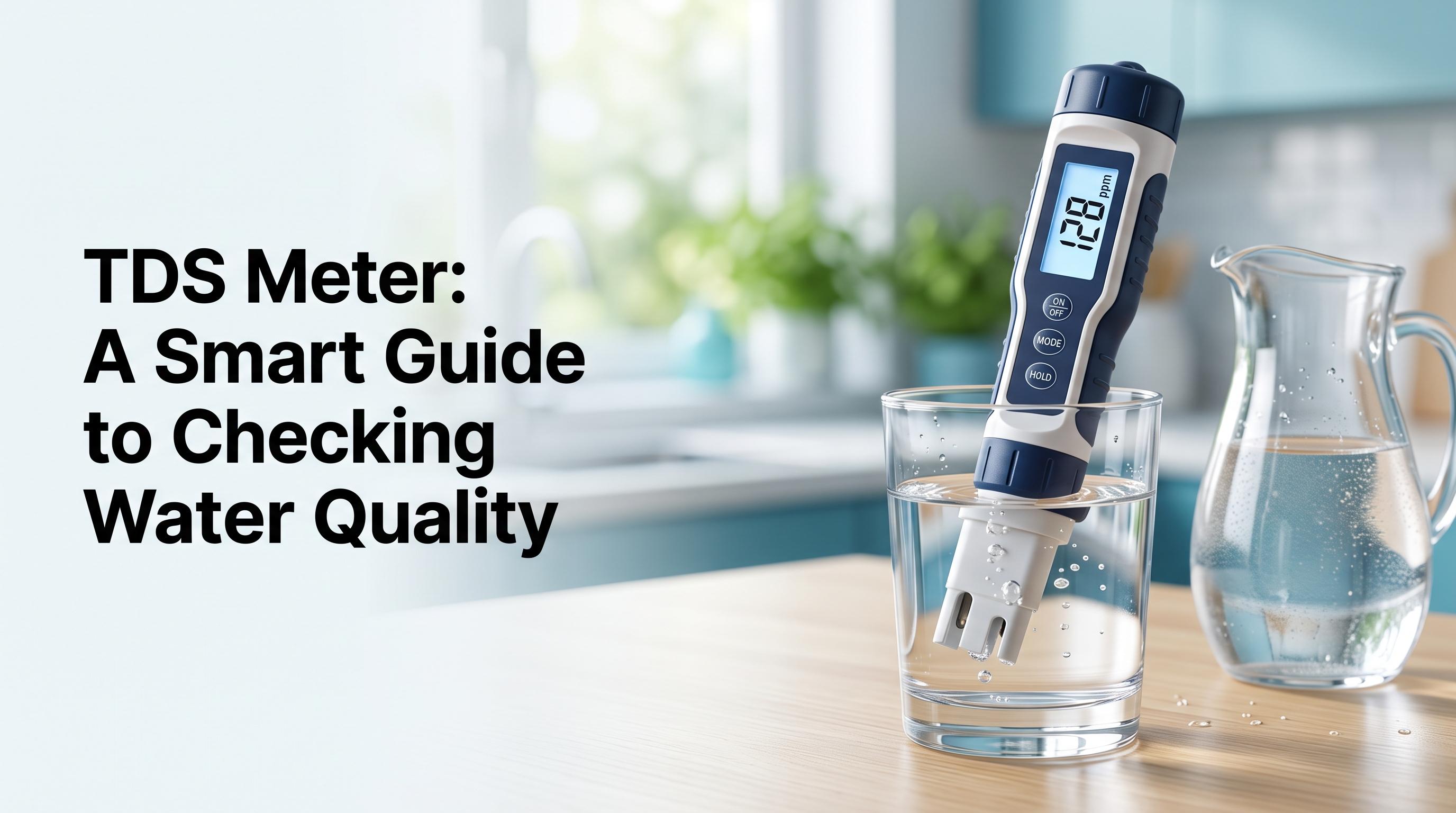
A TDS meter provides a digital reading of Total Dissolved Solids (TDS), usually measured in parts per million (ppm). Whether you are checking drinking water at home, monitoring a water filter, or comparing different water sources, this compact device can make basic water-quality checking much easier.
What Is a TDS Meter?
A TDS meter is a small electronic testing device designed to estimate the concentration of dissolved substances in water. It works by measuring the water's electrical conductivity and using that measurement to provide an estimated TDS value.
Common dissolved substances may include minerals, salts and other conductive materials. The digital display makes the reading simple to understand, even for someone using the device for the first time.
Why Does TDS Matter?
TDS can provide useful information when you want to compare water samples or monitor changes over time. For example, if you regularly check filtered water, recording the readings can help you notice significant changes that may require further investigation.
However, a TDS reading should not be treated as a complete water-safety test. It does not identify every contaminant or tell you exactly which substances are present.
How Does a TDS Meter Work?
Using a digital water quality tester is generally straightforward. The device has sensing probes that are placed into a water sample. After the meter stabilizes, it displays an estimated TDS reading.
For a more reliable comparison:
-
Use a clean container for the water sample.
-
Rinse the meter according to its instructions.
-
Place the probe into the sample without touching the bottom or sides.
-
Wait for the reading to stabilize.
-
Record the result if you are monitoring water regularly.
-
Clean and dry the probe after use.
Following these basic steps can help reduce errors caused by contamination or improper handling.
Benefits of Using a Digital Water Quality Tester
A portable water testing device can be useful for households, offices and anyone who wants a convenient way to compare water samples.
Some key benefits include:
-
Quick readings: Digital displays make results easy to check.
-
Portable design: Compact meters can be carried and stored easily.
-
Simple operation: Most basic models require only a few steps.
-
Useful for comparisons: You can compare tap, filtered or other water samples.
-
Helpful for filter monitoring: Regular readings can help you notice changes in filtered water.
-
Convenient for routine checks: It can be used whenever you want a quick TDS measurement.
How to Choose the Right TDS Meter
When buying a TDS meter, focus on practical features rather than choosing a device based only on appearance or price.
Important Features to Consider
Look for a model with:
-
A clear digital display
-
Easy-to-use controls
-
A suitable measurement range
-
Reliable and properly maintained probes
-
Compact and portable construction
-
Calibration support or instructions
-
A protective case or cap, if available
It is also important to understand what you actually need the device for. A basic home user may prefer a simple portable tester, while someone performing frequent measurements may want additional features.
Common Mistakes to Avoid
Even a simple water testing device can give confusing results if it is not used correctly. Avoid these common mistakes:
1. Testing with a dirty probe:
Residue on the probe can affect readings. Clean it properly between tests.
2. Touching the probe against the container:
Keep the sensing area properly immersed without pressing it against the sides or bottom.
3. Ignoring calibration:
If the manufacturer recommends calibration, follow the provided instructions.
4. Treating TDS as a complete safety test:
A TDS reading alone cannot identify specific contaminants or confirm that water is safe for drinking.
5. Comparing readings taken under different conditions:
For useful comparisons, try to use similar sampling and testing conditions.
Frequently Asked Question
What is a good TDS reading for drinking water?
There is no single TDS number that can determine whether water is completely safe to drink. TDS represents the amount of dissolved material rather than identifying specific contaminants. If you have concerns about drinking-water safety, a proper laboratory water analysis is more informative than relying on a TDS reading alone.
Who Can Use a TDS Meter?
A TDS meter is suitable for anyone who wants a quick way to monitor and compare dissolved-solids readings in water. Home users can use it when checking filtered water, while offices and other settings may use it for routine monitoring.
The device is especially convenient for people who prefer a quick digital reading instead of relying only on the appearance or taste of water.
Why Keep a TDS Meter at Home?
Having a portable tester available can make routine water checks more convenient. Instead of purchasing a new testing device every time you want to compare readings, you can keep one ready for occasional monitoring.
It is important, however, to view the meter as a screening and comparison tool, not a replacement for professional water testing when safety concerns exist.
Conclusion
A TDS Meter is a practical tool for checking and comparing the level of dissolved substances in water. Its compact design, simple operation and digital readings make it useful for routine household water monitoring, especially when you want to observe changes over time.
If you are looking for a convenient digital water quality tester, you can explore suitable options from Eudora. Eudora offers practical products at competitive prices, making it a convenient option for customers looking to purchase a TDS meter without unnecessarily paying more than comparable market options. Check the available options and choose a model that fits your testing needs.
 Romaian
 English
 Arabic
 French
 Spanish
 Portuguese
 Deutsch
 Turkish
 Dutch
Dutch
 Italiano
 Russian
 Portuguese (Brazil)
 Greek
Greek