


Modular Long-Duration Storage Systems: Flexible Energy Storage for Modern Power Needs
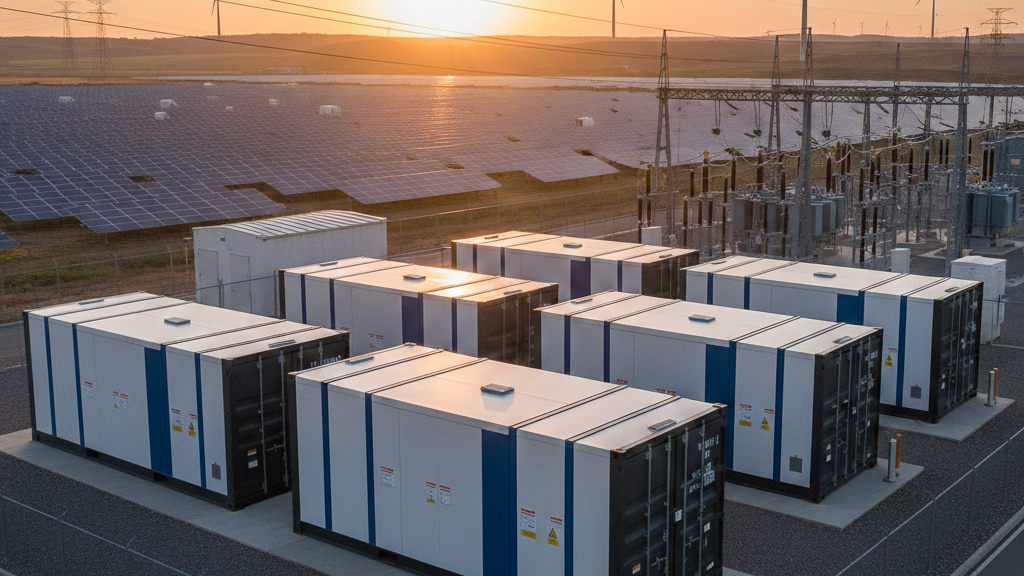
As electricity demand continues to grow and renewable energy becomes a larger part of the power mix, reliable energy storage is becoming increasingly important. Modular Long-Duration Storage Systems can help businesses, utilities, industrial facilities, and critical infrastructure store electricity for extended periods and use it when power is needed most.
Unlike small backup batteries designed primarily for short interruptions, long-duration storage systems are designed to provide energy over longer periods. A modular design can also make it easier to scale storage capacity as energy requirements change.
What Are Modular Long-Duration Storage Systems?
Modular long-duration storage systems are energy-storage solutions built from individual units or modules that can work together as a larger system.
Instead of relying on one large storage unit, a modular architecture allows multiple storage components to be connected according to the project's power and energy requirements.
This approach can provide flexibility during installation and future expansion. Businesses can potentially increase storage capacity by adding additional modules instead of replacing an entire system.
The exact storage duration depends on the technology, system size, load requirements, and configuration.
Why Long-Duration Energy Storage Matters
Electricity generation does not always match electricity consumption.
Solar panels can produce large amounts of electricity during daylight hours, while demand may remain high after the sun goes down. Wind generation can also vary depending on weather conditions.
Long-duration storage can capture electricity when supply is available and release it later.
This makes energy storage useful for renewable-energy integration, backup power, peak demand management, and microgrid applications.
The Importance of a Modular Design
Modularity can provide several practical advantages when designing an energy-storage system.
Every facility has different electricity requirements. A small commercial operation may need a relatively modest storage system, while an industrial facility or renewable-energy project may require much greater capacity.
A modular system can be configured around the project's requirements instead of forcing every customer into the same storage size.
Modular designs can also make future expansion easier when electricity demand increases.
Supporting Renewable Energy
Renewable energy is one of the most important applications for long-duration storage.
Solar and wind resources can produce electricity at times when demand is relatively low. Without sufficient storage, some of that energy may not be available when demand increases.
An energy-storage system can capture excess electricity and release it later.
For example, solar energy generated during the afternoon can be stored and used during the evening when solar production decreases.
This can help improve the usefulness and flexibility of renewable-energy generation.
Grid-Scale Applications
Large energy-storage systems can support electrical grids in several ways.
They can store electricity during periods of lower demand and discharge during periods of higher demand. They can also provide support for renewable-energy integration and certain grid-balancing services.
A modular architecture can make it easier to configure storage capacity according to the requirements of a particular project.
Utilities and energy developers can evaluate storage based on power output, energy capacity, duration, cycling requirements, and expected operating conditions.
Peak Demand Management
Many commercial and industrial facilities experience periods when electricity consumption rises significantly.
High demand can increase electricity costs in markets where demand charges or time-based pricing apply.
Long-duration storage can allow a facility to use stored energy during high-demand periods rather than drawing all of its electricity from the grid.
This strategy, commonly known as peak shaving, can help organizations manage energy expenses while reducing pressure on the electrical connection.
Backup Power for Critical Facilities
Reliable backup power is essential for facilities that cannot tolerate prolonged interruptions.
Data centers, telecommunications facilities, healthcare operations, manufacturing plants, and other critical sites may require backup systems capable of supporting important loads during extended outages.
A long-duration energy-storage system can provide electricity for longer periods than a small UPS battery, depending on its capacity and configuration.
For critical infrastructure, storage can also be combined with generators and renewable-energy sources to create multiple layers of backup.
Graphene-Based Energy Storage
Graphene is attracting interest in advanced energy-storage technologies because of its electrical and material properties.
Graphene Power Storage develops energy-storage solutions based on graphene-related technologies and offers systems intended for commercial and industrial applications.
Its portfolio includes energy containers, UPS systems, supercapacitor technologies, and intelligent energy-management solutions.
The company's energy-container solutions are designed for applications such as renewable-energy integration, peak shaving, backup power, and resilient microgrids.
Actual system performance depends on the specific technology, configuration, operating environment, and application.
Long-Duration Storage and Microgrids
Microgrids combine energy generation, storage, controls, and electrical loads into an integrated system.
A modular storage solution can become an important component of a microgrid by storing electricity and supplying it when generation is unavailable or demand increases.
During normal operation, the storage system can support energy management. During an outage, it can help maintain electricity to essential loads.
This makes long-duration storage particularly useful for facilities that want greater energy resilience.
Combining Storage With Solar
Solar and energy storage can complement each other.
Solar panels produce electricity during daylight hours, while energy demand can continue after sunset. A storage system can capture excess solar generation and make that energy available later.
A modular system can be sized according to the amount of solar generation, facility load, and desired storage duration.
This approach can also reduce dependence on grid electricity during certain periods.
Combining Storage With Generators
Generators can provide long-duration backup, but they require fuel and regular maintenance.
Energy storage can work alongside a generator rather than replacing it completely.
A storage system can respond immediately when grid power fails, while the generator starts and takes over longer-duration loads. Intelligent controls can coordinate the different energy sources.
This hybrid configuration can help reduce generator runtime and fuel consumption while providing additional resilience.
Energy Capacity vs. Power Capacity
When evaluating Modular Long-Duration Storage Systems, it is important to understand the difference between energy capacity and power capacity.
Energy capacity describes how much electricity the system can store and is commonly measured in kilowatt-hours or megawatt-hours.
Power capacity describes how quickly the system can deliver electricity and is measured in kilowatts or megawatts.
A system may have substantial energy capacity but limited power output, or it may be designed for high power over a shorter period.
The correct balance depends on the intended application.
Scalability for Growing Energy Requirements
One of the major benefits of modular storage is scalability.
A facility's electricity requirements can change over time. Production may increase, additional equipment may be installed, or renewable generation may be expanded.
With a modular storage architecture, additional capacity can potentially be added as requirements grow.
This can help organizations avoid installing significantly more storage than they need at the beginning of a project.
Monitoring and Intelligent Controls
Modern energy-storage systems can incorporate advanced monitoring and control technologies.
These systems can track battery condition, energy flows, temperature, power demand, charging status, and other operating parameters.
Intelligent controls can determine when the storage system should charge or discharge based on factors such as electricity prices, renewable generation, facility demand, or grid conditions.
Graphene Power Storage offers an Intelligent Graphene Energy Control Hub designed to coordinate energy sources such as grid power, solar, generators, and storage.
Safety and Thermal Management
Safety is a critical consideration for any large energy-storage installation.
System design should account for battery chemistry, electrical protection, thermal management, fire protection, ventilation, monitoring, and applicable safety requirements.
Graphene Power Storage promotes several of its technologies as designed to reduce thermal risks and describes its ELDES technology as a solid-state energy-storage system.
However, safety depends on the complete system and installation. Professional engineering and compliance with relevant standards remain essential.
Maintenance and Lifecycle Considerations
Long-duration storage should be evaluated over its entire operating life rather than only by its initial price.
Maintenance requirements, cycling behavior, efficiency, replacement costs, monitoring, and expected service life can all influence the overall value of a storage system.
A modular architecture can potentially simplify maintenance because individual components may be serviced or replaced without taking the entire energy-storage installation offline.
The exact maintenance strategy depends on the technology and system design.
Choosing the Right Storage System
Selecting a storage solution begins with understanding the facility's energy requirements.
Consider how much electricity needs to be stored, how quickly it must be delivered, how long the system should operate during an outage, and how frequently it will cycle.
Installation space, environmental conditions, grid connection, renewable-energy sources, expansion plans, and maintenance capabilities should also be evaluated.
A professional energy assessment can help determine the appropriate storage capacity and configuration.
The Future of Long-Duration Energy Storage
The growth of renewable energy is creating increasing demand for energy-storage technologies that can operate over longer periods.
As solar and wind generation expand, storage can help balance supply and demand while improving the flexibility of the electrical system.
Modular designs can provide an adaptable approach because storage capacity can be configured and expanded according to changing requirements.
Advanced technologies such as graphene-based storage, solid-state systems, and intelligent energy controls may contribute to the development of more flexible energy infrastructure.
Final Thoughts
Modular Long-Duration Storage Systems provide a flexible approach to storing and delivering electricity over extended periods. They can support renewable-energy projects, commercial facilities, industrial operations, microgrids, critical infrastructure, and grid-scale applications.
A modular design can make it easier to match storage capacity with current requirements while providing opportunities for future expansion. When combined with solar, generators, and intelligent energy-management systems, long-duration storage can also become part of a broader energy-resilience strategy.
Graphene Power Storage offers advanced energy-storage technologies for commercial and industrial applications, including energy containers, UPS systems, supercapacitor solutions, and intelligent energy controls.
For organizations evaluating long-duration storage, the most important step is to match the technology with the actual application. Power requirements, storage duration, cycling frequency, safety, environmental conditions, maintenance, and future expansion should all be considered before selecting a system.
 Italiano
 English
 Arabic
 French
 Spanish
 Portuguese
 Deutsch
 Turkish
 Dutch
Dutch
 Russian
 Romaian
 Portuguese (Brazil)
 Greek
Greek