


High-Quality Thermal Paper Solutions for Modern Business Operations
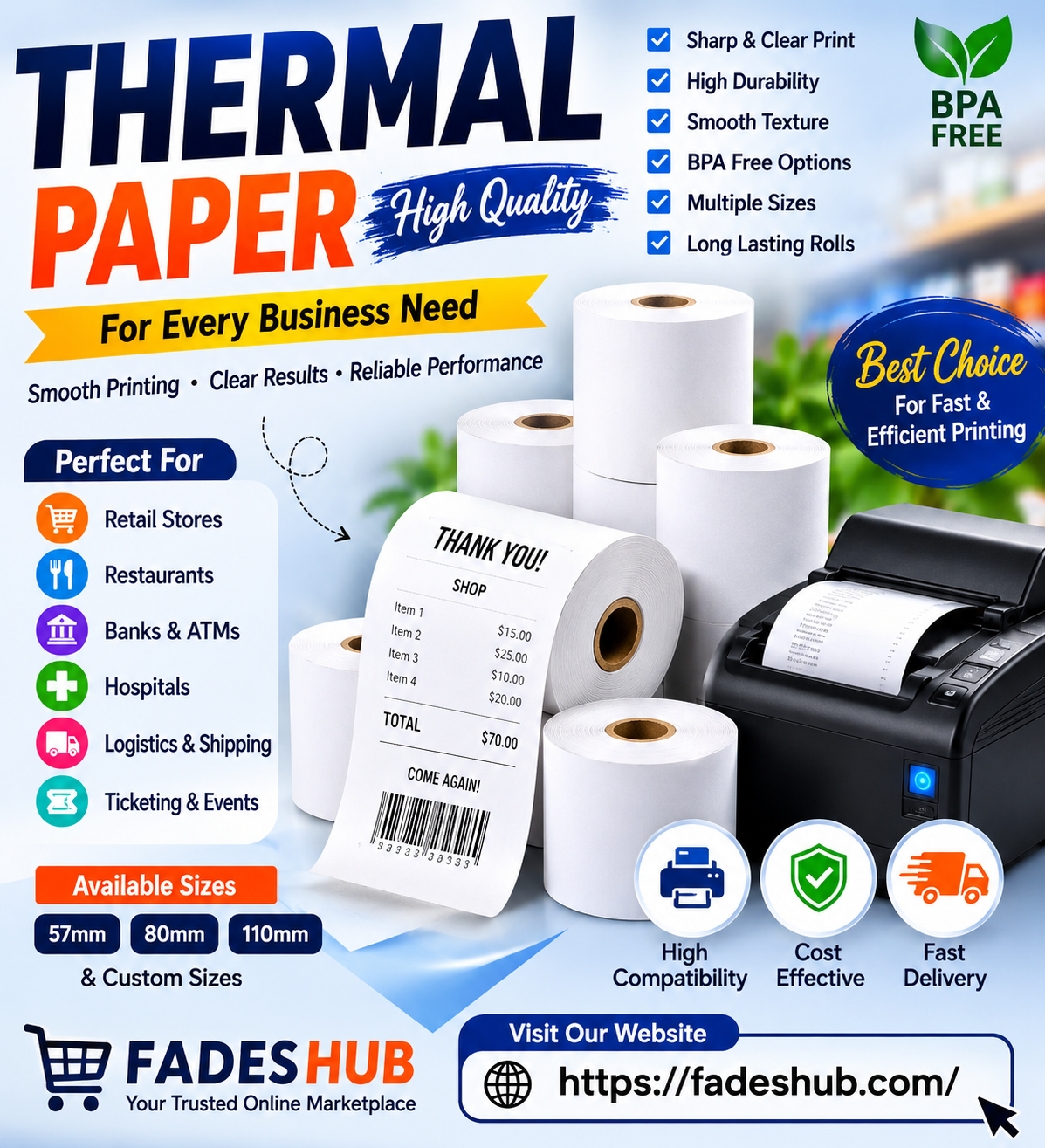
Thermal Paper Supporting Fast and Efficient Printing Systems
Thermal Paper is one of the most widely used printing materials in modern businesses. From retail stores and restaurants to banks, hospitals, logistics companies, and parking systems, thermal paper plays a critical role in daily operations. Its ability to produce clear prints without requiring ink or toner makes it a practical and cost-effective solution for businesses that rely on fast and reliable printing. Thermal Paper is specially designed with a heat-sensitive coating that reacts when exposed to heat generated by thermal printers. This technology allows printers to create text, barcodes, receipts, labels, and transaction records quickly and efficiently. As businesses continue to prioritize speed, accuracy, and cost savings, thermal paper remains an essential component of many industries worldwide. Whether used for point-of-sale receipts, shipping labels, or ticketing systems, thermal paper helps streamline operations and improve customer service experiences.
Understanding Thermal Paper
Thermal paper is a specialty paper coated with chemicals that change color when exposed to heat. Unlike traditional printing methods, thermal printing does not require ink cartridges, ribbons, or toner.
The printing process works by:
-
Applying heat directly to the paper
-
Activating the thermal coating
-
Creating visible text and images
-
Producing high-speed prints
-
Reducing maintenance requirements
This simple yet effective technology has made thermal printing a preferred choice for many businesses.
How Thermal Paper Works
Thermal paper contains a specially engineered coating that reacts to heat.
Step 1: Heat Application
The thermal print head applies heat to specific areas of the paper.
Step 2: Chemical Reaction
The heat-sensitive coating changes color where heat is applied.
Step 3: Image Formation
Text, numbers, barcodes, and graphics appear instantly on the paper.
Step 4: Finished Print
The printed output is ready immediately without drying time.
This efficient process contributes to faster transaction handling and improved operational efficiency.
Common Types of Thermal Paper
Different applications require different types of thermal paper.
Standard Thermal Paper
The most commonly used option for receipts and transaction records.
Benefits include:
-
Cost-effective
-
Fast printing
-
Reliable performance
-
Clear print quality
Top-Coated Thermal Paper
Includes an additional protective layer.
Advantages:
-
Improved durability
-
Enhanced resistance to moisture
-
Better scratch protection
-
Longer print life
Linerless Thermal Paper
Often used in labeling applications.
Benefits include:
-
Reduced waste
-
Lower storage requirements
-
Increased efficiency
Colored Thermal Paper
Available in multiple colors for specialized business requirements.
Common Applications of Thermal Paper
Thermal paper is used across a wide range of industries.
Retail Stores
Retail businesses rely heavily on thermal paper for:
-
Sales receipts
-
Refund receipts
-
Promotional coupons
-
Transaction records
Restaurants and Cafes
Food service businesses use thermal paper for:
-
Customer receipts
-
Kitchen order tickets
-
Billing systems
Banking and Financial Services
Banks use thermal paper for:
-
ATM receipts
-
Transaction records
-
Customer documentation
Logistics and Shipping
Shipping companies use thermal labels for:
-
Parcel tracking
-
Barcode printing
-
Inventory management
Healthcare Industry
Medical facilities use thermal printing for:
-
Patient records
-
Prescription labels
-
Laboratory reports
Key Benefits of Thermal Paper
Fast Printing Speed
Thermal printers produce prints quickly, reducing customer waiting times.
No Ink or Toner Required
The heat-sensitive coating eliminates the need for expensive consumables.
Lower Maintenance Costs
Fewer moving parts result in reduced maintenance requirements.
High Print Quality
Thermal paper delivers sharp text and accurate barcode printing.
Improved Business Efficiency
Faster printing contributes to smoother daily operations.
Important Features of Quality Thermal Paper
Not all thermal paper rolls offer the same level of performance, making product quality an important consideration for businesses.
Smooth Surface Finish
A smooth surface supports clear and consistent printing.
High Sensitivity Coating
Quality coatings ensure accurate image development.
Long Image Retention
Premium thermal paper maintains print visibility for longer periods.
Printer Compatibility
High-quality rolls perform reliably across various thermal printer models.
Choosing the Right Thermal Paper
Businesses should evaluate several factors before selecting thermal paper.
Paper Width
Common sizes include:
-
57mm
-
80mm
-
110mm
Roll Length
Longer rolls reduce replacement frequency.
Core Size
The correct core size ensures proper printer compatibility.
Application Requirements
Different industries may require specific durability or storage characteristics.
Thermal Paper vs Traditional Paper
Thermal Paper
-
No ink required
-
Faster printing
-
Lower maintenance
-
Better efficiency
Traditional Paper
-
Requires ink or toner
-
Slower operation
-
Higher maintenance costs
-
More consumable expenses
Many businesses prefer thermal paper due to its operational advantages and long-term cost savings.
Industry Trends Shaping Thermal Paper Usage
Eco-Friendly Manufacturing
Manufacturers are increasingly adopting environmentally responsible production methods.
BPA-Free Thermal Paper
Many businesses now prefer BPA-free options for improved safety standards.
Enhanced Durability
Advanced coatings improve resistance to moisture, oils, and environmental factors.
Smart Labeling Systems
The growth of e-commerce continues to increase demand for thermal labels and barcode printing solutions.
Topical Map: Thermal Paper
1. Thermal Paper Fundamentals
-
Thermal Printing
-
Heat-Sensitive Coating
-
Direct Thermal Technology
-
Receipt Printing
2. Paper Types
-
Standard Thermal Paper
-
Top-Coated Thermal Paper
-
Colored Thermal Paper
-
Linerless Thermal Paper
3. Applications
-
Retail Receipts
-
Restaurant Billing
-
ATM Receipts
-
Shipping Labels
-
Healthcare Labels
4. Printer Compatibility
-
POS Printers
-
Receipt Printers
-
Label Printers
-
Mobile Printers
5. Performance Factors
-
Print Quality
-
Durability
-
Image Retention
-
Sensitivity
6. Business Benefits
-
Cost Savings
-
Faster Transactions
-
Lower Maintenance
-
Operational Efficiency
7. Industry Solutions
-
Retail
-
Hospitality
-
Banking
-
Logistics
-
Healthcare
8. Future Trends
-
BPA-Free Paper
-
Eco-Friendly Production
-
Smart Labels
-
Advanced Thermal Coatings
Frequently Asked Questions
What is thermal paper?
Thermal paper is a specially coated paper that produces printed images when exposed to heat from a thermal printer.
Does thermal paper require ink?
No. Thermal paper uses a heat-sensitive coating and does not require ink, toner, or ribbons.
Where is thermal paper commonly used?
It is commonly used for receipts, labels, tickets, ATM transactions, shipping labels, and medical records.
What sizes are available for thermal paper?
Popular sizes include 57mm and 80mm rolls, though other sizes are also available depending on the application.
Is thermal paper cost-effective?
Yes. The elimination of ink and reduced maintenance requirements make thermal printing highly cost-effective.
How long do thermal paper prints last?
The lifespan depends on storage conditions and paper quality. Premium thermal paper typically offers longer image retention.
Driving Business Efficiency Through Reliable Thermal Printing
Thermal Paper continues to be a valuable solution for businesses seeking fast, accurate, and cost-effective printing. Its widespread use across retail, hospitality, banking, healthcare, and logistics demonstrates its importance in modern operations. By choosing high-quality thermal paper and compatible printing systems, businesses can improve efficiency, reduce costs, and deliver better customer experiences while maintaining reliable day-to-day performance.
For more related posts or blogs, click here
 Italiano
 English
 Arabic
 French
 Spanish
 Portuguese
 Deutsch
 Turkish
 Dutch
Dutch
 Russian
 Romaian
 Portuguese (Brazil)
 Greek
Greek