


How to Choose the Right Employee Management System for Your Business
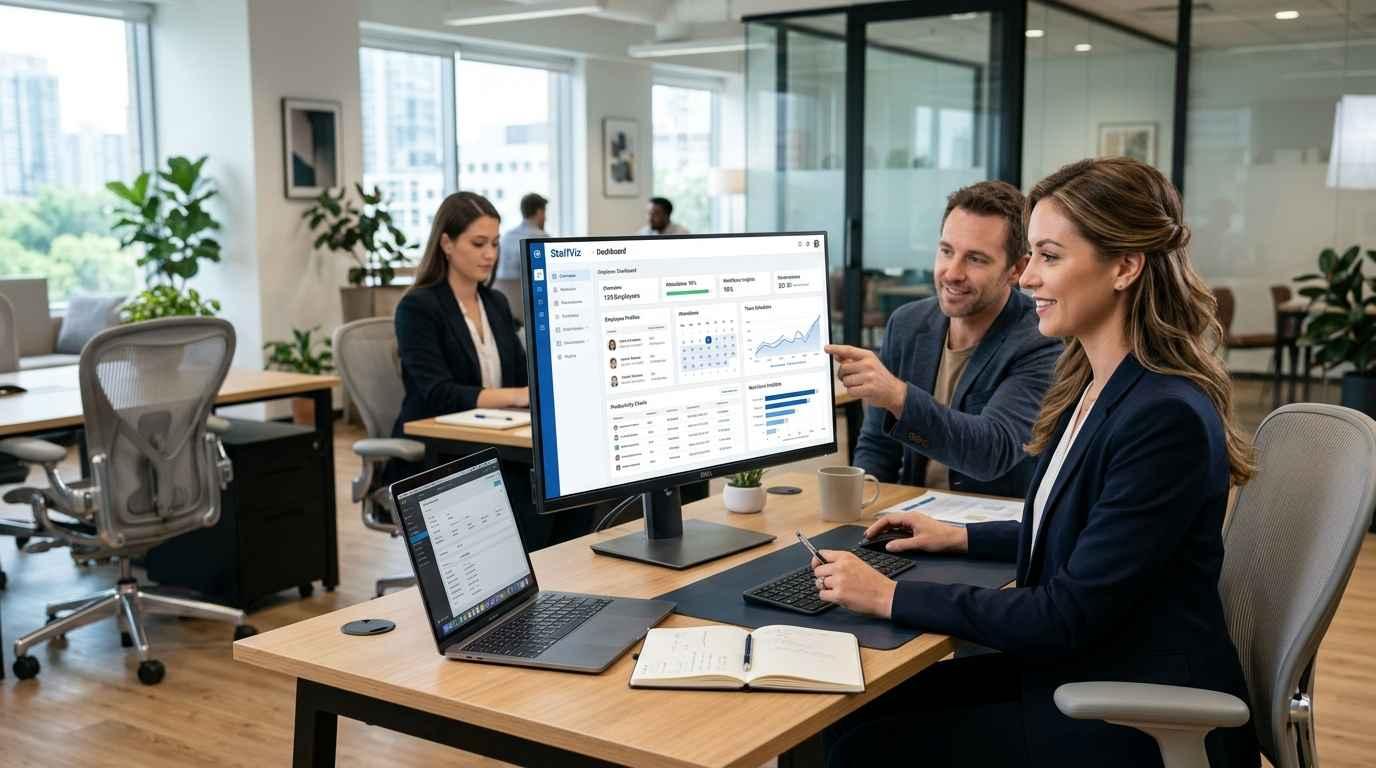
Managing employees effectively requires more than assigning tasks and tracking attendance. Businesses need a reliable way to organize employee information, coordinate daily responsibilities, monitor performance, and maintain clear communication across teams. As organizations grow, managing these activities through spreadsheets and disconnected tools can become time consuming and difficult to maintain.
Choosing the right employee management system helps businesses simplify administrative work, improve workforce visibility, and create a more organized workplace. However, companies should evaluate their actual needs before investing in new technology. While the Best Project Management Software can help teams organize projects and deadlines, a complete employee management strategy should also consider human resources, attendance, employee records, and workforce productivity.
Understand What Your Business Needs
Before comparing software platforms, identify the problems your current processes create. A small company may struggle with maintaining employee records, approving leave requests, and organizing onboarding documents. A larger organization may need advanced reporting, centralized workforce data, and better coordination between departments.
Start by reviewing how your business handles recruitment, onboarding, attendance, performance reviews, scheduling, and employee communication. Ask department managers which tasks consume the most time and where mistakes occur most frequently. These insights will help you identify the features that matter most.
For example, a growing marketing agency with 25 employees might need centralized employee profiles, attendance records, and project assignments. A manufacturing business with multiple shifts may prioritize scheduling and attendance monitoring. The right solution depends on the company's workforce structure rather than the number of features advertised by a software provider.
Evaluate Essential Employee Management Features
Employee Records and HR Administration
A suitable employee management system should make it easy to maintain organized employee profiles, contact information, job details, and relevant employment documents. Centralized records reduce repetitive data entry and help authorized staff find information without searching through multiple spreadsheets.
Look for role based permissions, secure document storage, and clear procedures for updating employee information. These capabilities become especially important when several managers or HR professionals need access to the same records.
Attendance, Scheduling, and Performance
Attendance management helps businesses understand working hours, identify attendance patterns, and simplify administrative reporting. Scheduling features can also help managers distribute workloads more effectively and ensure adequate staffing.
Performance monitoring should provide useful insights without creating unnecessary pressure on employees. For instance, a remote team leader may review project progress, attendance information, and completed assignments to identify workload imbalances. This approach supports informed decisions instead of relying on assumptions about individual performance.
Integration With Existing Business Tools
Software becomes more useful when it works with the systems your business already uses. Consider whether a potential platform integrates with payroll applications, communication tools, project management platforms, and other HR systems.
Integration can reduce duplicate data entry and improve consistency across departments. Before purchasing, confirm which integrations are available, whether they require additional fees, and whether the features match your current workflow.
Compare HR Software for Small Businesses
Businesses looking for HR software for small businesses should prioritize simplicity, affordability, and the ability to scale. An expensive enterprise platform may offer features that a small team does not need, while a basic application might become restrictive as employee numbers increase.
Compare subscription costs, user limits, customer support, onboarding assistance, and the availability of essential features. Consider the total cost of ownership rather than the monthly subscription alone. Training, implementation, additional integrations, and premium reporting may increase the overall expense.
A practical approach is to create a shortlist of two or three platforms and test them using real workplace scenarios. Ask an HR administrator to add an employee profile, process a leave request, generate an attendance report, and locate an important document. The platform that handles these everyday tasks clearly and efficiently may provide more value than one with a complicated interface and numerous unused features.
Consider Workforce Management and Productivity
Effective workforce management software helps businesses coordinate employees, understand staffing requirements, and improve operational efficiency. Depending on the platform, it may include attendance tracking, shift planning, workload monitoring, and productivity reporting.
When comparing solutions, consider how managers will use the information they receive. Reports should help identify bottlenecks, improve staffing decisions, and support employees who need assistance. For example, if a department repeatedly misses deadlines, managers can examine workload distribution and task assignments before assuming that employees are underperforming.
Privacy is equally important. Businesses should explain what information is collected, who can access it, and how it will be used. Transparent policies and appropriate access controls help maintain employee trust while supporting responsible workforce management.
Assess Ease of Use, Security, and Scalability
Choose Software Employees Can Use Easily
Even a feature rich system may fail if employees and managers find it difficult to navigate. Look for straightforward dashboards, clear reporting tools, accessible support documentation, and a smooth mobile experience where required.
Ask employees from different departments to test the platform before making a final decision. Their feedback can reveal usability problems that might otherwise slow adoption.
Protect Employee Information
Employee management platforms often store sensitive business and personal information. Review security controls, user permissions, backup procedures, data retention policies, and available authentication options. Confirm that the provider explains how information is protected and what happens if your business decides to change platforms.
Plan for Future Growth
Your workforce management needs may change as your company expands. Choose a system that can accommodate additional employees, new departments, evolving reporting requirements, and changing workflows without requiring an immediate replacement.
Conclusion
Choosing the right employee management system begins with understanding your business requirements, comparing essential features, evaluating security, and testing usability. Businesses should focus on solutions that simplify daily HR activities, improve workforce visibility, and remain practical as their teams grow.
Although the Best Project Management Software can support task coordination and deadlines, the most suitable employee management solution should also address your organization's HR and workforce needs. Explore StaffViz to learn about tools that support employee management, productivity monitoring, and work time tracking software. Evaluate the available features against your goals and choose a solution that helps your team work more efficiently.
Frequently Asked Questions
1. What is an employee management system?
An employee management system is software that helps businesses organize employee records, manage attendance, coordinate HR activities, and monitor relevant workforce information through a centralized platform.
2. How do I choose the right employee management software for my business?
Identify your main operational challenges, list essential features, compare pricing and integrations, review security controls, and test shortlisted platforms with real workplace tasks before making a decision.
3. Is HR software for small businesses worth the investment?
Yes. The right HR software can reduce repetitive administrative work, improve recordkeeping, and simplify processes such as onboarding and leave management. Its value depends on your business needs and the features you use.
4. What is the difference between employee management software and workforce management software?
Employee management software often focuses on employee records and HR administration. Workforce management software typically emphasizes scheduling, attendance, staffing, and operational efficiency, although many platforms combine both functions.
5. Can employee management software improve productivity?
It can help managers identify workflow problems, organize responsibilities, and understand attendance and task progress. Productivity improvements depend on how effectively the information is used to improve working practices.
6. What features should I prioritize in an employee management system?
Start with employee records, attendance tracking, leave management, reporting, access controls, and integrations. Add advanced scheduling or performance analytics when your business genuinely needs them.
7. Is cloud based employee management software suitable for remote teams?
Cloud based platforms can help distributed teams access relevant employee information and coordinate administrative processes from different locations. Businesses should still assess security, permissions, mobile accessibility, and internet requirements before choosing a provider.
8. How much does employee management software cost?
Pricing varies by provider, employee count, subscription plan, and available features. Compare monthly and annual fees, implementation costs, support, and integration charges to understand the total investment.
 English
 Arabic
 French
 Spanish
 Portuguese
 Deutsch
 Turkish
 Dutch
 Italiano
 Russian
 Romaian
 Portuguese (Brazil)
 Greek