


Top Cloud Certifications for 2026: Complete Career Roadmap
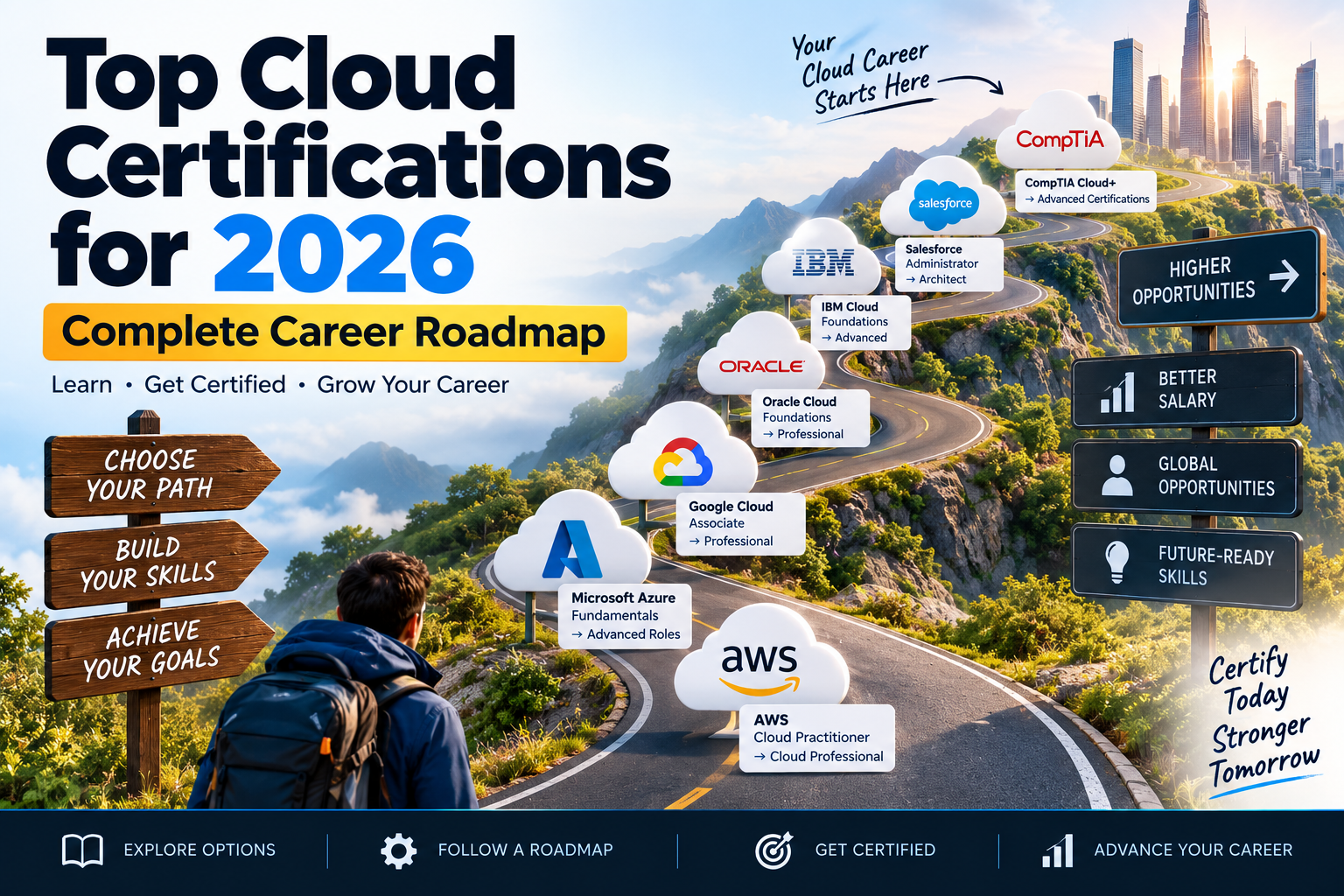
Cloud computing supports modern infrastructure, applications, data platforms, cybersecurity, DevOps, and artificial intelligence. For IT professionals, cloud certifications can provide a structured way to develop these skills and validate knowledge of platforms such as AWS, Microsoft Azure, and Google Cloud.
The best cloud certifications for 2026 depend on your current experience and target role. Beginners can start with cloud fundamentals, while experienced professionals can progress into administration, architecture, development, security, DevOps, data, and AI. A career-focused roadmap is more useful than collecting unrelated certifications.
For a brief visual overview, check out Cert Mage recent update on X (Twitter).
Why Cloud Certifications Matter in 2026
Cloud roles require knowledge across several technical areas. A cloud professional may need to understand networking, identity, storage, compute, security, monitoring, automation, and cost management.
Certification paths organize these subjects around specific responsibilities.
Potential benefits include:
-
Structured cloud learning
-
Validation of technical knowledge
-
Clear role-based progression
-
Exposure to security and governance
-
Better architecture knowledge
-
Preparation for advanced specialization
-
Identification of skill gaps
-
Familiarity with major cloud services
Certification should still be combined with hands-on experience. Building and troubleshooting real cloud environments develops skills that exam preparation alone cannot provide.
Top Cloud Certifications for 2026 Compared
The following options cover several major career stages.
|
Certification |
Level |
Platform |
Best For |
|
AWS Certified Cloud Practitioner |
Foundational |
AWS |
Complete cloud beginners |
|
Microsoft Azure Fundamentals |
Beginner |
Azure |
Azure beginners |
|
AWS Solutions Architect – Associate |
Associate |
AWS |
Cloud architecture |
|
Azure Administrator Associate |
Intermediate |
Azure |
Cloud administration |
|
Google Associate Cloud Engineer |
Associate |
Google Cloud |
Cloud operations |
|
Google Professional Cloud Architect |
Professional |
Google Cloud |
Cloud architecture |
|
Azure Solutions Architect Expert |
Advanced |
Azure |
Experienced architects |
|
AWS Solutions Architect – Professional |
Professional |
AWS |
Advanced AWS architects |
These credentials are alternatives and progression options, not a checklist everyone needs to complete.
Stage 1: Build Cloud Fundamentals
Beginners should first understand how cloud computing works before specializing.
AWS Certified Cloud Practitioner
AWS Certified Cloud Practitioner validates foundational knowledge of AWS services and cloud computing. AWS lists it as a Foundational certification with no prior experience required.
Important learning areas include:
-
Cloud concepts
-
AWS services
-
Shared responsibility
-
Security basics
-
Cloud economics
-
Billing
-
Basic architecture
It is particularly suitable for candidates entering AWS without previous cloud experience.
Microsoft Azure Fundamentals
Azure Fundamentals provides a similar beginner-friendly route into Microsoft's cloud ecosystem.
Learners develop knowledge of:
-
Cloud concepts
-
Azure architecture
-
Core services
-
Management
-
Governance
-
Security
-
Pricing concepts
Beginners do not necessarily need both foundational certifications. Choose the platform most relevant to your target jobs or organization.
Stage 2: Move Into a Technical Cloud Role
After learning fundamentals, select a role-based path.
AWS Solutions Architect – Associate
AWS Solutions Architect – Associate is suitable for candidates interested in designing cloud solutions.
Relevant skills include:
-
Secure architecture
-
Resilient systems
-
High-performing solutions
-
Cost optimization
-
Compute
-
Storage
-
Networking
-
Databases
This credential provides broad exposure to AWS architecture and can create a foundation for more advanced architecture or security study.
Azure Administrator Associate
Microsoft Certified: Azure Administrator Associate targets professionals who implement, manage, secure, and monitor Azure environments.
Microsoft identifies responsibilities involving virtual networks, storage, compute, identity, security, and governance.
Candidates should also understand:
-
Operating systems
-
Networking
-
Servers
-
Virtualization
-
PowerShell
-
Azure CLI
This path makes sense for systems administrators and infrastructure professionals moving toward Azure operations.
Google Associate Cloud Engineer
Google's Associate Cloud Engineer path is relevant to professionals responsible for deploying and managing applications and infrastructure in Google Cloud.
It can support development of skills involving:
-
Cloud resources
-
Compute
-
Storage
-
Identity
-
Networking
-
Operations
-
Monitoring
-
Security
Candidates targeting Google Cloud careers can use this stage to build practical platform experience before pursuing professional-level credentials.
Stage 3: Choose a Cloud Specialization
Once you understand cloud fundamentals and have practical experience, specialize according to the work you want to perform.
Common career directions include:
-
Cloud architecture
-
Cloud administration
-
DevOps
-
Cloud security
-
Networking
-
Data engineering
-
Machine learning
-
AI development
A cloud security professional, for example, needs stronger identity, governance, encryption, logging, and threat-management skills. A DevOps engineer requires more automation, CI/CD, infrastructure-as-code, container, and monitoring knowledge.
Avoid choosing a specialization solely because it appears popular. Match it to the technical responsibilities you want.
Stage 4: Progress to Advanced Cloud Architecture
Professional and expert certifications become more useful after significant hands-on experience.
AWS Solutions Architect – Professional
AWS Certified Solutions Architect – Professional validates advanced skills in designing complex AWS solutions, optimizing security, cost and performance, and automating processes.
AWS recommends two or more years of experience designing and implementing AWS cloud solutions.
An important 2026 consideration is the exam transition. Registration for SAP-C03 opens October 27, 2026, while November 16, 2026 is the final date for the existing SAP-C02 exam.
Candidates should therefore confirm the correct blueprint before beginning final preparation.
Azure Solutions Architect Expert
Microsoft Certified: Azure Solutions Architect Expert targets experienced professionals designing cloud and hybrid solutions.
Relevant areas include:
-
Compute
-
Networking
-
Storage
-
Monitoring
-
Security
-
Identity
-
Governance
-
Business continuity
-
Disaster recovery
Microsoft requires Azure Administrator Associate as a prerequisite and AZ-305 as the expert-level exam.
This creates a clear Azure progression from administration experience toward solution architecture.
Stage 5: Add Cloud AI and Machine Learning Skills
AI is increasingly connected with cloud career development.
Modern cloud professionals may encounter:
-
Generative AI
-
Foundation models
-
AI agents
-
Machine learning
-
Vector databases
-
Model deployment
-
AI security
-
MLOps
-
AI monitoring
AWS currently offers AI Practitioner at the Foundational level and Machine Learning Engineer – Associate for technical ML responsibilities. Microsoft provides Azure AI certifications for developers and AI engineers, while Google Cloud maintains professional machine learning certification paths.
Cloud infrastructure knowledge remains valuable even for AI specialists because production AI systems still depend on networking, storage, compute, identity, security, and monitoring.
Cloud Certification Paths by Career Goal
A roadmap should become more specialized as your experience grows.
Cloud Architect Roadmap
-
Learn cloud fundamentals.
-
Select AWS, Azure, or Google Cloud.
-
Earn an appropriate associate or intermediate certification.
-
Build cloud architecture projects.
-
Learn security, networking, and governance.
-
Progress toward a professional or expert architecture credential.
Cloud DevOps Roadmap
-
Learn cloud and networking fundamentals.
-
Build administration skills.
-
Learn Linux and scripting.
-
Practice infrastructure as code.
-
Learn CI/CD and containers.
-
Study monitoring and automation.
-
Pursue a role-specific DevOps certification.
Cloud Security Roadmap
-
Learn networking and operating systems.
-
Build cloud fundamentals.
-
Study identity and access management.
-
Learn encryption and key management.
-
Practice logging and monitoring.
-
Study cloud governance and incident response.
-
Add an advanced security credential.
Learners comparing exam preparation resources across multiple providers can also explore the certification material available through Cert Mage while using official vendor exam guides as the primary source for current objectives.
How to Choose Between AWS, Azure, and Google Cloud
Do not choose a platform based only on certification popularity.
Consider:
-
Platforms used by your employer
-
Technologies requested in target jobs
-
Your current professional experience
-
Preferred career specialization
-
Available hands-on opportunities
-
Long-term architecture goals
Once you understand one cloud platform well, concepts such as identity, networking, compute, storage, resilience, and governance can make learning another platform easier.
Practical Skills to Build Alongside Certification
Hands-on skills make certification knowledge more useful.
Practice:
-
Deploying virtual machines
-
Configuring virtual networks
-
Managing identities and permissions
-
Creating storage resources
-
Configuring monitoring
-
Using command-line tools
-
Building serverless applications
-
Working with containers
-
Applying infrastructure as code
-
Troubleshooting cloud connectivity
Document small projects so you can explain your decisions during technical interviews.
Common Cloud Certification Mistakes
Avoid:
-
Collecting certifications without projects
-
Attempting advanced exams too early
-
Ignoring networking fundamentals
-
Memorizing practice answers
-
Using outdated exam guides
-
Learning service names without understanding use cases
-
Neglecting security
-
Ignoring automation
-
Trying to master several cloud platforms simultaneously as a beginner
A focused path usually produces stronger skills than studying several unrelated certifications at once.
Conclusion
The top cloud certifications for 2026 provide several routes from beginner knowledge to advanced professional expertise. AWS Cloud Practitioner and Azure Fundamentals offer accessible starting points, while Associate and intermediate credentials build practical architecture and administration skills.
Experienced professionals can progress toward advanced credentials such as AWS Solutions Architect – Professional, Azure Solutions Architect Expert, or comparable Google Cloud certifications. AI, security, DevOps, networking, and data skills can then deepen the roadmap further.
Choose certifications according to your target role, build hands-on projects between certification stages, and treat each credential as part of a broader professional development plan.
FAQs
Which cloud certification should I take first?
Complete beginners can start with a foundational credential such as AWS Cloud Practitioner or Azure Fundamentals before progressing into technical role-based certifications.
Which cloud platform is best for certification?
AWS, Azure, and Google Cloud all provide established certification paths. The best choice depends on your employer, target jobs, existing skills, and preferred technical specialization.
Which certification is best for cloud architects?
AWS Solutions Architect and Microsoft Azure Solutions Architect paths are designed specifically around cloud architecture. Google also offers Professional Cloud Architect for Google Cloud professionals.
Should I learn cloud security?
Yes. Identity, access control, encryption, networking, monitoring, governance, and data protection are important across cloud roles, even when security is not your primary specialization.
Can I learn multiple cloud platforms?
Yes, but beginners often benefit from becoming competent with one platform first. Core cloud concepts can then make the transition to another provider easier.
Read More: Top Cloud Certifications for 2026 to Boost Your IT Career
 Spanish
 English
 Arabic
 French
 Portuguese
 Deutsch
 Turkish
 Dutch
Dutch
 Italiano
 Russian
 Romaian
 Portuguese (Brazil)
 Greek
Greek