

Jawline Contouring in Islamabad: Understanding the Mandible in Facial Aesthetics
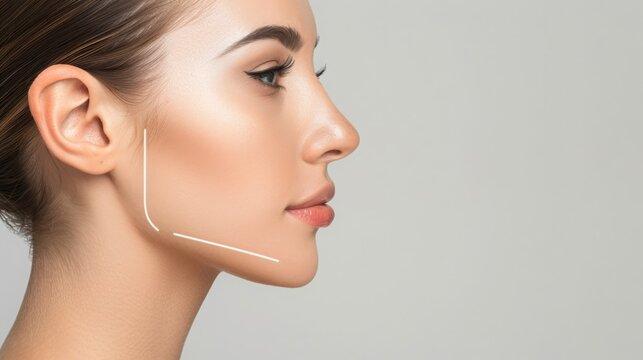
A defined jawline is often associated with facial balance, but the visible outline of the lower face begins with something much deeper: the mandible, or lower jawbone. Its width, shape, angles, and relationship with the chin all contribute to how the lower face looks from the front and side.
For patients considering Jawline Contouring in Islamabad, understanding the mandible can make treatment discussions much easier. The jawline is not created by bone alone, but the mandible provides the underlying framework over which muscles, fat, skin, and other tissues create the final visible contour.
What Is the Mandible?
The mandible is the lower jawbone and one of the main structural bones of the face. It supports the lower teeth, forms the chin, and extends backward toward the area near the ears.
Its shape differs naturally from person to person. Mandibular width, height, angle, and chin projection can all influence facial appearance, which is why two people with similar amounts of facial fat can still have very different jawlines.
Understanding this underlying structure is an important part of personalised facial assessment.
Why Does the Mandible Matter in Facial Aesthetics?
The mandible provides much of the framework for the lower third of the face. Its shape influences how wide the jaw appears, how prominent the chin looks, and how the jaw transitions toward the neck.
From the front, the mandible contributes to facial width and symmetry. From the side, its relationship with the chin and neck can influence the strength of the facial profile. Small differences in mandibular structure can therefore have a noticeable effect on overall facial balance.
Jawline Contouring in Islamabad: What Is Evaluated?
When assessing a patient for Jawline Contouring in Islamabad, a surgeon needs to distinguish between the underlying skeletal structure and the soft tissues covering it.
- Mandibular shape: The overall size, width, and contour of the lower jaw.
- Jaw angle: The transition between the vertical and horizontal portions of the mandible.
- Chin projection: The forward position and shape of the chin.
- Facial symmetry: Differences between the right and left sides of the lower face.
- Masseter muscles: Muscle size can influence the apparent width of the jaw.
- Facial fat: Soft-tissue fullness can hide the underlying mandibular contour.
- Skin quality: Loose skin may reduce visible definition around the jaw.
- Neck relationship: The area beneath the chin can affect how clearly the mandibular border is seen.
Looking at these factors together helps establish whether the patient's concern is mainly skeletal or related to surrounding soft tissue.
The Mandible and Jawline Width
The width of the lower jaw is partly determined by the mandible. Some people naturally have a broad mandibular structure, while others have a narrower lower face.
However, visible jaw width is not necessarily identical to bone width. Muscle size, fat distribution, and skin thickness can make the jaw appear broader or softer than the underlying bone actually is.
This distinction matters because soft-tissue contouring cannot simply change every aspect of the mandibular skeleton.
Understanding the Jaw Angle
The mandibular angle is the area where the main body of the lower jaw meets the upward portion extending toward the skull. Its position and shape contribute to the overall outline of the lower face.
Some people naturally have a more defined angle, while others have a smoother transition. The appearance of the jaw angle is influenced by both bone and the tissues surrounding it.
A surgeon may therefore assess the area from multiple views before deciding whether contouring could improve its visibility.
The Mandible and Chin Relationship
Although the chin forms part of the mandible, its projection deserves separate consideration during aesthetic assessment. A chin that sits farther backward can change how the entire lower face appears from the side.
This may sometimes create the impression of a weak or poorly defined jawline. A patient asking for jawline enhancement may actually have a concern related partly to chin position.
Understanding this relationship prevents the treatment plan from focusing on the wrong anatomical feature.
Can Jawline Contouring Change the Mandible?
This is an important distinction for patients. Many cosmetic contouring treatments focus on soft tissue, such as fat, skin, or muscle, rather than directly changing the underlying jawbone.
Soft-tissue contouring does not automatically reshape or reposition the mandible. If a patient has a significant skeletal difference, jaw misalignment, or bite-related concern, a dental, orthodontic, or maxillofacial assessment may be more appropriate.
The correct treatment depends on the actual cause of the facial concern.
How Facial Fat Affects the Mandibular Outline
Even a well-defined mandible can become difficult to see when there is significant soft-tissue fullness around the cheeks, jaw, or beneath the chin.
When appropriate, reducing localised fat may reveal more of the natural mandibular outline. The objective is not to remove all facial fat, because some volume is important for natural facial proportions and a healthy appearance.
A surgeon should therefore assess where the fullness is located and whether it is actually contributing to the lack of jaw definition.
Muscles Can Change the Appearance of the Jaw
The masseter muscles are located along the sides of the lower jaw and are involved in chewing. Their size can vary between individuals and may contribute to a broader appearance around the back of the jaw.
This is different from having a wider mandible. A muscular lower face and a structurally broad jaw are not the same anatomical issue.
Identifying the difference can help determine whether a patient would benefit from contouring or whether another approach should be discussed.
Skin and the Mandibular Border
The skin and soft-tissue layer surrounding the jaw can either reveal or conceal the underlying bone. Firm, well-supported tissue may allow the mandibular border to appear more clearly.
Ageing and significant weight loss can sometimes produce loose skin around the jaw and neck. When skin laxity is substantial, reducing fat alone may not restore a clearly defined mandibular outline.
This is why skin elasticity should be evaluated alongside the bone and other soft tissues.
The Mandible and Side Profile
The mandible plays an important role in the side profile because it determines much of the lower facial projection. Its relationship with the chin, lips, neck, and other facial features affects how balanced the profile appears.
A less prominent lower jaw can make other facial features appear more noticeable. Side-profile assessment can therefore reveal structural relationships that are not obvious from the front.
Patients should discuss both their front-facing and profile concerns during consultation.
Mandibular Asymmetry
Natural differences between the two sides of the face are common. In some individuals, however, the mandible may contribute to a more noticeable difference in lower-face symmetry.
Soft-tissue contouring may help when the asymmetry is primarily related to fat, muscle, or skin. Significant skeletal asymmetry is a different issue and may require specialist evaluation.
A surgeon should determine whether the visible difference is actually coming from the mandible before recommending cosmetic contouring.
Pakistani Facial Anatomy and Mandibular Shape
Pakistani patients have highly varied facial structures. Differences in mandibular width, chin projection, cheek volume, skin thickness, and facial proportions are natural and should be considered during treatment planning.
There is no single ideal Pakistani jaw shape. A very angular mandible may suit one person but look disproportionate on another.
Personalised assessment is therefore more appropriate than trying to reproduce a standard facial template or a celebrity's jawline.
Weight and the Appearance of the Mandible
The mandible itself does not change simply because body weight fluctuates, but the tissues surrounding it can change considerably. Weight gain may increase facial fullness, while weight loss can reveal more of the underlying jaw structure.
Significant weight loss can also leave excess skin behind. A relatively stable weight can make facial contour assessment more predictable when planning aesthetic treatment.
Discuss recent and expected weight changes with your surgeon before proceeding.
What Happens During Consultation?
During a consultation for Jawline Contouring in Islamabad, the surgeon may assess your lower face from the front, side, and three-quarter views. They may examine the chin, mandibular outline, jaw angle, cheeks, neck, skin, and surrounding soft tissues.
Previous injuries, dental issues, cosmetic procedures, weight changes, and relevant medical history should also be discussed. The more complete the assessment, the easier it is to identify the actual source of the aesthetic concern.
Photographs may be taken to document the existing anatomy and support treatment planning.
Setting Realistic Expectations
Understanding the mandible also helps patients develop realistic expectations. A treatment designed to refine soft tissue cannot necessarily create major changes to the underlying skeletal framework.
Natural facial proportions should guide the desired result rather than extreme definition. Even after successful contouring, some asymmetry and natural variation may remain.
A qualified surgeon should explain what can be improved, what cannot, and whether alternative treatments may be more appropriate.
Final Thoughts
The mandible provides the structural foundation of the lower face, making it an important consideration for patients exploring Jawline Contouring in Islamabad. Understanding the relationship between the jawbone, chin, muscles, fat, skin, and neck can help patients approach treatment with more realistic expectations.
Dynamic Aesthetic Clinic offers clinical expertise, board-certified surgeons, and advanced techniques focused on detailed facial assessment and personalised contouring plans designed around individual anatomy and aesthetic goals.
Meta Description
Understand the mandible's role in Jawline Contouring in Islamabad, including jaw width, chin projection, facial proportions, soft tissue, and symmetry.
 English
 Arabic
 French
 Spanish
 Portuguese
 Deutsch
 Turkish
 Dutch
Dutch
 Italiano
 Russian
 Romaian
 Portuguese (Brazil)
 Greek
Greek