


What Is Direct Access Laboratory Testing? Complete Guide and What to Know Before You Order
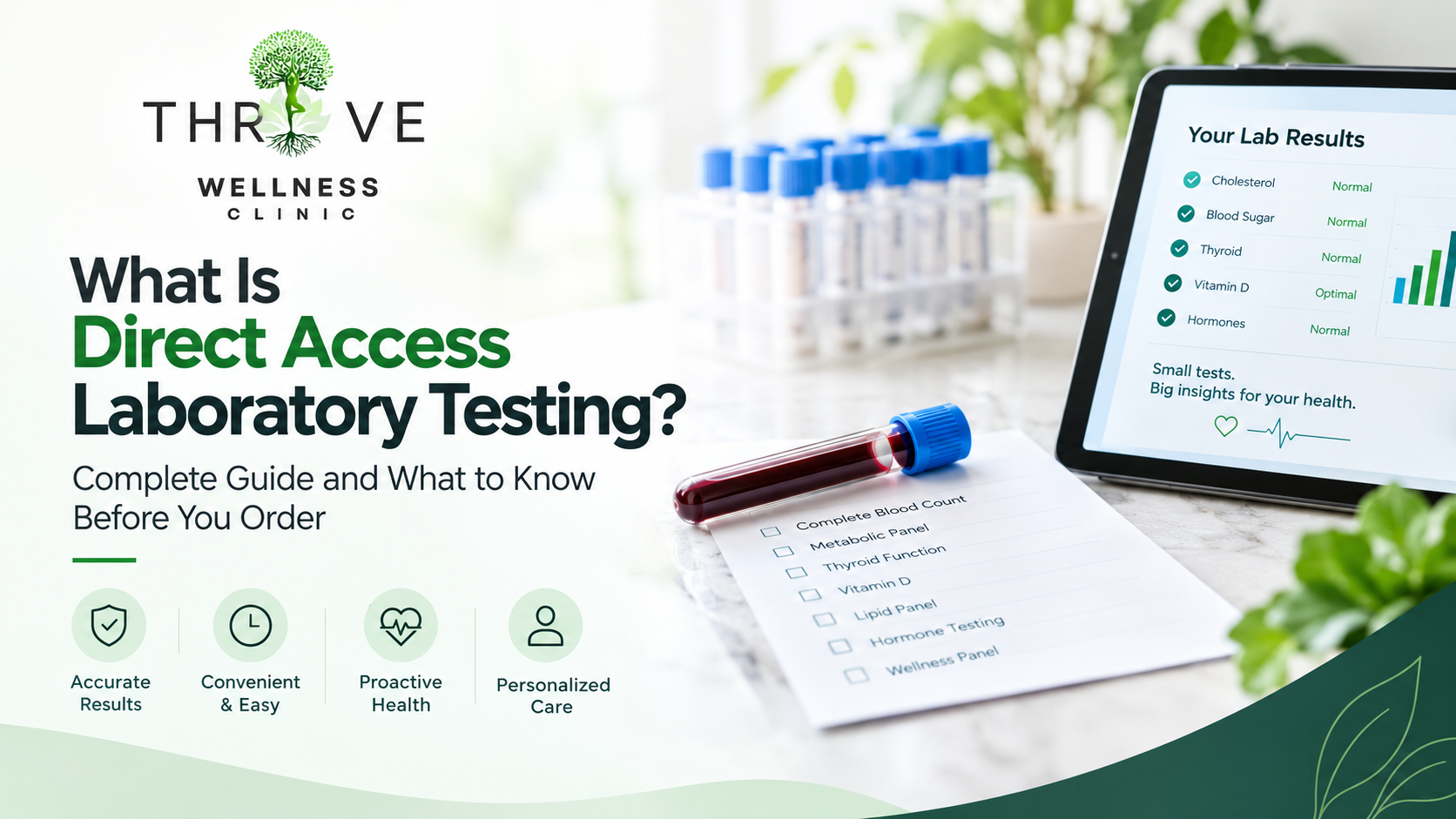
Healthcare is becoming more convenient, personalized, and accessible. One option gaining attention is direct access laboratory testing, which allows people to order certain laboratory tests without first visiting a traditional physician for a test order. For individuals who want greater control over their health information, this approach can make routine wellness monitoring easier.
But how does direct access lab testing work? Are the results accurate? What types of tests can you order, and when should you involve a healthcare professional?
This complete guide explains direct access laboratory testing, what to know before ordering, how to understand your results, and how ongoing healthcare support can make laboratory testing more useful.
What Is Direct Access Laboratory Testing?
Direct access laboratory testing refers to laboratory testing that consumers can access without obtaining a traditional physician's laboratory order first. Depending on the laboratory, state regulations, and the type of test, you may be able to select a test, provide a blood or other specimen, and receive your results directly.
This model is sometimes called direct-to-consumer (DTC) testing, consumer-initiated testing, or self-directed laboratory testing.
Instead of waiting for a routine appointment, a person may use direct access testing to investigate areas of their health such as cholesterol, blood sugar, thyroid function, vitamins, hormones, or other biomarkers.
However, access does not necessarily mean that every test is appropriate for everyone. Laboratory results need to be considered alongside symptoms, medical history, medications, lifestyle factors, and other clinical information.
How Does Direct Access Lab Testing Work?
The exact process varies by laboratory and location, but direct access laboratory testing commonly follows several steps:
-
Choose a laboratory test: Select an individual test or health panel based on your wellness goals.
-
Order the test: Depending on local requirements, you may be able to order testing directly.
-
Provide a sample: Many tests require a blood draw, while others may use urine, saliva, or another specimen.
-
Laboratory analysis: The specimen is processed by a qualified laboratory.
-
Receive your results: Results are typically delivered through a secure online portal or another approved method.
-
Review the findings: A healthcare professional can help explain what your results may mean and whether follow-up testing is appropriate.
For people in San Antonio and those seeking care through a North Carolina Clinic, accessibility can be particularly useful when combined with professional guidance and ongoing health monitoring.
Is Direct Access Laboratory Testing Accurate?
A common question is whether direct access laboratory testing is reliable.
The accuracy of a laboratory result depends on several factors, including the quality of the laboratory, the specific test method, specimen collection, transportation, handling, and the patient's circumstances.
A reliable laboratory follows established procedures for specimen processing and quality control. However, even an accurate laboratory result does not automatically provide an accurate diagnosis.
For example, some biomarkers naturally fluctuate. Fasting status, exercise, hydration, medications, supplements, timing, illness, and other factors can influence certain laboratory measurements.
That is why an abnormal result may need to be repeated or interpreted alongside other information before any healthcare decision is made.
What Should You Know Before Ordering a Direct Access Lab Test?
Before ordering direct access laboratory testing, consider the following:
1. Know Why You Are Testing
Start with a clear health question. Are you interested in preventive screening, tracking an existing health goal, monitoring a biomarker, or investigating a symptom?
Having a purpose makes it easier to choose relevant tests and avoid unnecessary testing.
2. Understand Reference Ranges
Laboratory reports usually include reference ranges. These ranges help indicate how a result compares with a defined population, but they are not the same as a diagnosis.
A result outside the reference range does not always mean something is wrong, while a result within the range does not guarantee that everything is optimal.
3. Consider Testing Conditions
Some laboratory tests require preparation. Fasting, time of day, exercise, hydration, medications, and supplements may affect certain results.
Follow the laboratory's preparation instructions carefully.
4. Look at Trends, Not Just One Result
One laboratory result provides a snapshot. Repeated testing over time can sometimes provide more useful information, particularly when monitoring wellness goals.
Tracking changes in biomarkers can help you and your healthcare professional identify patterns that deserve attention.
5. Have a Plan for Follow-Up
Ordering a test is only one part of the process. If the result is abnormal, borderline, unexpected, or inconsistent with your symptoms, you may need professional interpretation or additional testing.
This is one reason personalized healthcare support can add significant value to direct access testing.
Common Tests Available Through Direct Access Testing
Depending on the provider and applicable regulations, direct access testing may include tests related to:
-
Cholesterol and lipid levels
-
Blood glucose and diabetes-related markers
-
Thyroid function
-
Vitamin and nutrient status
-
Complete blood counts
-
Liver and kidney function
-
Hormone levels
-
Inflammation-related biomarkers
-
General wellness panels
Not every test is appropriate for self-ordering, and availability can vary by state and laboratory.
If you are unsure which test is appropriate, discussing your goals with a qualified healthcare professional can help you choose a more meaningful testing strategy.
Direct Access Laboratory Testing vs. Traditional Lab Testing
Traditional laboratory testing generally begins with a healthcare professional who evaluates your needs and orders appropriate tests. Direct access testing gives consumers more control over initiating certain laboratory tests.
Neither approach eliminates the importance of clinical context.
Direct access testing can be useful for convenience and proactive monitoring, while professional healthcare guidance can help determine which tests make sense, interpret results, and decide whether follow-up is needed.
The two approaches can also complement one another.
Why Ongoing Health Monitoring Matters
Laboratory testing becomes more informative when it is part of a broader preventive health strategy.
Instead of viewing a laboratory report as a one-time document, consider it one piece of your long-term health picture. Depending on your individual circumstances, periodic monitoring may help track changes in areas such as metabolic health, cardiovascular risk factors, nutritional status, or other wellness markers.
The goal is not simply to collect more data. The goal is to use relevant health information to support informed conversations and better long-term care.
Discover Thryve Clinic's Membership Program
If you want more than occasional laboratory testing, a healthcare membership can provide a more connected approach to wellness. Thryve Clinic's membership program is designed around convenient access to ongoing healthcare support, making it easier to stay engaged with your health rather than waiting until a problem becomes urgent.
Membership can provide benefits such as convenient access to at-home healthcare services, ongoing wellness monitoring, personalized care, preventive health support, and long-term health optimization.
For someone exploring direct access laboratory testing, this type of ongoing relationship can be especially valuable. Instead of simply receiving laboratory numbers, you can have a more structured approach to understanding your health goals and monitoring changes over time.
If you are interested in making proactive healthcare part of your routine, learn more about Thryve Clinic membership options and discover how membership can support your ongoing wellness journey.
Direct Access Testing and Preventive Healthcare
Preventive healthcare focuses on identifying health risks and supporting healthier choices before problems become more serious.
Direct access testing can contribute to this approach by giving individuals access to relevant health information. However, testing should be purposeful rather than excessive.
A healthcare professional can help determine which biomarkers are meaningful for your personal circumstances and whether additional evaluation is necessary.
For broader support, you can also explore Thryve Clinic's healthcare offerings and available wellness services.
Frequently Asked Questions About Direct Access Laboratory Testing
Can I order laboratory tests without seeing a doctor?
In some cases, yes. Certain laboratories offer consumer-initiated testing, although requirements and available tests vary by state and test type.
Is direct-to-consumer laboratory testing safe?
Laboratory testing itself can be safe when performed through an appropriate laboratory and with proper specimen collection. The more important consideration is how results are interpreted and what happens afterward.
Does an abnormal result mean I have a disease?
Not necessarily. An abnormal result may have many explanations, including temporary changes, individual variation, testing conditions, or other factors. A healthcare professional can determine whether further evaluation is appropriate.
How often should I have laboratory testing?
There is no universal schedule. Testing frequency depends on your health history, age, risk factors, symptoms, medications, goals, and the specific biomarkers being monitored.
Can direct access testing replace a healthcare provider?
No. Direct access testing can provide useful information, but it does not replace comprehensive healthcare, physical evaluation, clinical judgment, or emergency medical care.
Final Thoughts
Direct access laboratory testing gives consumers greater flexibility in accessing certain health tests and can be a useful component of proactive wellness monitoring. Before you order, however, consider the purpose of the test, preparation requirements, laboratory quality, reference ranges, and how you will respond to the results.
The greatest value often comes from combining accurate laboratory information with personalized healthcare guidance and ongoing monitoring. Whether you are located in San Antonio or looking for healthcare support through a North Carolina Clinic, a coordinated approach can make your health data more meaningful.
If you are ready to take a more proactive approach to your health, learn about Thryve Clinic's personalized healthcare and membership options and consider how ongoing support can fit into your long-term wellness strategy.
This version is structured for search intent around “direct access laboratory testing,” “direct-to-consumer lab testing,” “at-home healthcare,” “lab test accuracy,” “preventive health,” and related FAQ queries, while keeping the membership promotion relevant to the topic rather than making it feel like a separate advertisement.
 English
 Arabic
 French
 Spanish
 Portuguese
 Deutsch
 Turkish
 Dutch
Dutch
 Italiano
 Russian
 Romaian
 Portuguese (Brazil)
 Greek
Greek