

Can Eyebrow Hair Transplant in Dubai Correct Brow Imbalance
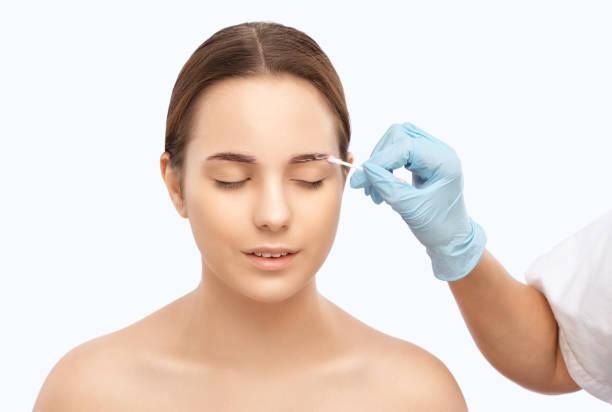
Brow imbalance can become noticeable when one eyebrow carries less hair in a particular region, creating a difference in visual weight even when both brows originally followed a similar contour. For suitable patients, Eyebrow Hair Transplant in Dubai can address selected follicular deficiencies by introducing donor hairs into areas where natural growth is no longer sufficient.
The objective is not to make the eyebrows mechanically identical. A better approach is to identify the source of the imbalance, preserve useful native follicles, and rebuild only the sections that contribute to the visible difference.
What Brow Imbalance Looks Like
Brow imbalance can be subtle at first. Patients may notice that one eyebrow photographs differently, appears lighter, or seems to have a different endpoint even though the overall facial structure has not changed.
Unequal Visual Weight
One brow may contain more visible hair across its central section while the opposite side shows greater skin visibility. This can make the eyebrows appear mismatched even when their outer boundaries are relatively similar.
Different Terminal Points
A missing group of follicles near the outer portion can cause one eyebrow to appear shorter. The imbalance may therefore be caused by a relatively small area rather than a deficiency throughout the entire brow.
Uneven Contour Support
Loss around a particular curve can weaken the definition of the brow. The remaining hairs may still outline the eyebrow, but the contour can appear less continuous on one side.
Finding the Source of the Imbalance
The visible difference should be separated into its hair-related and structural components.
Compare Native Follicle Distribution
The two eyebrows can be examined side by side to determine where the follicular populations differ. This helps establish whether additional hair could realistically change the perceived imbalance.
Review Previous Changes
The history of plucking, threading, injury, burns, medical treatment, or gradual thinning can provide clues about why one area has less hair. Tajmeels lists several such factors among potential causes of eyebrow hair loss.
Examine the Brow in Motion
Eyebrow position can change with facial expression. A difference that becomes prominent only during movement may not be explained entirely by follicular distribution.
This distinction matters because transplantation changes hair coverage, not the underlying action of facial muscles.
When Eyebrow Hair Transplant in Dubai May Help
A transplant can be considered when missing follicles are a significant contributor to the imbalance and the loss is sufficiently stable for reconstruction planning.
Localized Follicular Deficiency
A patient may have one clearly underpopulated region while the rest of the brow remains satisfactory. Treating that section can provide a more focused correction.
Unequal Hair Retention
If one side has retained considerably more follicles than the other, selective transplantation may supplement the weaker side.
Permanent Grooming-Related Loss
Repeated hair removal can result in lasting reduction for some patients. When adequate native growth is no longer returning, donor follicles may be considered for reconstruction.
When Hair Transplantation Cannot Address the Entire Imbalance
Brow imbalance is not always a follicular problem.
Natural Facial Asymmetry
The underlying facial structures on the two sides of the face are not necessarily identical. Transplanted hair cannot alter the position of the orbit, forehead, or other anatomical structures.
Dynamic Brow Position
Muscle activity affects eyebrow movement and resting position. Adding follicles cannot make two brows move in precisely the same way.
Changing Hair Loss
If the underlying loss is continuing, the appearance may change after reconstruction. A stable treatment plan requires appropriate evaluation of the current pattern.
Creating a Side-to-Side Restoration Plan
A useful plan should evaluate the eyebrows together rather than treating the weaker brow in isolation.
Establish the Visual Reference
The clinician can identify the portions of the stronger brow that provide useful reference points without assuming that it should be copied exactly.
The inner region, central body, arch, and outer endpoint can each be assessed independently.
Identify the Missing Component
The key question is which specific element is creating the imbalance. It might be reduced fullness, a shortened tail, an interrupted contour, or a small area of absent hair.
Define the Correction Boundary
Once the deficient region is identified, the restoration can be kept within an appropriate boundary. This reduces the risk of changing areas that already look natural.
Why Brow Imbalance Requires Controlled Density
Adding follicles is only one part of reconstruction. Their distribution determines how the eyebrow reads as a whole.
Avoiding a Dense Patch
A concentrated group of new follicles can become visually obvious if it is substantially denser than the surrounding native hair.
Creating Gradual Coverage
The transition between existing and transplanted follicles should be considered during placement. A gradual change in coverage generally integrates more naturally than a sudden increase.
Maintaining the Original Character
The restored eyebrow should retain its individual features. Correcting imbalance does not require eliminating every natural variation between the two sides.
Direction Is Part of the Correction
Eyebrow hairs follow distinctive patterns across different regions. Tajmeels describes preparing donor grafts according to the desired eyebrow shape and direction and placing them individually into fine recipient openings.
Inner Brow Direction
The hairs near the medial section have their own orientation. A restoration plan should transition into this existing pattern rather than introduce a conflicting angle.
Central Brow Direction
The body of the eyebrow generally requires a controlled orientation that supports the established contour.
Outer Brow Direction
The terminal region needs particularly careful positioning because the direction and taper of these hairs influence the perceived endpoint of the eyebrow.
The Importance of Recipient-Site Design
Recipient-site creation determines how transplanted follicles are positioned beneath the skin.
Angle
The emergence angle influences whether a new hair lies naturally against the brow or appears to project away from it.
Placement
Small changes in position can affect the apparent height, thickness, or length of the brow. Precision is therefore particularly important when correcting a localized imbalance.
Orientation
The direction of the recipient sites should correspond with the surrounding native growth pattern. This helps the transplanted hairs function visually as part of the existing eyebrow.
Donor Planning for a Single-Sided Correction
A patient with one noticeably weaker eyebrow may not need the same amount of donor hair as someone requiring bilateral reconstruction.
Match Donor Supply to the Defect
The size of the recipient deficiency should determine the scope of harvesting. A small imbalance should be approached differently from extensive bilateral loss.
Consider Donor Hair Behavior
Because donor follicles are generally obtained from the scalp, their characteristics can differ from native eyebrow hair. These differences should be considered when selecting and positioning grafts.
Protect Future Donor Options
A responsible treatment plan should avoid unnecessary harvesting. Individual extraction allows the available donor supply to be used selectively according to the treatment requirement.
How the Result Develops Over Time
Brow imbalance cannot be accurately judged immediately after implantation.
Initial Healing
Temporary redness, swelling, tenderness, and scabbing can occur around the recipient sites. Tajmeels describes an initial recovery period of approximately five to seven days.
Transitional Growth
The transplanted hairs may pass through a shedding stage before new growth becomes established. During this period, the visual balance can fluctuate.
Progressive Maturation
Tajmeels reports that natural growth may become apparent around four to five months, with fuller results developing over approximately one year.
This timeline is important when evaluating whether the restored side has integrated with the native brow.
Practical Recovery Planning in Dubai
The local environment should be considered when arranging treatment and early recovery.
Sunlight Exposure
Dubai's strong sunlight makes it sensible to plan early recovery around limited direct sun exposure and the treating clinician's protective instructions.
Outdoor Commitments
Patients with outdoor work, regular exercise, or frequent commuting may need to schedule treatment around the period when the recipient area is settling.
Indoor Air Conditioning
Long periods in air-conditioned environments can contribute to general skin dryness or discomfort. Gentle care of the treated area remains important during healing.
Tajmeels' aftercare information advises protecting the recipient region and avoiding unnecessary touching or scratching.
Questions About Brow Imbalance
Can Eyebrow Hair Transplant in Dubai Correct an Imbalance Caused by Missing Hair?
It may help when follicular deficiency is responsible for a meaningful portion of the visible difference.
Does Correction Require Treating Both Eyebrows?
No. If the deficiency is localized to one side, treatment can potentially focus on that side.
Can Transplantation Correct Differences in Brow Movement?
No. Hair transplantation changes follicular coverage but does not modify facial muscle movement.
Can Existing Brow Hair Be Used as a Guide?
Yes. Native hair provides important information about the patient's established contour, density, and direction.
Will the Two Brows Become Identical?
The goal is balanced appearance rather than exact duplication. Natural facial asymmetry can remain after successful hair restoration.
What Patients in Dubai Should Do Next
Anyone concerned about brow imbalance should first determine whether the difference is caused by missing follicles, uneven density, facial anatomy, or a combination of these factors. Taking photographs over time can also help distinguish a longstanding feature from a recently developing change.
A consultation can then focus on the exact source of the imbalance, the condition of the recipient area, the availability and characteristics of donor follicles, and the amount of restoration actually required. This approach allows the treatment to remain conservative where native hair is already adequate.
The Strategic Investment
Correcting brow imbalance is a matter of proportion rather than simple hair replacement. The strongest treatment planning comes from identifying the specific follicular deficiency, matching it to the existing architecture, and controlling every aspect of placement from density to direction. For patients exploring individualized eyebrow restoration in Dubai, Tajmeels Clinic can provide a starting point for evaluating whether follicular reconstruction fits the nature of the imbalance.
 Romaian
 English
 Arabic
 French
 Spanish
 Portuguese
 Deutsch
 Turkish
 Dutch
Dutch
 Italiano
 Russian
 Portuguese (Brazil)
 Greek
Greek