


How to Create Custom Tags That Fit Your Brand and Style
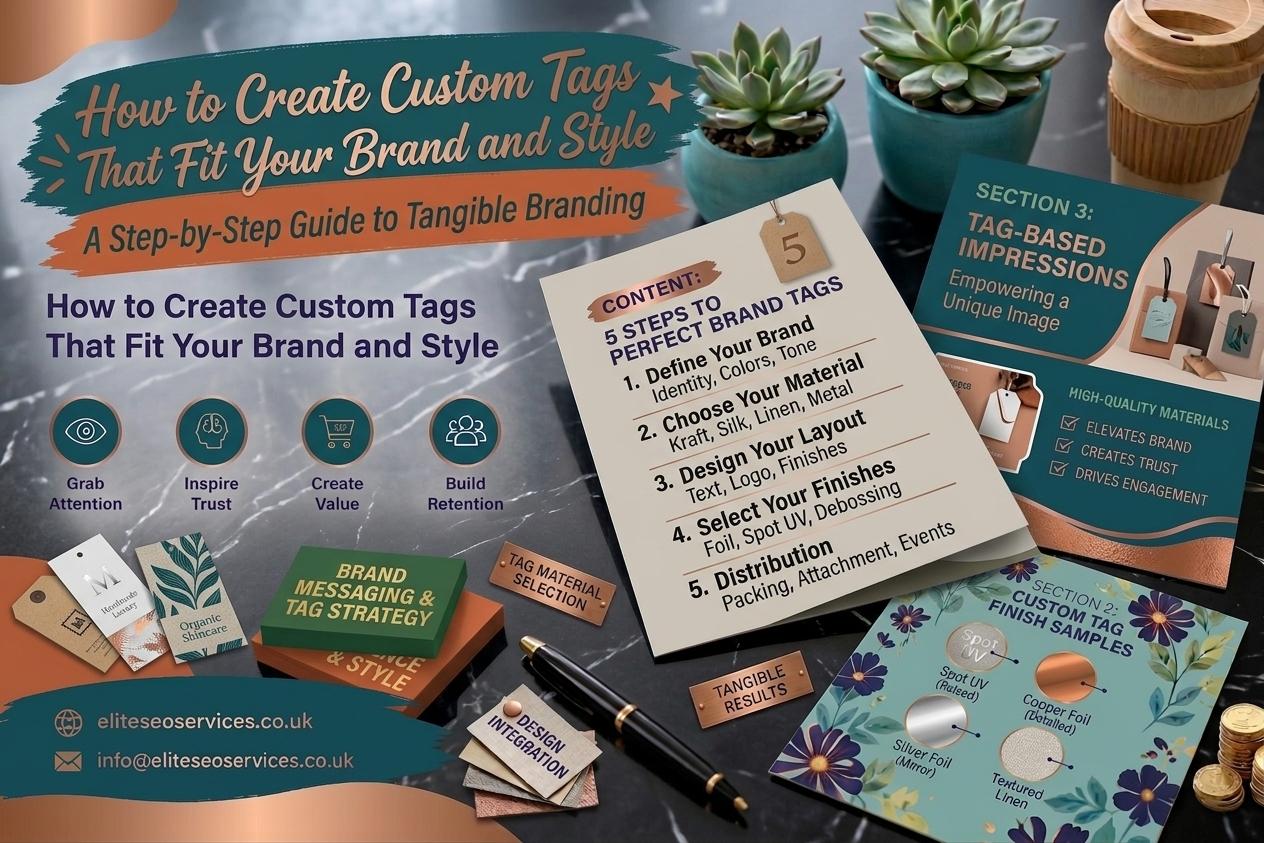
A custom tag may be small, but it can become an important part of how people recognize your brand.
When customers receive a product, they notice more than what is inside the package. The colors, typography, materials, labels, and little finishing details all contribute to the overall impression. A well-designed custom tag can bring these elements together and make your packaging feel connected to your brand.
The challenge is creating a tag that does not simply look attractive but actually feels like your brand.
Whether your business is modern and minimal, colorful and playful, handmade and rustic, or elegant and premium, the tag should support that identity. Fortunately, creating one does not have to be complicated. With a clear direction and a few thoughtful design decisions, you can create custom tags that look intentional and consistent.
Start With the Personality Behind Your Business
Before opening a design tool or choosing a font, think about the personality of your brand.
Ask yourself how you want customers to feel when they see your packaging.
Should it feel sophisticated? Friendly? Creative? Natural? Energetic? Traditional?
These qualities provide a useful starting point because design choices become easier when you know what you are trying to communicate.
For example, a brand built around natural handmade products may feel more comfortable with earthy colors and organic visual elements. A contemporary fashion label might prefer a cleaner appearance with fewer decorative details.
Your tag should reflect the personality that already exists within your business rather than introducing a completely unrelated style.
Give Your Visual Identity a Place to Shine
Your custom tag should feel like part of the same family as your other branding materials.
If your website uses particular colors, typography, or graphic elements, consider carrying some of those features onto the tag. Customers should be able to look at the packaging and recognize that the different pieces belong to the same company.
This does not mean copying your entire website onto a tiny piece of cardstock.
Instead, choose a few recognizable elements and use them consistently. Your logo, brand color, or signature typeface may be enough to establish a visual connection.
Consistency often makes simple designs feel more professional.
Pick a Color Direction Before Adding Decorations
Color can change the entire mood of a tag.
Rather than choosing colors simply because they look good individually, consider how they work with your existing brand palette and packaging.
A strong color direction might use one dominant shade, a supporting color, and a neutral background. This keeps the design controlled while still giving you enough flexibility.
If your packaging is already colorful, a quieter tag may create balance. If the packaging is plain, the tag can become a stronger visual feature.
The important thing is to make the color choice intentional.
Choose Typography That Sounds Like Your Brand Looks
Fonts have personalities too.
A bold typeface can create a confident appearance. A refined serif can feel traditional or sophisticated. A simple sans-serif can create a clean and contemporary impression.
When selecting typography, think beyond whether you personally like a particular font.
Consider whether it represents the way your business communicates.
A playful children's brand and a professional consultancy probably should not use the same typographic approach. The font should feel natural alongside your logo, website, packaging, and other branded materials.
Most importantly, make sure the text remains readable at the actual size of the tag.
Decide What Deserves the Spotlight
A tag has limited space, so every element needs a reason to be there.
Your brand name may need to be the primary focus. In another situation, the product name or personalized message might deserve more attention.
Try organizing the information according to importance.
For example, a simple business tag might contain the brand name prominently, followed by a short phrase or supporting detail. A personalized tag could place the recipient's name at the center while keeping the brand information smaller.
When everything is emphasized equally, nothing feels important.
Let the Shape Support the Design
The physical shape of a tag can become part of its personality.
A traditional rectangular tag may work well for a straightforward retail brand. A circular tag can create a softer visual impression. An unusual custom shape can add character when the brand calls for something more distinctive.
Think about how the shape interacts with the product.
A tag hanging from a small bottle may need a different proportion from one attached to a large clothing package. The attachment point also matters because the tag should hang naturally rather than covering important parts of the product.
Shape should therefore be considered alongside the practical use of the tag.
Match the Tag Material to Your Brand's Feel
The material can communicate almost as much as the printed design.
A smooth finish can support a crisp, polished identity. A textured surface can complement a handcrafted aesthetic. A sturdy material can create a more substantial impression.
There is no universally correct material.
Instead, think about the experience you want customers to have when they touch the package. The material should make sense with both the product and the visual identity.
A beautifully designed tag can lose some of its impact if its material feels completely disconnected from the rest of the packaging.
Create a Signature Detail People Can Remember
One of the easiest ways to make a tag feel distinctive is to introduce a small recurring feature.
It could be a particular border style, a recognizable color combination, a tiny illustration, a special phrase, or a unique placement of your logo.
This detail does not need to dominate the design.
In fact, subtle repetition can be more effective. When customers repeatedly see the same visual characteristic across your products, it can gradually become associated with your brand.
Think of it as a visual signature.
Keep Different Product Lines Connected
If your business sells multiple products, you do not necessarily need a completely different tag for every item.
Creating a flexible tag system can make your branding easier to manage.
You might keep the same logo placement and typography across your collection while changing one color or small graphic according to the product category.
This approach allows individual products to have their own identity without making the overall brand look inconsistent.
It is especially useful when your product range continues to grow.
Think About Where the Tag Will Actually Go
Designing a tag on a screen is different from seeing it attached to a real product.
Before finalizing your design, consider how the tag will hang, sit, or attach.
-
Will it be tied with string?
-
Attached with ribbon?
-
Fastened to a handle?
-
Placed inside a package?
The attachment method can influence the tag's size, orientation, and even shape.
A design that looks perfect by itself may not work well if important text becomes hidden when the tag is attached. Thinking about the physical placement early can prevent these problems.
Make Personalization Part of the Design
If your tags are intended for gifts, events, or personalized products, leave enough room for variable information.
Names, dates, short messages, product variations, or customer details may change from one tag to another.
Instead of treating personalization as something added at the last minute, design the layout around it from the beginning.
This creates a more natural result and prevents the personalized text from looking squeezed into an empty corner.
Use White Space Without Being Afraid of Empty Areas
Empty space is not wasted space.
A little breathing room around the logo or text can make a tag easier to read and give the design a cleaner appearance.
Many designs become crowded because there is an urge to fill every available area. But a tag does not need to communicate everything about a company.
Sometimes a logo, short phrase, and carefully chosen visual detail are enough.
Allowing elements to breathe can make even a very small tag feel more polished.
Build a Design That Still Works in Different Sizes
A useful custom tag design should be flexible.
Your business may eventually need tags in several sizes or formats. Perhaps one product requires a small hanging tag while another needs a larger version.
A design that relies on extremely small details may not translate well.
When possible, keep the core elements simple enough that they can be adjusted without losing their identity. Your logo and primary text should remain recognizable even when the dimensions change.
Flexibility can save time when your packaging needs evolve.
Test the Tag Before Making a Large Batch
Never rely only on what you see on a computer screen.
Print a sample or create a physical mockup and attach it to the actual product. Look at it from different distances and under different lighting.
Check whether:
-
The main text is easy to read.
-
The logo is noticeable without overwhelming the design.
-
The colors work with the packaging.
-
The tag hangs or sits correctly.
-
The material feels appropriate.
-
Personalized information has enough space.
-
Nothing important gets hidden after attachment.
A physical test can reveal problems that are easy to miss during digital design.
Know When Simplicity Is the Better Choice
A custom tag does not need dozens of design elements to look professional.
If your brand already has a strong identity, a simple tag may actually communicate it more effectively than a heavily decorated design.
Focus on recognition rather than decoration.
A clear logo, suitable typography, thoughtful color choice, and a small signature detail can be enough to create a memorable result.
The goal is not to make the tag look impressive on its own. The goal is to make it work beautifully with your brand.
Give Your Tags Room to Evolve
Your first tag design does not have to remain unchanged forever.
As your business grows, your products may change, your audience may develop, and your visual identity may become more refined.
The important thing is to maintain the recognizable parts of your brand while allowing the design to evolve naturally.
A good custom tag system can adapt without losing its original character.
Make Every Tag Feel Like It Belongs
Creating a custom tag that fits your brand and style comes down to alignment.
The colors should make sense with your identity. The typography should match your communication style. The shape and material should suit the product. The information should have a clear purpose. And the overall appearance should feel connected to everything else your customer sees from your business.
When these elements work together, the tag stops feeling like an extra piece of packaging.
It becomes part of the brand itself.
Final Thoughts
Custom tags give businesses a simple way to add personality, recognition, and consistency to their products.
The strongest designs are not necessarily the most complicated. They are the ones that understand the brand behind them and translate that identity into a small, practical format.
Start with your brand personality, build around your existing visual identity, choose colors and typography carefully, consider the physical product, and always test the finished design before producing a larger quantity.
With the right approach, even a small tag can become a recognizable part of the experience your brand creates.
Visit Us: https://ibexpackaging.com/custom-tags/
 Romaian
 English
 Arabic
 French
 Spanish
 Portuguese
 Deutsch
 Turkish
 Dutch
Dutch
 Italiano
 Russian
 Portuguese (Brazil)
 Greek
Greek